T.N.T.
Before Angus Young’s guitar comes in on “T.N.T.,” Malcolm Young holds the riff by himself. Four or five seconds. Just the rhythm, the low end, the engine running before anyone floors it.
Most people never notice him there. He built the band so they wouldn’t have to.
The song was recorded in Sydney in 1975, at Albert Studios on King Street, with Harry Vanda and George Young producing. George was Malcolm and Angus’s older brother. He and Vanda had made hits in the sixties with the Easybeats, so they knew what it took to get a song onto tape. What they did with AC/DC was simpler and harder than that: they let the band be what it already was.
Bon Scott was twenty-nine. Angus was twenty. Malcolm was twenty-two. They had been playing pubs since 1973, and somewhere in those rooms they had decided the bar was not going to be the end of it.
“I’m TNT, I’m dynamite / TNT, and I’ll win the fight.”
That’s the whole lyric, more or less, and it doesn’t ask to be studied. It asks to be felt in your sternum, in a room where the carpet is sticky and the monitors are blown and half the crowd is still at the bar. The song was built for the venue with three hundred people in it. It got to the arenas and the festival stages eventually, but it never stopped being shaped like that first room.
What Vanda and Young understood is that this band did not need improving. It needed documenting. Angus’s guitar had to sound like a guitar in a room. Phil Rudd’s kick drum had to hit the way it actually hit. Bon Scott’s voice had to sit up front, conversational and menacing in the same breath. Their job was to get the thing on tape without killing what made it alive, and they did.
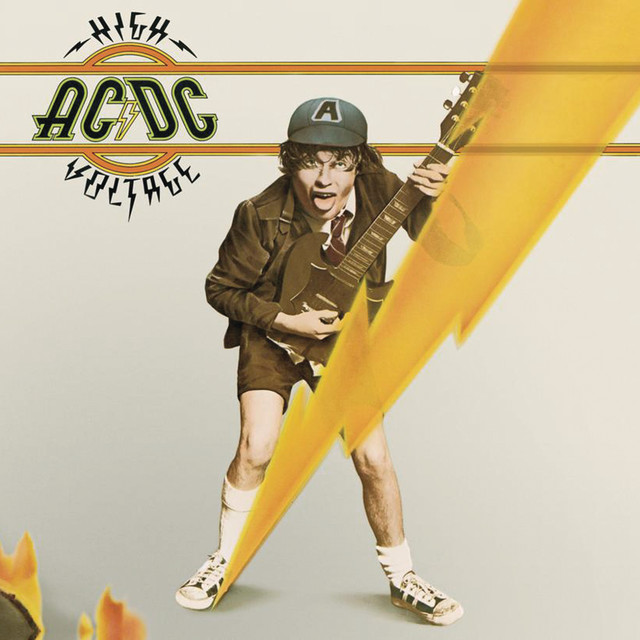
The version of High Voltage released in Australia in 1975 was a different record from the international High Voltage that came out in 1976 — the one with “T.N.T.” on it, assembled from the first two Australian albums. So for most of the world, the introduction to this band was a selection of who they already were. They arrived fully formed. Two years of pubs will do that.
Malcolm stepped away from the band in 2014. He had been dealing with dementia for years by then, and he left quietly, which was the only way he ever did anything. He died in 2017. The band put his nephew Stevie in his spot on rhythm guitar — his kin, playing his parts, keeping his time.
I keep going back to those few seconds at the top of the song, because everything Malcolm was is in them. Angus was the one people watched — the schoolboy uniform, the duckwalk, forty countries’ worth of stages. Malcolm stood in one place and held the whole thing together. He kept the time so that everyone else could come in and know exactly where they were.
The song does what it says it will. It blows up. It wins the fight. Three minutes and thirty-five seconds, and then it’s over, and you want it again.
Listen to the very beginning one more time. For four or five seconds, it’s only Malcolm.
It always was.