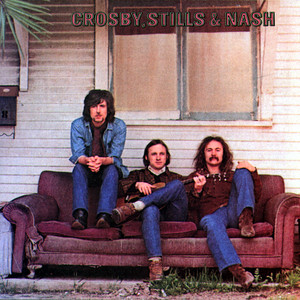
Southern Cross
Stephen Stills didn't write Southern Cross. He took a song called Seven League Boots and rewrote it until it told the truth.
Stephen Stills didn’t write “Southern Cross.” He took someone else’s song and rewrote it until it told the truth.
The original was called “Seven League Boots,” by Rick Curtis and Michael Curtis. Stills heard it somewhere and decided it needed to become something else. He rewrote the lyrics, brought it to the Daylight Again sessions in 1982, and handed it to Graham Nash and David Crosby.
The song is about sailing. About taking a boat across the Pacific after something in your life has fallen apart. The Southern Cross is a constellation you can only see from the Southern Hemisphere, which means to see it you have to go somewhere you’ve never been, far enough from everything you know that the sky overhead is a different sky. That’s the whole of it. Stills doesn’t explain it and doesn’t need to.
“When you see the Southern Cross for the first time, you understand now why you came this way.”
People don’t get on boats and cross oceans because they love sailing. They do it because they need to go somewhere they can’t be reached. The thing that happened — the end of a marriage, a loss, some private demolition — is still sitting in the same room with them if they stay on land. The only way out is to put enough water between themselves and it that geography does the work.
The production is clean in that early-eighties way that should have dated badly and didn’t. The guitars are wide. Nash and Crosby find each other in a chord the way old friends find each other in a crowded room without looking. The harmonies make you feel like the people singing are standing inside your chest.
There’s a line in the middle that stops me every time.
“So I’m sailing for tomorrow, my dreams are a dying.”
Not dead. Dying. Present tense. The man on this boat isn’t coming from the wreckage. He’s in the middle of it. The thing is still happening. He hasn’t made it through. He’s just moving, because moving is the only answer he has left.
By 1982 these three men had been through enough collective wreckage to fill a library. CSN had imploded and regrouped more times than anyone could track. Crosby was somewhere in the middle of a decade that nearly killed him. Stills had watched his best creative partnership dissolve and reconstitute itself in ways that never fit the way the original did. Nash was the one who seemed to keep it together, and even Nash knew the thing they had was the kind of fragile thing you can’t force and can’t hold still. You can only sing it while it lasts.
And here they are, on this song, harmonizing like none of it happened, or like all of it happened and they’re still standing anyway.
The song ended up on every greatest hits compilation, every soft-rock station, every sailing documentary. That reach makes people dismiss it as yacht rock, clean production, no rough edges. The people who have actually needed it know what it is.
It isn’t a song about sailing. It’s a song about surviving the specific disaster of loving someone who isn’t there anymore, and finding a way to move forward through open water while everything behind you is burning.
The Southern Cross doesn’t tell you where you’re going. It tells you you’re south enough, far enough, out past everything familiar, and the sky looks different here than it did at home. Stills found that song under someone else’s words and rewrote it until it was true. Sometimes that’s all the answer you were looking for.