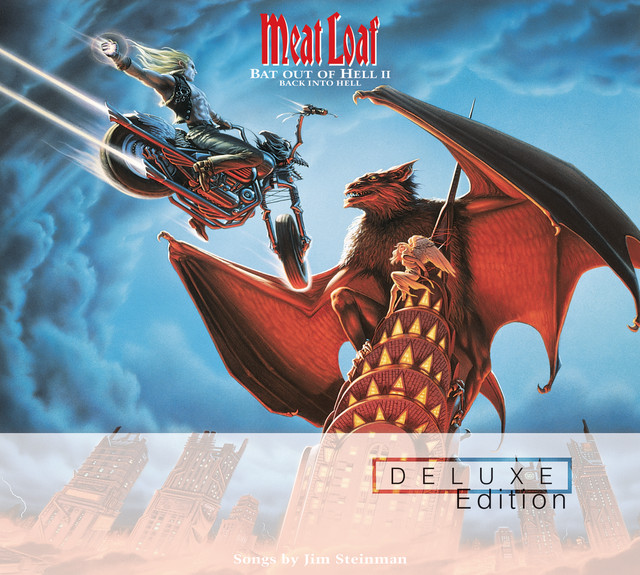
I'd Do Anything for Love (But I Won't Do That)
The question everyone asks: what’s “that”? What’s the thing he won’t do? For thirty years, people have debated this at parties, convinced the answer is hiding somewhere in the twelve minutes of orchestral excess.
It’s not hiding. It’s right there in the song. Listen to what she asks in the final third. Will you forget the way I feel right now? He won’t do that. Will you do it better with someone else? He won’t do that. Every “that” refers to something she just said. The mystery isn’t a mystery. People just don’t listen past the chorus.
But that’s not why the song works. The song works because Jim Steinman understood that in 1993, when irony was king and everyone was too cool to feel anything, there was still an audience for unapologetic theatrical bombast. Meat Loaf commits completely. The orchestra swells. The motorcycles rev (yes, there are motorcycles on the track). The female vocalist enters like an opera diva. It’s ridiculous. It’s twelve minutes long. It went to number one in twenty-eight countries.
Steinman wrote songs like Wagner composed operas—more is more is still not enough. He’d been doing this since the original Bat Out of Hell in 1977, creating rock songs with classical architecture and Broadway dramatics. By 1993, he’d perfected the formula: give the listener an emotional experience so overwhelming they forget to be embarrassed.
The production is a maximalist’s fever dream. Every instrument recorded at peak intensity, layered until the mix becomes a physical force. It shouldn’t work. It works completely.
Some songs ask for your attention. This one demands your surrender.
Get tomorrow's spin in your inbox.