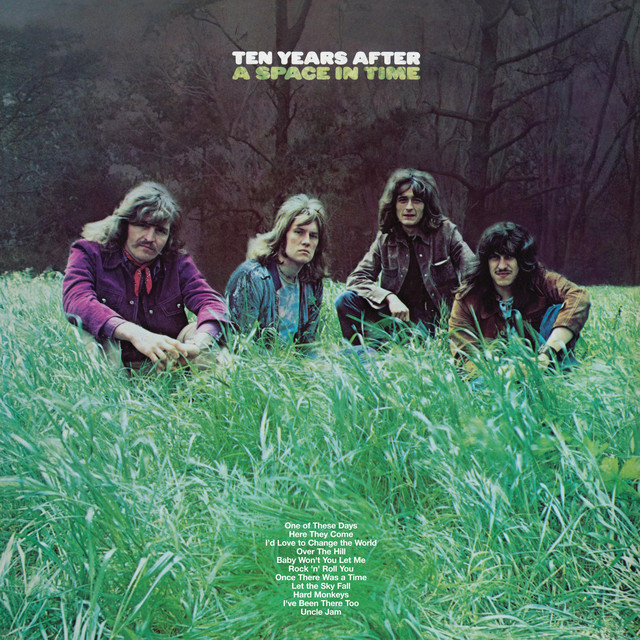
I'd Love to Change the World
“I’d love to change the world, but I don’t know what to do.”
That’s it. That’s the confession that made this song outlive everything else Ten Years After ever recorded. Not bravado. Not a plan. Just the honest admission that wanting to fix things isn’t the same as knowing how.
Alvin Lee was the fastest guitarist at Woodstock. Literally. His performance of “I’m Going Home” became legendary because nobody could believe a human being could play that fast. But speed doesn’t save the world. And by 1971, Lee was watching the sixties dream curdle into something uglier.
The song lists everything wrong: war, taxes, pollution, hatred. It sounds like a protest anthem until you hit that chorus, and suddenly it’s something more complicated. Lee isn’t rallying the troops. He’s sitting down, exhausted, admitting he’s out of ideas.
The acoustic guitar in the verses—delicate, almost pretty—gives way to that heavy electric riff when the chorus hits. It’s the sound of frustration taking over. Of good intentions collapsing under their own weight. Of a guy who rocked Woodstock realizing that rock and roll wasn’t actually going to change anything.
“Tax the rich, feed the poor, till there are no rich no more.” Simple math. Obvious solution. Still waiting, fifty years later.
What makes this song last isn’t the politics. It’s the vulnerability. Lee could have written a finger-pointing anthem, blamed the government, blamed the man, blamed somebody else. Instead, he included himself in the failure. We all want to change the world. None of us know what to do.
That honesty hits harder than any slogan.
Some protest songs tell you what to think. This one admits that thinking isn’t enough.
Get tomorrow's spin in your inbox.