Disappear
Michael Hutchence had seven years left when he sang this, and he spent them being the loudest man in the room. Here he is quiet.
Michael Hutchence had seven years left when he recorded this.
The version of INXS the world settled on is all strut and sweat — Hutchence working a crowd like a man who knows every eye in the room is on him and has decided to be worthy of it. Disappear is the other version. Not softer. Quieter. Which is a different thing.
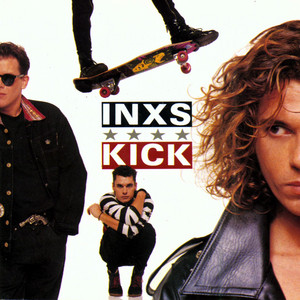
X came out in September 1990. Chris Thomas produced it — a man who had spent the previous two decades producing Never Mind the Bollocks and engineering the back half of Abbey Road, who understood both restraint and detonation and when to use which. INXS came to the record straight off Kick: four top-ten singles in America, arenas, the kind of success that changes what you think a song is supposed to do.
They could have chased it. They mostly didn’t. X is a more interior record. Still muscular, still built on Andrew Farriss’s instinct for a groove that sits exactly right in your chest, but less interested in the rafters. Disappear is where that shows up plainest.
The song opens with a guitar figure that doesn’t announce itself. It arrives like something you’ve been half-hearing from another room. Tim Farriss keeps it clean. Kirk Pengilly’s saxophone is in there, but it isn’t doing the thing saxophone usually does in a rock band — it isn’t stepping forward, it’s filling air. Garry Gary Beers’ bass holds the bottom without pushing. The whole track breathes like a room where everyone agreed, without saying so, to turn it down.
And then Hutchence opens his mouth, and you understand why the restraint works.
“I see you, a face in the crowd, and I want you, even though it won’t help me now.”
He doesn’t oversell it. A man with his range, his magnetism, the temptation to pour everything onto a line like that was real, and he lets it sit. He trusts the want in the words to do the work. He had been performing long enough to know the biggest moments sometimes need the softest touch.
The chorus opens just enough to feel like release without becoming cathartic. Disappear doesn’t want you to throw your hands up. It wants you to lean in. The intimacy of something said close to your ear instead of across a stadium.
Hutchence died in November 1997, in a room at the Ritz-Carlton in Sydney. He was thirty-seven. The circumstances got argued about in the tabloids for years, which is its own kind of tragedy — a life reduced to a mystery when there was so much actual music to talk about. In the decade or so of the band’s real run he was one of the most compelling frontmen working in rock. Not because he was the best singer, though he was very good. Because he understood the space between the notes. Because he knew when not to reach.
X sold well and lived in the shadow of Kick, the way records do when they follow something that broke through to a different altitude. People who love INXS properly will tell you X repays close listening. They’re right, and Disappear is why.
It works best on headphones, late, when the day has gone quiet. Not because it’s sad — it isn’t, exactly — but because it asks for attention at a register that gets lost in noise. There’s a gap in it, between what the lyric says it wants and what the music is willing to ask for. The song wants to disappear into someone and can’t quite bring itself to push hard enough to make it happen. It holds its ground and hopes.
He had seven years left, and he spent most of them being the loudest man in the room. This song is the other register, the one the strut never needed — a man who knew every eye in the building would find him, choosing instead to sing close to your ear: “I see you, a face in the crowd, and I want you, even though it won’t help me now.”