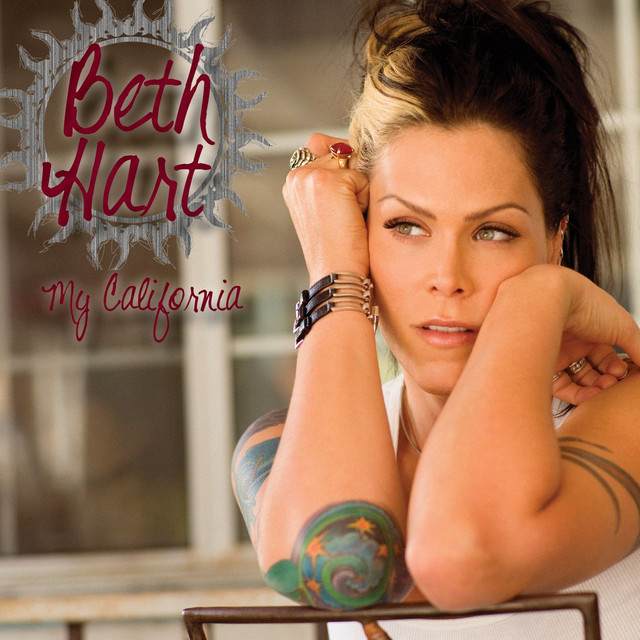
My California
You know this kind of song — not because you've heard it before, but because you recognize the feeling it's made from.
You know this kind of song — not because you’ve heard it before, but because you recognize the feeling it’s made from. The feeling of a place that formed you, a place that broke you, a place that will not let you go no matter how far you run from it.
Beth Hart grew up in Los Angeles: South Central, Silver Lake, the kind of corners where beauty and damage share an address. She spent years trying to escape what California had made her — the addiction, the chaos, the brilliant wreckage of a talent that kept outrunning her ability to hold it together. And then she came back, in her mid-thirties, and sat down and wrote a record about the place itself. Not a postcard. A reckoning.
“My California” opens the album that shares its name, and it does the thing that only the best place-songs do: it refuses to settle into either love or grievance. It holds both, the way you hold a thing you can’t put down and can’t carry comfortably.
“Brown hills and canyons and the long dry grass, the Santa Ana winds are blowing hard and fast.”
That’s not the California of palm trees and movie lots. That’s the California of brush fires and August heat and the particular loneliness of a city that offers everything and withholds most of it. Hart isn’t painting a skyline. She’s describing the landscape the way someone describes the face of a parent — every line familiar, most of them earned in some kind of pain.
Hart has one of the great voices in American music — full stop, no hedging required. It’s a voice built for extremes: she can go from a whisper to a scream inside a single bar and make it feel like one continuous emotional motion rather than a trick. What she does on this song is something harder than screaming. She stays controlled. She lets the feeling build underneath the restraint, and the restraint is what makes it unbearable in the best way.
The production is spare enough to stay out of her way. Jon Nichols, her guitarist and writing partner, plays it like someone who understands that the job of the music is to hold the frame while she fills it. There’s a blues-rock slowburn underneath — not flashy, not reaching for arena — just a band finding the groove the song needs and staying in it.
Hart’s story up to this record is not a small one. A record deal at nineteen. An album that got lost in label chaos. Years of performing at a level that left audiences stunned and left her spent. Breakdowns that were public and real. She has been, at various points, exactly the person the music suggests — someone burning at both ends while the wind drives the fire wherever it wants to go.
By the time she made My California, she was sober and she was married and she was, by her own account, trying to figure out who she was when she wasn’t in crisis. And what she found, at the bottom of all of it, was that the place she came from was still there inside her — the brown hills, the dry grass, the heat that cracked everything it touched.
“I will always love you, my California.”
That line lands differently when you know she’s not singing to a lover. She’s singing to the condition. To the place that shaped the wound and also the voice.
The song is three minutes and fifty-eight seconds, and it doesn’t overstay. It says the hard thing — that you can love the source of your damage, that love and damage are sometimes the same root system — and then it stops, no resolution, no absolution, the winds still going in the last line the way they were going in the first, which is about as much as she was willing to claim.