Waiting on the World to Change
The song came out in 2006, while a war was on, and a generation of young Americans had figured out a basic math problem: we are not in charge, and the people who are in charge are
The song came out in 2006, while a war was on, and a generation of young Americans had figured out a basic math problem: we are not in charge, and the people who are in charge are not listening, and there is nothing obvious to do about that.
John Mayer handed them that feeling back, set it to a Curtis Mayfield groove, and called it a plan.
That’s the argument people make against “Waiting on the World to Change” — that it isn’t really a plan at all. That it’s a rationalization dressed up as a protest song. That Mayer wrote the most comfortable anthem of political disengagement in recent memory and the audience said yes, exactly, this is how I feel, and that was the problem.
The argument is worth taking seriously, because the song invites it. Deliberately.
“Me and all my friends, we’re all misunderstood. They say we stand for nothing and there’s no way we ever could.”
Mayer was sitting somewhere in that space between the generation that marched and the generation that posted, and he understood something that made critics uncomfortable: his generation was not going to storm the barricades, and the song was not going to tell them to. Instead he did something harder to argue with. He described the actual internal logic of a cohort that had watched the machinery of power grind forward regardless of what anyone said or did, and he said: this is why they’re waiting. Not because they don’t care. Because they’ve done the arithmetic on caring and the numbers don’t work.
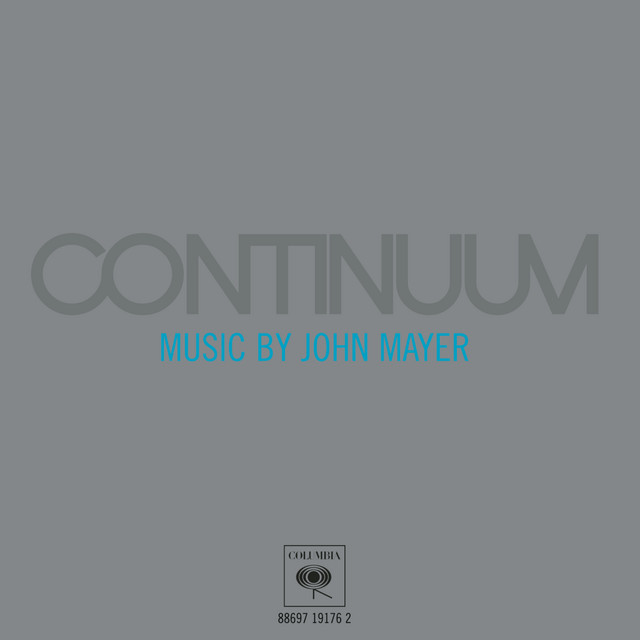
The record is Continuum, and Steve Jordan produced it — the drummer who had played with Keith Richards and David Letterman and Stevie Ray Vaughan, who understood that a groove could carry more weight than an argument. Jordan built the track around a soul-band pocket so relaxed it practically sighs, and Mayer sat on top of it like he had nowhere to be. That ease is doing heavy rhetorical work. You can’t get worked up about the urgency of the moment when the song itself refuses to be urgent.
The Impressions are in the DNA of this track in a way that isn’t incidental. Curtis Mayfield wrote “People Get Ready” in 1965, which is also about waiting — but waiting in the theological sense, waiting that is twinned with faith and forward motion. Mayer’s waiting is secular. It’s more like patience without a destination. The Mayfield comparison was made by almost every critic who wrote about the song, and mostly as a complaint, but the comparison holds in a direction they didn’t mean: both songs are describing what powerlessness feels like from the inside, and making that feeling sound beautiful.
The song moved four million copies in the United States. It won the Grammy for Song of the Year. And it has never stopped making people angry, which is interesting, because songs that are truly as comfortable as the critics claimed tend not to make people angry. They tend to make people comfortable.
What actually seems to bother people is that the song is accurate. It describes a real position that a lot of real people held, and still hold, and it doesn’t condemn them for holding it. There is no verse where Mayer tells you to get off the couch. There is no bridge where the beat picks up and suddenly we’re marching. The song ends where it begins: we’re still waiting. And that flatness — that refusal to resolve into action — is the thing that reads, depending on who’s listening, as either honesty or failure.
Maybe both. Most true songs contain both.
Mayer has said he wrote it in a single afternoon, and you can hear that — not in the sense of carelessness, but in the sense of a thought that arrived whole. There’s no seam where the song tried to become something else and didn’t make it. It knew what it was from the start: a chronicle of a particular kind of moral fatigue that had no good name, and a melody so clean it could carry the weight of it without breaking.
Whatever you make of the politics, that’s the craft. The song asked something of Mayer that pop radio rarely asks of anyone: to write about powerlessness without flinching from it, and to resist the temptation to dress it up as something more useful. He resisted. He let the groove be the only comfort on offer.
Whether that’s enough — for a generation, for a song, for a three-minute-and-twenty-second argument with the state of the world — is still an open question.
He left it open. On purpose.