Babylon
A thousand CDs in the trunk of the car, every one of them paid for himself.
There are a thousand CDs in the trunk of the car, and he paid to press every one of them. That’s the distribution plan. Three record labels have already had him and let him go, so the record gets handed to people one at a time, out of the back of a car, by the man who made it.
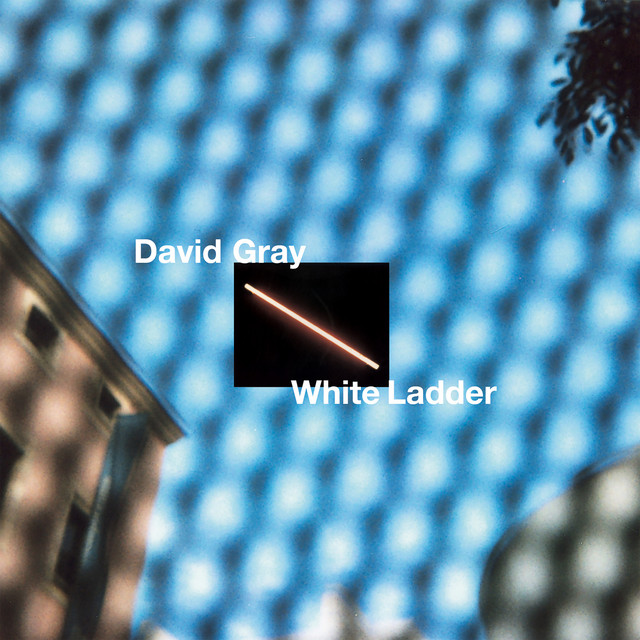
He made it in his London apartment in 1998, with a batch of songs and almost no money, on a secondhand drum machine and a laptop he could barely afford, running the whole thing through software that cost less than a night out. White Ladder. “Babylon” is track two.
The thing that matters about this song isn’t the melody, though the melody is nearly perfect — that finger-picked acoustic line, the Roland drum machine ticking underneath it like a patient clock. It’s not even the voice, which is Gray at his most unguarded. It’s the specificity of the situation he describes. Friday night. The city outside. A man who has been holding a feeling all week, waiting for the right moment, and the moment keeps not coming.
“Let go your heart, let go your head, and feel it now.”
That’s the whole argument of the song in one line. Not you should feel this or here’s what I felt. Just: let it go. Feel it. Now. As if the feeling is right there, waiting, and the only thing standing between you and it is the habit of not feeling it.
Gray had been trying to make it for years before White Ladder. He’d released two albums on major labels — A Century Ends in 1993, Flesh in 1994 — and watched both of them disappear. The labels dropped him. He moved to London. He wrote songs in a small flat with his friend Craig McClune, who helped him build out the production, and they used what they had: an Apple Mac, a keyboard, a drum machine, some guitar. The budget was essentially zero. The ambition was not.
They pressed those first thousand copies in Ireland, where Gray had roots, and Ireland responded. Not the music industry — actual people, in actual rooms, playing it to each other. Word spread the way it used to spread before streaming: someone hands you something and says listen to this. Dave Matthews heard it and brought Gray to the States. By the time White Ladder was re-released on a proper label in 2000, it had already sold three hundred thousand copies in Ireland alone. A country of four million people. One in thirteen.
That’s what the song was doing in the trunk of the car, apparently.
What makes “Babylon” work as a song — not as a hit, as a song — is that it never explains itself. Gray doesn’t tell you who the woman is, or what he felt, or why Friday night is when it all came loose. He just puts you on the street with him, that particular kind of early-evening London light, and he lets the feeling arrive.
The production earns this restraint. McClune’s arrangement never crowds the vocal. The drum machine stays in its lane — it’s not trying to be live drums, it’s not apologizing for being a machine. It just keeps time while everything else opens up. The song breathes. It was made in a small room, and it sounds like it: close, interior, personal. You can hear what it cost not to be in a real studio, and somehow that cost became the thing.
There’s a word people reach for with songs like this — raw — and it’s usually a lazy word, a way of saying low budget while making it sound intentional. With White Ladder, it genuinely was intentional. Gray didn’t have another choice, so he made the choice into the album’s spine. The plainness is the point. A man with a guitar and a drum machine and some feelings about Friday night, and he trusts that to be enough.
It was enough. It was more than enough.
White Ladder eventually sold seven million copies. Gray made several more albums, some of them with proper studios and proper budgets, and some of them are very good. But he has never made another record that sounds like someone left the window open while they were recording, never made another “Babylon,” a song this naked and this confident about being naked.
Let go your heart. Let go your head. Feel it now.
He meant the song. The song meant him. Three labels threw him back and he went home and made this, in a flat in London, on a laptop, for almost nothing. Turns out that’s exactly what it needed to cost.