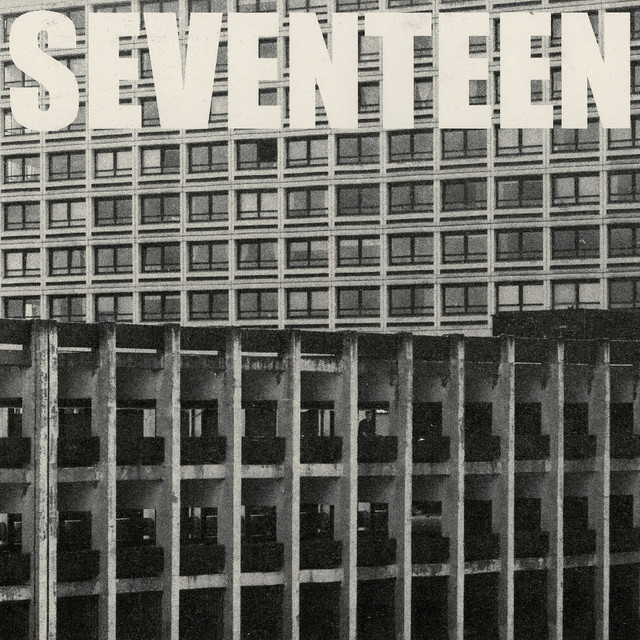
Seventeen Going Under
By rights, nobody should be able to sing along to this.
By rights, nobody should be able to sing along to this. The details are one man’s, down to the town and the house and the years he spent running from what was happening inside it, and specificity like that usually locks a listener out. This song does the opposite, and it isn’t an accident.
The song is about the years his mother spent fighting her way out of an abusive relationship, and about the version of himself who watched it happen and couldn’t do anything except grow up fast and wrong. Not a monster, just a situation, just the grinding weight of a family in trouble and nowhere to put it. Fender was thirty-one when he recorded it. The distance mattered.
Fender grew up in North Shields, a post-industrial town on the Tyne, the kind of place where the shipyards closed and the community rearranged itself around the absence. He has talked about his childhood in interviews with a plainness that resists self-pity — just: this is what was happening, this is what it looked like from seventeen. His mother eventually left. Things eventually got better. The song is not about the resolution. It’s about the years before the resolution, when eventually is not a word that has any meaning yet.
What he captured is something most songs about difficult childhoods can’t manage: the specific confusion of a teenager who loves his parent and cannot help his parent and is also, in his own body, falling apart. The two things run alongside each other and neither one cancels the other out. You’re scared for her. You’re scared for you. You keep showing up to school. You keep doing the normal thing. And underneath all of it, something is tearing.
I was running from my early teens.
The song opens in motion. Past tense, but only barely — the feeling is still right there, present-tense in the chest.
The production is worth talking about. Johnny Lloyd, who co-produced the record with Fender, built the thing in layers — a deceptively spare verse that opens up into something close to euphoric on the chorus, guitars stacked until they feel like a crowd moving. It’s a Springsteen move, consciously or not, and Fender has never pretended otherwise. The comparison is too easy and also exactly right: the same instinct that the music should feel as big as the feeling, that the guitar line should carry what the words can’t. That the song should be the release the life wasn’t.
The lead guitar riff — the one that pushes through the chorus — was played by Fender himself, and it has the quality of something that was worked until it felt inevitable. It doesn’t showboat. It just keeps going, steady and urgent, like someone who has decided they’re going to make it through this even if making it through looks like running.
That’s what the song is actually about. Not the abuse. Not the mother’s suffering, which Fender doesn’t make his to describe in detail. It’s about the running — the years of forward motion as a survival strategy, the way a kid turns velocity into armor, the cost of that armor later.
The song came out in August 2021, ahead of the album, and it moved fast. By October it had become something larger than a single — a live staple, a crowd-carry, the kind of song where Fender would get to the chorus and the room would take it from him. In Glastonbury footage from 2022, you can watch it happen in real time: ten thousand people singing I was running from my early teens back at a man who wrote it about his own mother, in his own house, in North Shields. Something crosses his face during those moments that is not quite disbelief and not quite joy. More like recognition. Like: yes, that’s the thing. That’s the thing I was trying to say.
The song works as a crowd song because the feeling is not particular. The specific details are his — the town, the house, the mother, the relationship he could see but not stop. But the shape of it is everyone who ever turned seventeen under a difficult sky and tried to hold themselves together until something changed.
Fender has said that writing the song required him to go back and look at his mother’s experience as an adult, with an adult’s understanding of what she was going through. That shift — from a teenager who couldn’t see the full picture to a man who could — is what the past tense is doing. I was running. Not I am. The running is over. He made it to the other side of it.
But the song doesn’t end triumphant. It ends the way real reckonings end — with the memory still fully intact, the weight of it still present, the distance just enough to see clearly without the seeing making it hurt any less.
His mother heard it. He’s talked about that too, without saying too much. That it was important to him that she heard it. That the song was partly for her in a way that songs are sometimes for the person who can never say the thing directly.
What happened after was that the song stopped belonging only to him. It went out in August 2021 and by October the crowds were taking the chorus off his hands, and by the Glastonbury summer of 2022 there were ten thousand people singing a line he wrote about his own mother, in his own house, in North Shields, back at him with the guitars all the way up, loud enough to fill a field.