The Way It Is
The piano part on "The Way It Is" is locked in E-flat.
The piano part on “The Way It Is” is locked in E-flat.
Not locked like a key signature on a score — locked like a closed door. Bruce Hornsby plays the same descending pattern under the whole song, and it doesn’t modulate, doesn’t resolve, doesn’t open up into something easier. The verse happens on top of it. The chorus happens on top of it. The story of a man turned away from a hiring counter because of the color of his skin happens on top of it, and the piano just keeps descending, and the message is in the descent: this is the thing that doesn’t move.
Hornsby wrote the song at his piano in Williamsburg, Virginia, trying to make sense of what he’d grown up watching. He was a white kid in the South in the 1960s. He saw the signs. He watched the laws change and watched the resistance to those laws calcify into different laws, or into no laws at all, into a shrug and a closed door. The song names two of them: the legislation that kept Black Americans out of jobs and housing before the Civil Rights Act, and the quiet successor to that legislation, which was the phrase people used when you complained about it.
“That’s just the way it is.”
He gives that line to the people defending the system — not as a slur, but as something more durable than a slur. As received wisdom. As a hand on the shoulder that holds you in place. And then, at the end of each chorus, he puts a crack in it: some things will never change. Which sounds like agreement. Which is, if you listen right, the opposite of agreement. Because Hornsby does not say some things cannot change. He says some things will never change — which is a moral failure, not a law of physics. It will not change because we have not changed it. That’s the whole different thing.
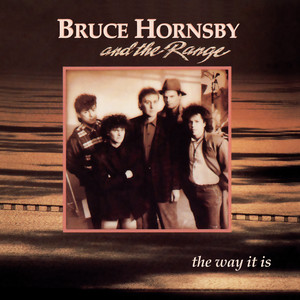
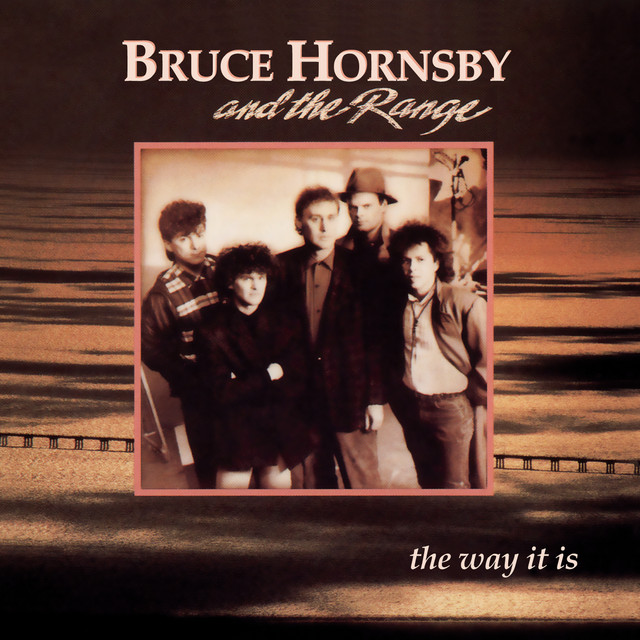
The Range was Hornsby and four other people, and the record came out on RCA in August of 1986. David Foster had a hand in the production, which is worth noting — Foster was the architect of some of the most ferociously polished pop of the decade, and there’s a tension inside “The Way It Is” between that studio gloss and the plainness of what the lyrics are doing. The synthesizer that floats above the piano in the chorus is pure 1986. The subject matter is 1865 and also 1965 and also, as Tupac Shakur would demonstrate a decade later when he built “Changes” around the melody, also whatever year you’re reading this in.
Tupac’s version came out in 1998, two years after his death, and it stripped the song into something harder and more immediate. He kept the piano because you cannot take the piano out — the piano is the argument. He put his own words on top of it, about crack and cops and prisons and the geometry of a country that tells young Black men that the way it is is the way it will always be. The two songs together make a kind of diptych: a white Southerner’s grief at the system from the outside, and a Black man’s testimony about the system from inside its machinery. Same melody. Same truth. Thirty years apart and not a thing had moved.
Hornsby won the Grammy for Best New Artist in 1987. “The Way It Is” went to number one. It is, on its surface, a gentle song — the piano is beautiful, the vocal is measured, the arrangement never raises its voice. That’s the point. The most effective protest is sometimes the one that refuses to shout, that sits down at the keyboard and plays the same descending pattern and makes you sit with the thing that doesn’t move.
He’s still playing it. He plays it every night, that pattern in E-flat, the descent that doesn’t arrive anywhere different than where it started. Forty years of stages and the song keeps finding its moment. Because the closed door is still there. Because somewhere tonight someone is being told, gently or not, that this is just the way it is — as if it came down from the mountain that way, as if it wasn’t a choice someone made and keeps making.
The piano descends. The song ends where it started. The door doesn’t open.