Throwing It All Away
Play the chorus for someone who doesn't know it and they'll call it hopeful.
Play the chorus for someone who doesn’t know the song and they will tell you it sounds hopeful. They are wrong, and the record intends them to be wrong.
Tony Banks floats that clean, glassy keyboard line underneath, the kind that was everywhere on radio in 1986, and the word free lands on a note that opens up. Your ear fills in the rest: an uplift song. A breakup song with a hopeful center. An ending that hasn’t quite admitted it’s an ending yet.
“We could be eagles, we could be free, we could be what we want to be.”
That’s the lyric doing the most work here, and it’s the one nobody quotes. And then you listen to what Phil Collins is actually saying.
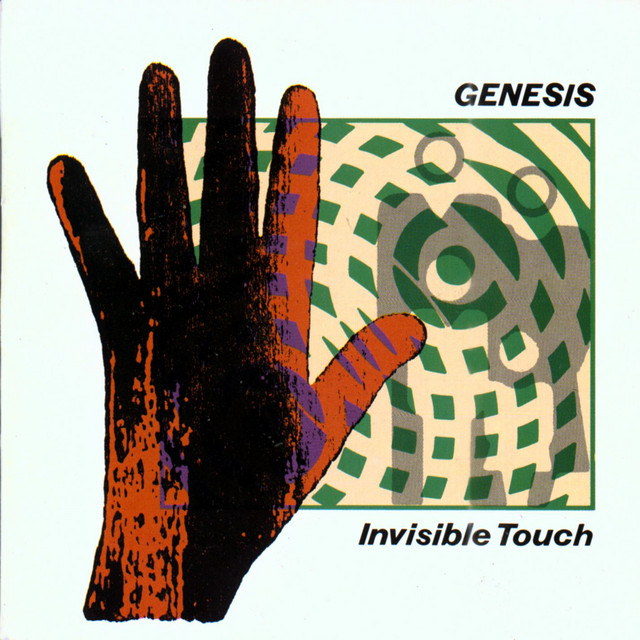
The record was Invisible Touch, and by the time it came out Genesis was a different band from the one that had made Nursery Cryme and Foxtrot in the early seventies — the Peter Gabriel years, all theater and mythology and side-long suites. Gabriel had left in 1975. Steve Hackett left a year after. Collins had moved from behind the drum kit to the front of the stage, and Banks and Mike Rutherford had leaned into the new shape of the group rather than fought it. By 1986 they were selling arenas. Invisible Touch hit number one in the US. It was the first Genesis album to do that.
“Throwing It All Away” was the second single, and it reaches number four. Clean production, David Hentschel co-producing with the band, the sound of a group that had figured out exactly how much space to leave in a mix for a song to breathe on a car stereo. It is a flawlessly built machine.
It’s also about watching yourself destroy something you know you can’t replace, and being unable to stop.
The person in this song is not the one who’s leaving. That’s the thing that takes a few listens to land. There’s no triumphant walkout here, no righteous departure. The speaker is the one watching the other person go, and the question he keeps returning to is not why are you leaving — it’s why can’t you see what this is going to cost you?
“Someday you’ll be sorry. Someday when you’re free, misty memories of me will haunt you when I’m gone.”
You could read that as bitterness. Collins doesn’t sing it as bitterness. He sings it almost gently, like a man who has already moved through the anger and is sitting somewhere on the far side of it, reporting what he knows will happen. The certainty isn’t triumphant. It’s just sad.
And then the other lyric: “We could be eagles, we could be free.”
The word could. Not are, not will be — could. The possibility has already been damaged. They are standing at the edge of it, looking at what they might have been, and one of them is still choosing to walk away. The freedom the song offers isn’t real freedom; it’s the freedom of throwing something good onto the ground and leaving it there. Collins has given this person the full picture, laid it out, named it clearly, and it doesn’t matter.
That’s the part that cuts. Not the loss itself. The fact that the loss was preventable.
There’s a live version from the Invisible Touch Tour — Wembley, 1987, tens of thousands of people — where Collins lets the chorus loose and the crowd comes with him, and for a moment the song sounds exactly like the uplift anthem the melody promises. The arena makes it enormous. And it still doesn’t change what the words are doing underneath all of it.
That gap, between how a song feels and what it actually says, is where this one lives. Banks’s keyboard line is warm. Rutherford’s bass sits easy in the mix. The whole production is smooth and untroubled, and Collins is singing about watching someone dismantle something irreplaceable because they don’t yet understand what irreplaceable means.
Some people figure that out in time. Some people figure it out after.
The song knows which kind this is.