Mr. Jones
Adam Duritz wrote "Mr.
“Mr. Jones” is not a song about wanting to be famous. It sounds like one — I want to be Bob Dylan is sitting right there in the lyric — but what it’s actually about is the belief that being famous would fix the thing that needed fixing. That’s a different want, and a sadder one, and Adam Duritz caught it on paper before fame could test it, which is the only way the song could have been honest.
The story behind it is so plain it almost sounds made up: Duritz and Marty Jones — father of the Counting Crows bassist David Immerglück’s friend, a real man named Marty Jones — spent a night in a bar in San Francisco watching a Spanish dancer, talking about what it would feel like to be somebody. Famous. Loved. Seen. Duritz went home and wrote the whole thing almost immediately. He wasn’t fantasizing about a life he’d lost. He was fantasizing about a life he hadn’t touched yet.
That’s the thing the song never lets you forget, even if you haven’t thought about it in years. It came from a specific night, a specific bar, a specific somebody standing next to him who wanted the same thing he wanted. The desire in it isn’t abstract. It’s two guys at closing time, not quite drunk enough to stop meaning it.
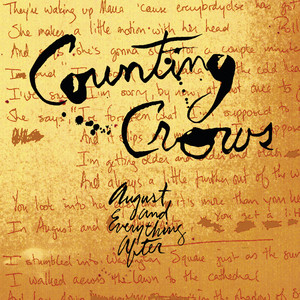
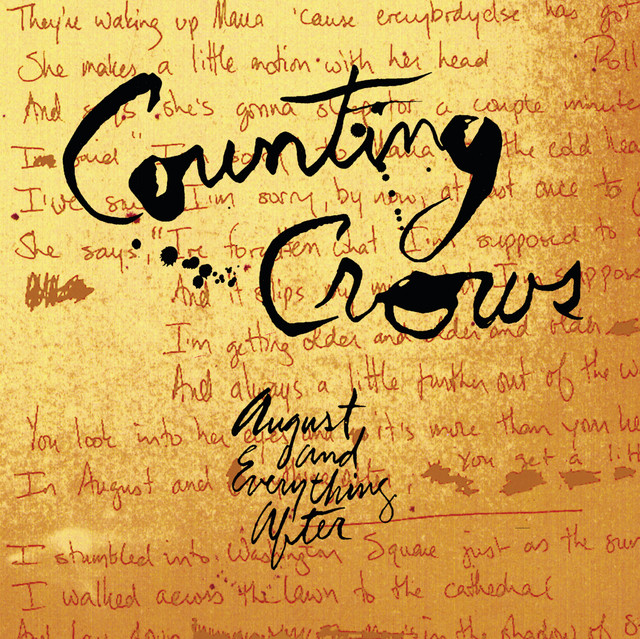
T Bone Burnett produced August and Everything After in 1993, recording most of it at Shrine Auditorium in Los Angeles and Fantasy Studios in Berkeley. The album sounds the way it sounds — that particular kind of open and aching, like a room you can’t quite fill — because Burnett kept pulling the band back from the edge of polish. He had a gift for making records that breathed. David Bryson’s guitar on “Mr. Jones” does something most rock radio hits didn’t bother to do then: it settles in and waits. It doesn’t push the song forward. It lets the song arrive at its own pace.
The whole record was like that. Quiet in the way that large things are quiet. It sold four million copies in the United States, which is the kind of number that sounds like a statistic until you remember that four million people heard this and decided to own it. Most of them had nights like that bar night. Most of them knew what it felt like to want something enormous and unnamed.
Duritz has said he dislikes the song, or at least what the song became. He’s said it in interviews with enough regularity that it stopped being a passing comment and started sounding like something he actually had to carry. The irony isn’t lost on him, and he’s never pretended it was: he wrote a song about wanting to be famous, became famous because of it, and then had to sing it every night for the rest of his life. The dream came true and then the dream became the job.
That’s not a complaint worth much sympathy from the outside — and he hasn’t really asked for any — but it changes how the song sounds if you know it. When he sings I want to be Bob Dylan, he’s singing it now from a place Bob Dylan himself had to eventually arrive at, which is the place where the hunger has been fed and what’s left is something stranger and harder to name.
“When everybody loves me, I will never be lonely.”
The line is a wish and a mistake at the same time, and Duritz knew it even when he wrote it. That’s the ache the song runs on — the specific kind that lives in young people who are good at things and have not yet learned that being good at things doesn’t reach all the way down to where the ache lives.
“I am nothing. I am nothing.”
He keeps coming back to that line. The voice rising and then falling back into it. The song can’t escape it because the man who wrote it couldn’t escape it either — not before the fame, and not, from what he’s suggested over the years, reliably after it.
There is something worth saying about the gray guitar. Near the top of the song Duritz sings about a gray guitar, and it’s such a specific detail in an otherwise wide-open song that it always snagged me. Not a great guitar. Not a loud guitar. A gray one. The adjective is a color but it functions like a mood. It’s the guitar of somebody who hasn’t made it yet, hasn’t bought the good one, is still playing the instrument that just barely does the job.
Marty Jones probably had a gray guitar. Or something like one. Most people in that bar that night probably did.
The Counting Crows didn’t stay in the place the song came from. They couldn’t — nobody does. But August and Everything After got preserved the way certain records do: not as nostalgia, exactly, but as evidence. Evidence that there was a specific moment, a specific hunger, a specific pair of men watching a dancer in a San Francisco bar and wanting the whole world to know their names.
Duritz got what he wished for. Whether it was what he wanted is a different question, and “Mr. Jones” has been asking it, quietly, every time it plays.