Give Me Back My Hometown
The last sound in "Give Me Back My Hometown" is not a guitar swell or a fade.
The last sound in “Give Me Back My Hometown” is not a guitar swell or a fade. It’s Eric Church singing the title line one more time, alone, with almost nothing behind him — and then stopping. Not resolving. Just stopping, the way a man stops talking when he’s said everything he has to say and knows the other person can’t give him what he asked for anyway.
That’s the whole argument of the song in four seconds of silence.
Church wrote it about leaving — or rather, about what leaving costs. Not the cost you pay when you go, which you can at least choose. The cost you pay when you come back and find that the place you were trying to return to is gone in a way that has nothing to do with geography. The buildings are there. The streets are there. Your name is still on things. But it’s been colonized by the memory of another person, and you can’t walk through it without her, and that means it isn’t yours anymore.
“She’s got the church, she’s got the bar, she’s got the corner of every street.”
That’s an inventory. He doesn’t say she ruined it, doesn’t say she took it. He says she has it — like a deed, like a claim, like something that transferred without his signature. He can drive through but he can’t inhabit it. The town is still there. He’s the one who’s been displaced.
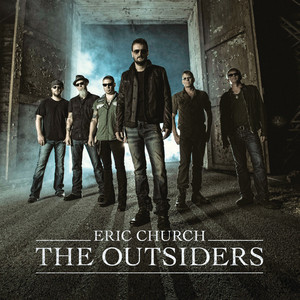
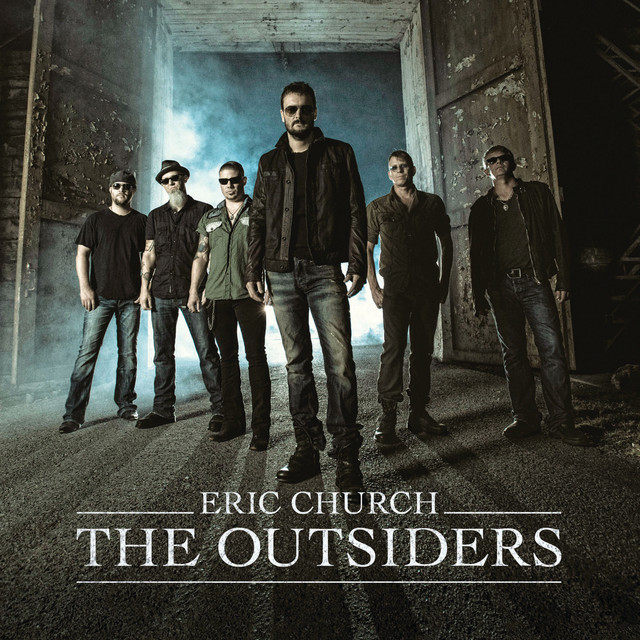
The Outsiders came out in February 2014 and it was a strange record for mainstream country radio at the time — harder-edged, longer, weirder, deliberately out of step with the bro-country that was cresting that year. Jay Joyce produced it, as he has produced almost everything Church has made, and Joyce is the kind of producer who thinks in textures rather than formulas. The record had distortion and drum loops and passages that would have been laughed out of a Nashville pitch meeting. “Give Me Back My Hometown” was the commercial concession, the one the label could point to — four minutes of something that sounded like radio without being soft, something with an actual melody and a verse-chorus structure and lyrics that didn’t require liner notes.
But calling it a concession undersells it. Joyce and Church built the song around space. The verses have room in them. You can hear the distance Church is describing. And when the chorus arrives it doesn’t arrive triumphant — it arrives like a request made to the wrong person, with just enough doubt to make it land.
What Church is doing here is older than country music. It’s the thing Thomas Wolfe put in the title of his novel — you can’t go home again — except Church doesn’t argue it abstractly. He makes it concrete. He gives you the church and the bar and the corner of every street, the specific topography of a small place where everything means something and nothing is neutral. If you are from somewhere small enough that you know all the corners, you know exactly what he’s describing. The town becomes a map of the relationship. You can’t look at the map without seeing her on it.
The song was written with Luke Laird and Barry Dean, two Nashville writers who between them have touched enough hits to know the difference between a song that describes a feeling and a song that produces one. This one produces it. That’s the craft. You don’t think about whether Church is singing about a real person or a composite or a pure invention, because the feeling is too accurate to argue with.
He recorded it in Nashville with Joyce engineering the kind of restraint that doesn’t come naturally to big studio records. No string swells. No background vocal army. The band does what the song needs and then gets out of the way. And Church, who can belt with the best of them and often does, mostly doesn’t belt here. He holds back. There’s one moment near the end where his voice lifts and you think he’s going to open it up — and then he doesn’t. He pulls it back down. That choice is the point. The man asking this question isn’t demanding. He’s just tired.
“Give me back my hometown.”
He knows she can’t. That’s why he asks like that — not like an accusation, like a wish made to something that doesn’t grant wishes. The town is hers now, or it’s no one’s, or it’s just a place with roads and corners and a church and a bar, and none of those things will ever feel the way they felt before. That’s the tax. You don’t know what you owe until you try to go back and can’t.
The silence at the end just sits there and confirms it.