Springsteen
Eric Church wrote "Springsteen" about a girl he'd never seen again, but he named the song after a man who had nothing to do with her.
You have one of these too — a song that comes on and drops you straight back into a moment you never planned to keep. A summer night, a face, a car you no longer own. For Eric Church it was “No Surrender”, seventeen years old at a bonfire somewhere in North Carolina, a girl he’d never see again. He wrote a song about all of it and named it after a man who had nothing to do with her.
That’s the whole trick of it. “Springsteen” is not about Bruce Springsteen. It’s not a tribute or a reference or an homage. It’s about the way a particular song — any song — can become the container for a particular moment, and how afterward the two things are inseparable. You can’t hear one without living the other. In Church, the two things are fused together like bone.
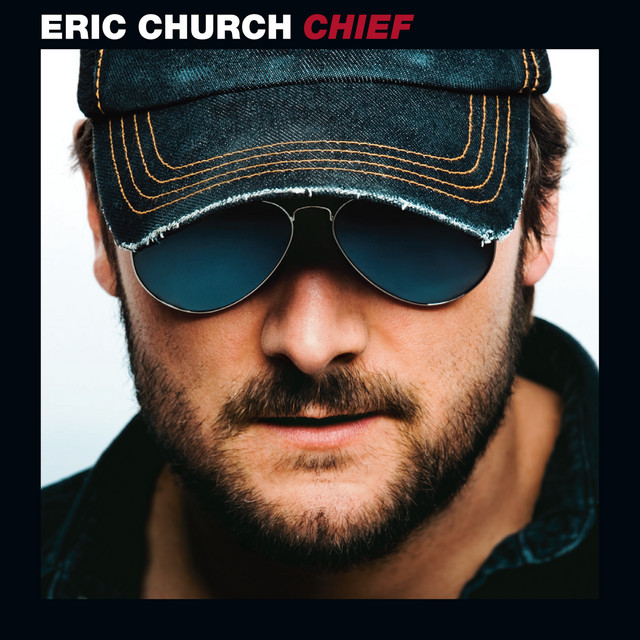
The song came out in 2011 on Chief, the album Church made when he finally stopped worrying about whether he fit anywhere. He’d spent the back half of the 2000s on the edges of Nashville, getting dropped, starting over, playing to small rooms. By the time he cut Chief he had something to prove and knew exactly how to prove it — not by reaching toward radio, but by going back to the things that made him want to do this in the first place. Which, apparently, included a bonfire and a girl and a radio playing loud.
What Church understood, which is harder to articulate than it sounds, is that the memory isn’t really about the girl. The girl is the anchor, but the song is the medium. “When I think about you I think about 17, I think about my old jeep, I think about the stars in the sky.” He’s not even sure which of those is the real thing — the girl, the car, the night, the music. They’re all part of the same event now, and you can’t pull them apart without losing the whole picture.
“Funny how a melody sounds like a memory.”
That line is doing a lot of work in very little space. It’s not trying to be clever. It’s just true — the way a melody can collapse twenty years into a single instant, the way your body responds before your mind does, the way you’re suddenly seventeen years old before you even realize the song has started. Church didn’t over-explain it. He just said it plain and kept moving.
The production is worth paying attention to. Jay Joyce built the track around a guitar part that feels like it could be from any era — no heavy pedal steel, no fiddle-forward arrangement, no signaling that this is a country song so relax. It breathes the way a memory breathes, which is to say unevenly, with empty space in places where you’d expect fullness. The drums don’t crowd the verse. The electric guitar sits back. Church’s voice gets room to be uncertain, which is the right tone for a song about something you can’t quite hold.
By the time the chorus opens up, it earns the swell because it’s been patient. That’s a craft decision. You feel like something has opened, not because the production suddenly got big, but because it waited to get big until you needed it to.
“Springsteen” went to number one on the country charts after spending longer than almost any song in memory climbing there — sixty-two weeks on the Hot Country Songs chart before it reached the top, a slow accumulation of listeners who found it one by one and held onto it. Church said in interviews that he thought the label was going to shelve it, that it was too specific, too interior. He was wrong about that.
Songs that are too specific are almost never too specific. They’re just specific about the right things. The bonfire, the Jeep, the song on the radio — those are not universal details, but the feeling they’re pointing at is universal, and Church trusted that readers would bring their own bonfire. Their own Jeep. Their own song that turned into something it wasn’t supposed to be.
That’s what Springsteen always did too, for what it’s worth. He wrote about specific highways and specific towns and specific girls in ways that made people from nowhere near New Jersey feel like he’d written them a letter. Church knew that. The name of the song isn’t a coincidence. It’s a dedication — not to the man, but to the idea that a specific song can carry a whole life inside it if you let it.
The last chorus Church sings the name out loud: “Springsteen.” Just the name, over the swell. No explanation. He doesn’t need one. By then you understand exactly what he means, even if your bonfire had a different soundtrack. Even if it was someone else entirely playing on someone else’s radio. The song finds you wherever you parked it.
Some memories don’t live in the moment. They live in the song that was playing during the moment, and the moment only comes back when the song does. Church got stuck with “No Surrender” at seventeen and spent the next few decades carrying it around in the back of a Jeep he no longer owned.
That’s not nostalgia. That’s just how music works on people who let it.