Breathe In, Breathe Out, Move On
Mac McAnally wrote this song after Katrina.
You know the morning this song is for. The storm has taken everything it’s going to take, the sky has gone clear, the damage is still wet, and you are still standing — which is both a mercy and its own kind of weight. You don’t know what to do next. Somebody wrote a song for exactly that hour.
That somebody was Mac McAnally, and the storm — not the subject exactly, but the occasion — was Katrina. He handed the song to Buffett, and Buffett sang it like he had lived every word of it. Which, by then, he had. He grew up in Pascagoula. The Gulf Coast wasn’t a brand for him — it was the place his family came from, and Katrina had just torn most of it apart.
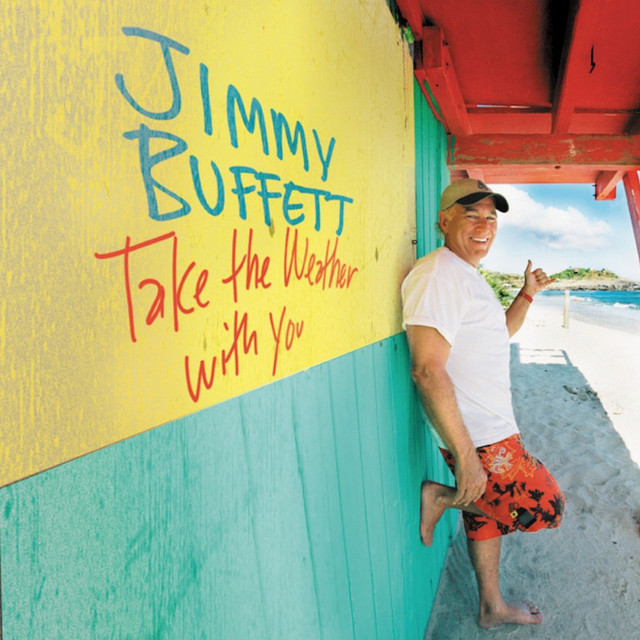
The song came out in 2006 on Take the Weather with You, a record that arrived one year after the storm. Buffett had spent time in the wreckage. He’d done benefit concerts, written checks, shown up in person to places the cameras had already left. And then he put this song on the record — not a protest, not a lament, not even a tribute in any conventional sense. Something quieter than all of those.
“I’ve been trying to bring some closure to this chapter in my life.”
That’s the whole thing right there. Not we shall rebuild, not the spirit of the Gulf endures, not any of the language that gets used when politicians walk the rubble line. Just a man trying to close a chapter. The scale of the feeling and the smallness of the word closure sitting next to each other — that gap is where the song lives.
McAnally is one of the great undersung craftsmen in American music. He plays guitar on sessions the way a carpenter builds a good staircase — you notice it’s solid and beautiful and you don’t stop to think about who built it. He’s won CMA Musician of the Year more times than most people can name off the top of their heads. He wrote “Back Where I Come From,” which Kenny Rogers recorded and which is probably the most honest song ever written about the feeling of returning to the place that made you. He knew what the Gulf meant to people who weren’t just visiting it.
And he wrote this song not as an outsider documenting a disaster but as somebody working through the same grief, trying to find what comes after the part where you stand in the wreckage and don’t know what to do next. The answer the song arrives at is almost plain to the point of embarrassment — breathe in, breathe out, move on — three verbs in a row, no metaphor, no elevation. Just the thing you actually do, stated as simply as it can be stated, repeated until it becomes something you can hold onto.
There’s a version of this song that’s about survival after catastrophe. But Buffett sings it like it’s also just about getting through. About the accumulation of ordinary losses — the kind that don’t make the news, the ones you can’t point to on a map — and the practice you develop, over a long life, of taking the next breath and the next step when standing still isn’t really an option.
He was fifty-nine when this record came out. He had been playing music for thirty-five years. He had buried friends. He had watched genres he loved get swallowed and reshaped. He had made his peace with the shape his career had taken — the parrothead empire, the margarita mythology — and he had kept writing songs that the mythology didn’t always leave room for. This was one of them.
“And there’s a church it could be any church on any given Sunday.”
That line. McAnally slips it in and doesn’t make anything of it. Any church. Any Sunday. The ordinariness of it is the point. Not a specific place of reckoning, not a moment of dramatic spiritual arrival. Just — people showing up, week after week, breathing in, breathing out, doing the ordinary work of continuing to live. Faith as practice rather than event. That’s harder to write than it looks.
The record’s full title is Take the Weather with You, which is its own quiet thesis. You don’t outrun the weather. You don’t wait for it to pass. You take it with you and keep moving. Buffett knew this better than most. The Gulf Coast had given him the frame through which he saw the whole world, and in 2005 the Gulf Coast had been torn up from the inside, and the only honest response he could find was a song that said — yes, it happened, and now breathe, and now move, and now the next breath after that.
The song never got much radio play. It wasn’t built for that. It’s built for the morning after something has gone wrong, when the sky is too blue for what just happened and the air is still and you are standing in it, breathing, which is all you can do and which turns out to be enough.