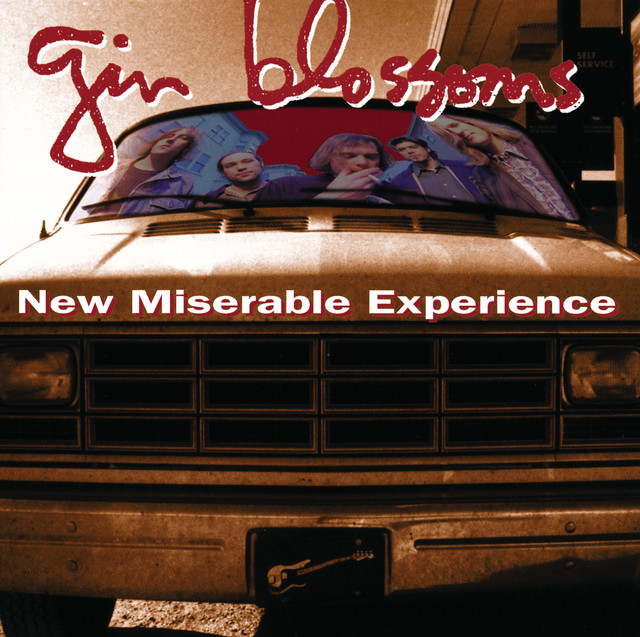
Hey Jealousy
Doug Hopkins wrote "Hey Jealousy" and then got fired before it made the Gin Blossoms famous.
“Tell me, do you think it’d be all right if I could just crash here tonight?”
Doug Hopkins wrote that line, and he got fired before it made the Gin Blossoms famous. He wrote the hook, handed it to the band, the band handed it to A&M Records, and by the time the song was on the radio and everyone in America was singing along to that guitar line on the way to work, Doug Hopkins was not in the group anymore. They let him go in 1992 — his drinking had become the kind of problem that ends things. The album came out. The song became the one that opens the door for all the other songs. He was outside the door.
He died in December 1993, a self-inflicted gunshot wound, thirty-two years old.
The thing about “Hey Jealousy” is that it sounds like hope. That jangly, rolling guitar intro sounds like a Friday afternoon, like a window rolled down, like something good about to happen. The production — done mostly in Phoenix, the Gin Blossoms building their sound in a desert city where the alternative rock boom was happening somewhere else — has this warmth to it, this open-air quality, like the song is taking place in a parking lot after a show when everyone is still happy and no one has gone home yet.
And then you actually listen to what it’s saying.
“Tell me, do you think it’d be all right if I could just crash here tonight?”
That’s not hope. That’s a man with nowhere to go, asking someone he used to love if he can have the couch. The verses are a catalog of wreckage — the money gone, the chances missed, the clean life that didn’t stick — and Hopkins keeps offering the same bad trade: if you take me back, if you let me in, everything will be fine. He doesn’t believe it. The song doesn’t believe it. But the guitar is so bright, so genuinely joyful in how it rings out, that you almost believe it alongside him.
That’s the craft. The dissonance between what the song sounds like and what the song is saying is not an accident. It’s the whole argument. Some people are their most charming when they’re at the bottom of the bottle and making promises they can’t keep. The music is doing that. The music is the charm. The words are the truth.
Robin Wilson sang it. He sang all of it, after Hopkins was gone — performed the song on tour for years, watched it become the thing that defined the band, carried it. That has to be a complicated thing to carry. The song is a message in a bottle from a man who didn’t make it out, and Wilson has spent three decades singing it to audiences who mostly know it as a good-time singalong.
He’s talked about this in interviews with a honesty that’s worth respecting. The Gin Blossoms tried to help Hopkins. They’d made his sobriety a condition of staying in the band and he couldn’t hold it. They weren’t wrong to do what they did, and they also watched a friend die anyway. There’s no clean version of that story where everybody did right and it still ended this way. It just ended this way.
Hopkins wrote the song about jealousy the way drinkers often write about drinking — not as condemnation, not as celebration, but as a companion. The jealousy in the title isn’t romantic jealousy, not exactly. It’s the way a person can be jealous of their own past. The version of themselves that was easier to love, before the years got at them. If you don’t expect too much from me, you might not be let down. That’s not a seduction. That’s a disclaimer. That’s a man telling you exactly who he is before you get any closer, because he’s done this enough times to know how it goes.
The miracle of the song is that even with the disclaimer, even with the inventory of failure laid out right there in the lyrics, you still want to say yes. You still want to believe the turn is coming. The guitar says it’s coming. The guitar is lying, but it’s the most convincing liar in the room.
I keep thinking about what it means that this song became, genuinely, one of the feel-good tracks of the nineties. That it showed up in commercials, in movies, at bars and backyard parties and proms. That it became shorthand for a certain kind of uncomplicated good time. Doug Hopkins wrote a song about being lost and it became a song about having fun, and he never lived long enough to see either version of what it turned into.
The guitar rings out at the end. Warm, bright, completely alive. It sounds like everything is going to be fine.
That’s the most devastating part of all of it. It really, genuinely sounds like everything is going to be fine.