Cry Freedom
Dave Matthews was born in Johannesburg. The last song on Crash is the one where that childhood comes closest to the surface.
Dave Matthews was born in Johannesburg.
That is the fact underneath “Cry Freedom,” and it sits there quietly, the way the song sits at the end of Crash — last track, nearly six minutes, after the singles have already done their work. Most people who bought the record in 1996 got to it late, if they got to it at all.
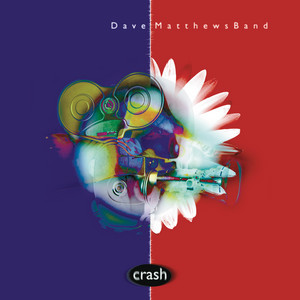
Crash came out in April of 1996, recorded at Bearsville Studios in Woodstock, New York, with Steve Lillywhite producing — the same man who made the first two records, who understood by then that the way to get this band on tape was not to sand off the edges but to find a room big enough to hold them. The band that walked into Bearsville was still a bar band that had outgrown bars. Within eighteen months they would be an arena act. Crash was the record where they had to decide what they were when they weren’t improvising, and most of the album decided toward the accessible: “So Much to Say,” “Too Much,” “Crash Into Me” — tight, melodic, radio-shaped.
Then they put this at the end. Sparse, by their standards. Acoustic guitar doing the real work. Boyd Tinsley’s violin threading through instead of leading. LeRoi Moore’s saxophone arriving late and low, more presence than punctuation, the way a good session player leans into the corner of a song without announcing himself. Carter Beauford — one of the best drummers in the country — spends most of these six minutes doing the quietest work he does on the whole record. Nobody is showing off. The song won’t allow it.
The title comes from the 1987 Richard Attenborough film — the one about Stephen Biko and the journalist Donald Woods, about South Africa under apartheid, about what it costs to speak when speaking is dangerous. Matthews didn’t reach for that title from a distance. He grew up in South Africa. His father died when he was ten, and his family moved between South Africa and the United States through his childhood — in and out of a country that was openly, officially telling certain people they were worth less than others. He doesn’t lecture about any of this in the song. He just sings the word freedom like a question instead of a declaration.
“Who are we? Where do we go? We’ll be alright, maybe.”
Maybe. Not the fist-in-the-air kind of freedom. Not the arena kind, though the arenas were coming. The uncertain kind — the freedom of someone who has seen what a country can take from people and is not ready to promise it works out.
Matthews wrote most of the Crash material while the band was still playing every night, which means these songs were road-tested before they were recorded, shaped by what the crowd needed. “Cry Freedom” sounds like the exception. It sounds like a song they needed to play for themselves.
“Cry freedom, cry freedom, come on.” Not a command. A plea, and on some nights a prayer.
The last two minutes don’t resolve. They release. Beauford finds a little more space. Tinsley lifts. The guitar keeps its rhythm like a heartbeat slowing after a long run. Then it ends, quietly, the way a conversation ends when everything that needed saying has been said and there’s nothing left but the silence after.
Fans have argued for decades about which record is the one — Under the Table and Dreaming if you were there early, Crash if you came with the singles, Before These Crowded Streets if you stayed. “Cry Freedom” doesn’t enter that argument. It sits at the end of the second record, not asking to be anybody’s favorite. It asks one thing: to be heard all the way through.
I keep coming back to where it starts. A kid born in Johannesburg, moved back and forth across an ocean, his father gone at ten, grew up and stood in a studio in upstate New York and sang the word freedom — and he would not sing it as a sure thing.
He left the maybe in.