I Hold On
The truck in the song is a 1999 Chevy.
The truck in the song is a 1999 Chevy. Dierks Bentley says so in the video — it’s his actual truck, the one he drove from Phoenix to Nashville when he was twenty-two and didn’t know if any of it was going to work out.
That detail changes the song.
Because “I Hold On” could have been a catalog of generic heirlooms — the old guitar, the pickup, the worn-out boots — and it would have been a decent country song, the kind that gets cut by a dozen artists a year. But Bentley wrote it about specific things that survived, and the truck is the proof of that specificity. He still had it in 2014, fifteen years later. He drove it to the set. That’s not a prop. That’s a man who kept something when he didn’t have to, because letting go of it would have been letting go of who he was when he started.
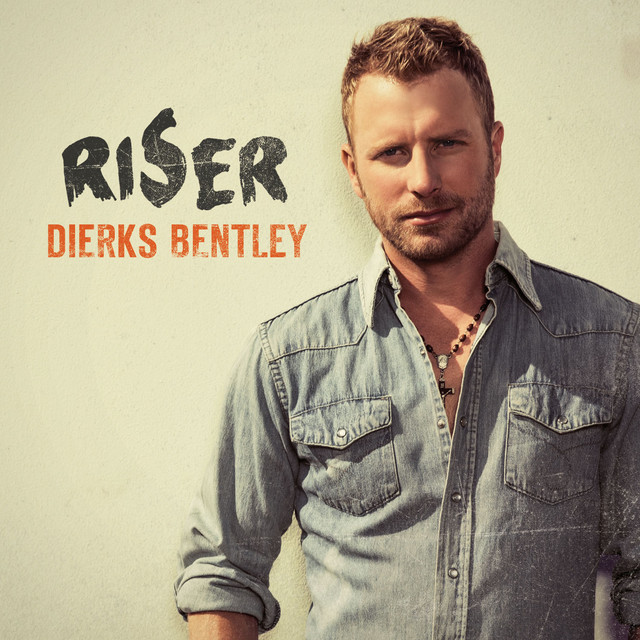
The song was released as the first single off Riser, and it got a little buried in the noise around the album’s title track — which is its own kind of story, about coming back from something, about the way people survive. But “I Hold On” is the quieter, more durable statement. Where “Riser” is about getting up, this one is about refusing to put certain things down in the first place.
The structure of the song is simple almost to a fault — a list of what he won’t release. His father’s old guitar. The truck. Faith. Love. But the list earns its sentiment because it keeps getting more specific, more costly. An old guitar is easy to keep. Faith is harder. A relationship — “I still believe in us” — is hardest of all, because that one requires another person to be holding on from the other side.
“I hold on to what I’ve been given, I hold on to what I know is true.”
That’s the chorus, plain as a fence post. There’s no ornament in it. It’s just a man naming the things he refuses to drop — as if the act of naming them out loud is itself a form of grip.
Bentley co-wrote the song with Jon Nite and Ross Copperman, and Copperman also produced the record. The production does something right: it doesn’t swell past where the song needs to go. There’s no swelling gospel choir, no key change designed to force tears. The guitar stays up front. The arrangement trusts the lyric instead of trying to carry it. That’s a choice that takes a kind of discipline in Nashville, where the temptation to pile on is always there.
What comes through in the recording is something that’s hard to manufacture: the sense that the singer actually means it. Bentley had been in Nashville for fifteen years by the time this album came out. He had hits, he had a family, he had survived the industry’s attempts to define him — the dirt-road party guy, the bluegrass-leaning outlier, the mainstream compromiser. He kept adjusting, kept insisting on being something he recognized in the mirror. That biography is in the vocal here, whether he intended it or not.
The truck is the thing that anchors all of it. Because it’s easy to talk about holding on to faith and love in the abstract. But a 1999 Chevy is not abstract. A 1999 Chevy has a specific smell and a specific set of rattles and a specific way the seat sits when you’ve been the only one driving it for a decade and a half. It’s a physical record of a younger version of yourself — the one who didn’t know the outcome yet, who drove east and hoped.
There’s something in the American imagination that has always understood keeping old things as a moral act. Not hoarding, not nostalgia exactly — more like witness. The refusal to let certain objects get swallowed by time is a refusal to pretend those moments didn’t happen, that you didn’t come from somewhere, that you didn’t have to make the drive.
Bentley has made records that go harder, that swing wider, that try more interesting things. But this one lands differently, because it isn’t trying to do anything except tell the truth about what he won’t let go. The guitar, the truck, the faith, the us.
He drove that truck to Nashville when he was twenty-two and scared, and he still had it when he was thirty-eight and had everything he came for, and the song is about understanding that those two things are connected. The keeping is part of the arriving.