Rocket Man (I Think It's Going to Be a Long, Long Time)
“And I think it’s going to be a long, long time.”
Leave that line where it is for a minute. Start in a car instead — night, the English countryside, Bernie Taupin in the passenger seat watching a shooting star track across the sky. What he found himself thinking about was a man who goes to work the way a commuter goes to work, except that the commute is space, the destination is Mars, and the loneliness of the job is so total there’s almost no language for it. He had the lyric finished before they arrived wherever they were going.
The order of operations matters here: the words existed before Elton John had written a single note of music. That’s how they’ve always worked — Taupin hands over a finished page, Elton sits down at the piano and finds the melody inside it, sometimes in minutes. For this one he set it in a key that feels like open air, and the arrangement — built at the Château d’Hérouville outside Paris in May 1971, the same sessions that gave the album its name — is one of the most patient things in early seventies rock. Davey Johnstone on acoustic guitar. Dee Murray on bass. Nigel Olsson on drums. Paul Buckmaster doing the orchestration, pulling strings up slow from underneath the piano like something rising through the atmosphere. Nobody is in a hurry. The song clocks out at four minutes and forty-one seconds and uses almost all of it just to let the feeling expand.
What Taupin understood, and what the song gets absolutely right, is that loneliness at scale is still just loneliness. The astronaut in the lyric isn’t a hero. He’s a man with a job that takes him away from home for months at a time, who calls his wife before launch, who burns out his fuse alone up here, who thinks about his kids. He’s a salesman with an extraordinary itinerary. The cosmic backdrop doesn’t elevate the feeling — it reduces it, which is the whole trick. You go far enough out into space and the distance between you and the people you love stops being measurable, and then it stops mattering whether it was Mars or Milwaukee that separated you.
Taupin has said the song owes something to Ray Bradbury — to that mid-century science fiction that was less interested in technology than in the psychological texture of being the kind of person who goes to space. What does that do to a person. What does that do to a marriage. Whether the adventure is worth the silence that comes with it. Bradbury asked those questions in the forties and fifties. Taupin asked them again in 1971 and found they were still open.
Which brings the opening line back. “And I think it’s going to be a long, long time” is the entire song; everything else is the frame around it. The verse about packing bags and missing his wife, the detail about Mars being cold — all of it exists to set up that one flat statement, which doesn’t even close the thought properly. He thinks it’s going to be. He’s not sure. He’s up there doing his job, sitting with the arithmetic of the distance, and the best he can do is a guess that the gap is not closing anytime soon.
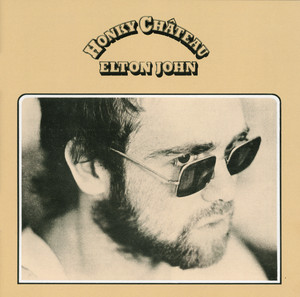
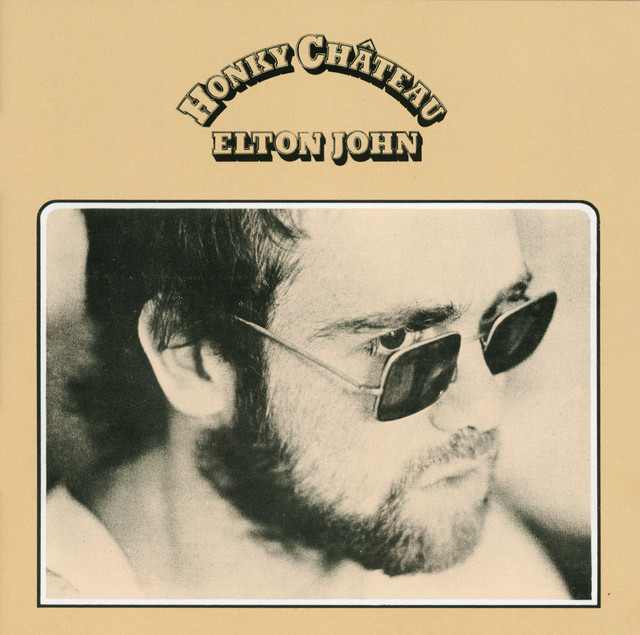
By the time “Rocket Man” was released in April 1972, Elton John was already the biggest thing in the world, or close to it — Honky Chateau would be his first number-one album in the States. The machinery of fame was working at full speed, the tours getting longer, the shows getting bigger, the distance between the man on the stage and the people who loved him when he was just Reginald Dwight from Pinner growing in ways that were hard to name out loud. He never said the song was about that, and he didn’t need to.
The whole thing started smaller than any of it: a car moving through the dark, a star falling somewhere over England, and a man in the passenger seat who had the words done before the ride was.