Livin' Our Love Song
Jason Michael Carroll recorded “Livin’ Our Love Song” in one take.
That’s the detail his producer Nathan Chapman mentioned in a 2007 interview — that Carroll came in, sang it straight through, and the room went quiet after. Not the quiet of uncertainty. The quiet of people who know they just heard something they don’t need to improve. Chapman, who would go on to produce Taylor Swift’s early records, knew the difference between a take that was technically clean and a take that was done. He kept it.
The song itself is almost defiantly simple. There are no metaphors reaching for the sky, no clever reversals, no production tricks designed to hide the absence of a real melody. Carroll just describes a life — a truck, a house, a front porch, a woman he loves, Sunday mornings, kids maybe, the whole ordinary architecture of a life that looks modest from the outside and feels enormous from the inside. He describes it like he’s showing you around a house you haven’t visited yet, and he’s proud of every room.
“We ain’t got a mansion, got a front porch view.”
That line is doing more than it sounds like. Country music in 2007 was not short on trucks and front porches — they were practically genre furniture by then, showing up in every other song whether they earned their place or not. What Carroll does differently is refuse to dress the front porch up. He doesn’t say it’s enough in spite of everything. He doesn’t need to. The song proceeds from a settled place, a man who has looked at his life and found that it fits him, and so he simply describes it without apology or inflation.
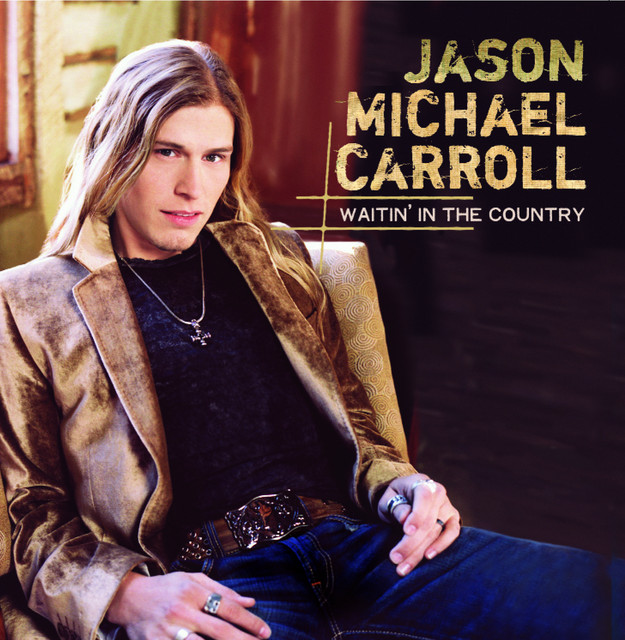
Carroll came out of Youngsville, North Carolina — not Nashville, not a music industry family, not a club circuit that was trying to build him into something. He waited tables. He sang wherever he could get a microphone. He drove himself to Nashville without a deal, without connections, and started playing the industry the only way a guy without leverage can play it: by being impossible to ignore in a room. He eventually got in front of the right people and signed with Arista Nashville, and Chapman got handed the debut record — Waitin’ in the Country — and the whole thing was built around voices rather than arrangements. The instrumentation is warm and unhurried. It doesn’t compete with Carroll’s vocals; it just keeps them company.
His voice is the kind that country radio in the mid-2000s was not built to accommodate — big, earnest, without a hint of grit or irony. It doesn’t sound like a performance. It sounds like someone who is simply telling you something true and has enough faith in the truth of it that he doesn’t dress it up. That’s harder than it looks. Most singers in that era were working angles — working the rasp, working the cool, working the smirk. Carroll just opened his mouth and sang directly at you.
The song went to number one in August 2007. That’s a fact worth sitting with for a second, not because chart position proves anything about quality, but because it says something about what an audience will respond to when they’re given the chance. The summer of 2007 was not a moment crying out for simplicity — the radio was full of big glossy productions, and the default mode was to make everything sound large. “Livin’ Our Love Song” is small by design. It is deliberately, structurally small. And it connected anyway, maybe because of that, maybe because there are more people living ordinary lives on front porches than the industry tends to remember.
Carroll never quite replicated the moment. The follow-up singles charted respectably, but the record didn’t reset the terms the way debut albums sometimes do when they hit that clean. He’s spent the years since as a working artist — touring, releasing music independently, building the kind of career that doesn’t generate magazine profiles but does generate the kind of fans who drive four hours to see a show. There’s something honest about that, something that rhymes with the song itself.
The thing about a song like this is that it doesn’t make a promise the listener has to fact-check. It doesn’t say love is forever, or that the front porch never needs repainting, or that the ordinary life is secretly the extraordinary one if you just squint right. It says: this is what we’ve got, and I know what it is, and I’m not sitting here wishing for anything else. That’s not naivety. That’s a kind of clarity that most people spend a long time arriving at.
Chapman kept the first take because it already had that clarity in it. There was nothing left to find.