Take Me To The Pilot
Bernie Taupin wrote the lyrics before he had any idea what they meant.
Though I search myself, it’s always someone else I see.
Nobody has ever offered a satisfying account of that line — or of what a pilot is, or why you’d want to be taken to one. Not Bernie Taupin, who filled the page in his bedroom in Lincolnshire and handed it across before he had any idea what it meant. Not Elton John, who set it to music without much discussion about what the words were doing — that’s just how the two of them worked in the early years. Not any interviewer who’s pressed either of them on it in the fifty years since. The lyrics are not obscure the way Dylan is obscure, working behind a glass you could clean if you tried hard enough. They’re obscure the way a dream is obscure — internally logical, emotionally pressurized, resistant to the morning.
What matters is that Elton believed them anyway.
The version most people know isn’t from a studio. It’s from a live broadcast out of A&R Recording Studios in New York City on November 17, 1970 — a two-hour radio show for WABC-FM, with just Elton on piano, Dee Murray on bass, and Nigel Olsson on drums. No overdubs. No strings. No production cushion. The tape went out over the air and then became the album, titled after the date. Elton was twenty-three years old, barely known outside Britain, playing his second tour of America, and he and his two bandmates walked into that room and played like they were trying to burn it down.
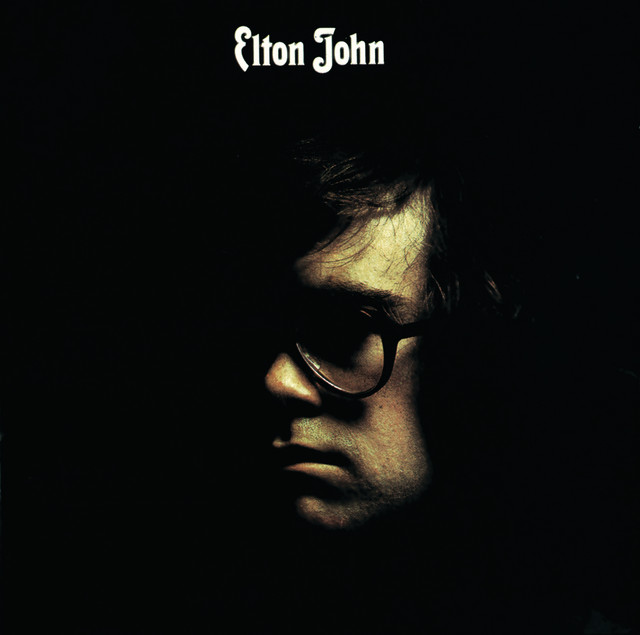
The recorded-live version of “Take Me to the Pilot” runs nearly six minutes. The studio cut from Elton John a year earlier is tighter, more arranged, correct in all the ways a first album track is supposed to be correct. The live version is something else. It’s a young man who has figured out that he can do this — that the piano can hold more than the piano is supposed to hold, that the room will follow him wherever he decides to go. You can hear that knowledge in the way he leans into the middle section, the groove dropping down and then building back up through pure refusal to stop climbing.
Dee Murray and Nigel Olsson deserve to be named in every sentence about this album. Murray’s bass is the architecture. When Elton goes up, Murray holds the floor. Olsson plays the kit like a man convinced that this is the show that matters — every fill placed with the kind of conviction that isn’t technique, it’s belief. The three of them had been together less than a year when they played this set. They sound like they’d been playing together since they were born.
The lyrics don’t resolve, and it doesn’t matter. Though I search myself, it’s always someone else I see. Something is chasing that line — some restlessness in the narrator that the music turns into forward motion instead of paralysis. That’s the trick of the song. Taupin gave Elton a lyric full of searching and confusion and longing pointed at something unnamed, and Elton took it and played it as forward motion. Not an answer. An engine.
There’s a school of thought that says art should mean something — that lyrics ought to point toward a coherent idea you could defend in a sentence. This song argues against that school by existing. Nobody knows what the pilot is. The song doesn’t care. It cares about what it feels like to need to be taken somewhere, to feel the urgency of direction without knowing the destination. That feeling is not small. That feeling is most of being young, and a lot of being alive at any age.
Elton John in 1970 is worth sitting with for a moment, because the story gets loud fast and it’s easy to skip past this part. He is about to become famous in a way that almost nothing can prepare a person for — the feather boas, the platforms, the stadium crowds, the sunglasses bigger than some European nations. All of that is coming. In November 1970, in a studio on Seventh Avenue with a three-piece band and a radio antenna, none of it has arrived yet. There’s just a kid at a piano who has been handed a page of words he can’t fully explain, and he plays them like they’re the most important thing he’s ever been given.
That version of Elton John — the one on 17-11-70, loose and unselfconscious, working out what he could do without a safety net — is the one that earns everything that comes after. You hear it in the way he plays the outro, the piano finding one more place to go when you think the song is done, pushing the band up with him, wringing one more climb out of a set of chords that had already given everything they had.
He didn’t know what the song meant. He played it like he did.
That turned out to be enough.