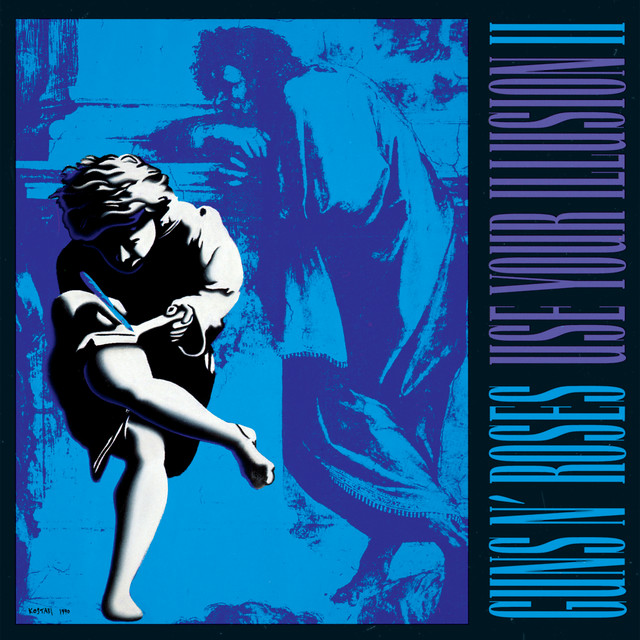
Knockin' on Heaven's Door
Bob Dylan wrote "Knockin' on Heaven's Door" in four minutes.
Bob Dylan wrote “Knockin’ on Heaven’s Door” in four minutes. That’s not a boast — that’s almost the problem with covering it. The song is so simple, so skeletal, that there’s almost nothing to grab onto. Two verses. A chorus that repeats until it means something. And then it’s over, and you’re left with the image of a dying sheriff handing his badge to his wife in the dust of Pat Garrett and Billy the Kid, and somehow that’s enough.
Guns N’ Roses had no business making it five and a half minutes long. And yet.
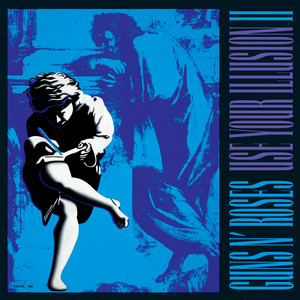
The cover appeared on the Use Your Illusion II record in 1991, but the version that matters came from a different night entirely — a benefit concert in Los Angeles in April 1989, for victims of a mudslide in Huntington Park that had killed nearly two dozen people and left hundreds homeless. The band played it live in that room first, in front of a crowd that had come to grieve, and Axl Rose sang it like a man who understood what it felt like when everything you built got buried under the ground.
That’s the context the studio version carries, whether you know it or not.
What Guns N’ Roses does to this song is not subtle. Slash layers guitar over guitar. There’s a slow building quality to it, the way a candle gets replaced by a bonfire — same light, different scale. Duff McKagan’s bass sits low and patient underneath everything, doing the structural work while the guitars do the emoting. The tempo doesn’t rush. For a band that could make a room feel like it was coming apart at the seams, they play this song like they’re holding something fragile.
Axl’s voice is the thing that shouldn’t work and does. His range sits in a different register than Dylan’s flat Midwestern plainspokenness — Dylan narrates, Axl pleads. Where Dylan sounds like someone recounting a death he witnessed, Axl sounds like the man dying. He pitches it personal in a way that takes a risk. You can hear him right at the edge of overselling it on nearly every line, and he doesn’t cross it, which is either craft or luck, and at five and a half minutes you have to respect whichever it was.
“Mama, take this badge off of me, I can’t use it anymore.”
In Dylan’s original, that line belongs to a fictional lawman in a Sam Peckinpah western. In Axl’s mouth in 1989, it sounds like it belongs to anyone who has carried something past the point of carrying it. The metaphor gets stretched, and it holds. That’s good songwriting underneath — Dylan built the frame solid enough that other people could hang different pictures in it.
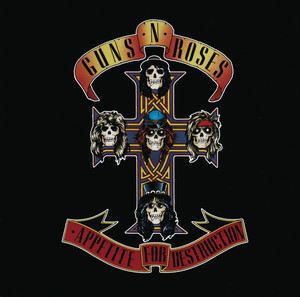
The band was three years out from Appetite for Destruction when the Use Your Illusion records came out, which means they were both enormous and imploding at the same time. Izzy Stradlin left during the sessions. The Use Your Illusion tour ran from 1991 to 1993 and became famous as much for its disasters as its music — riots in St. Louis and Montreal, Axl stopping shows and starting fights, the whole enterprise perpetually threatening to collapse under its own weight. These were not men at peace with themselves or with each other.
Which is part of why this cover lands. Knockin’ on Heaven’s Door is a song about exhaustion, about the moment when a man admits he’s done and starts setting down whatever he was carrying. The band that recorded it was in no position to fake their way through that emotion. They knew what it felt like to stand at the edge of something and not know which way it was going to fall.
Dylan wrote the feeling. They lived it.
There’s a version of music criticism that would hold the five-and-a-half-minute runtime against them — too long, too much, too loud, too much guitar, too much Axl. And there’s a version of this song that might agree. But the length has a function. It keeps you in the moment longer than Dylan lets you stay. Dylan gets you to the image — the badge, the dust, the dark — and then moves on. Guns N’ Roses won’t let you move on. They hold you there in it, the guitars circling back and back, Axl repeating the chorus until the repetition stops being repetition and starts being something closer to ritual.
“Knock, knock, knockin’ on heaven’s door.”
You hear it enough times in five minutes and it stops sounding like a lyric and starts sounding like an actual knock. Like someone standing outside something they can’t enter, hand raised, not willing to leave yet.
That’s what the length is for.
Dylan’s version is a document. Guns N’ Roses made a vigil out of it — louder than a vigil has any right to be, and somehow exactly right.