Jack & Diane
John Mellencamp almost cut the guitar riff.
John Mellencamp almost cut the guitar riff.
The four-bar figure that opens “Jack & Diane” — the one that has played out of car stereos and jukebox speakers for over forty years now — wasn’t in the original demo. Mellencamp had written the song with a fuller arrangement, and the label had concerns about whether it would work on radio. What saved it was a recording trick that almost never works: producer Don Gehman convinced Mellencamp to let the song breathe, to strip back the production and let that acoustic riff sit alone in the room for a moment before the rest of the band came in. The result was the kind of opening that makes a person stop talking mid-sentence and turn toward the speaker.
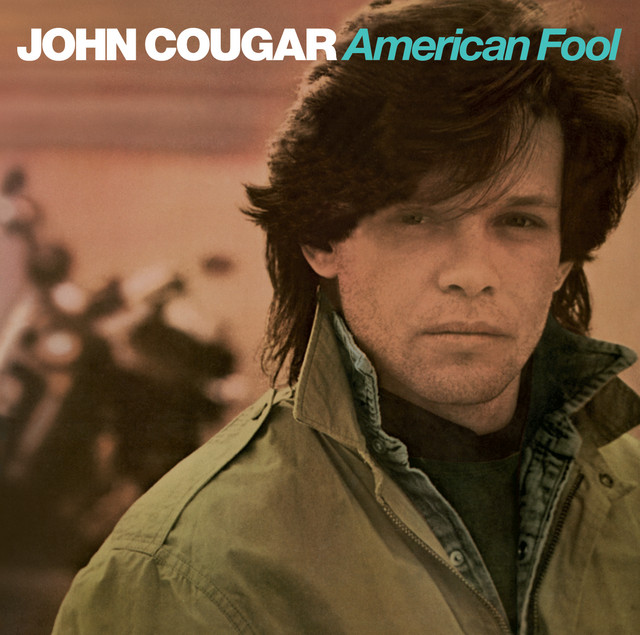
The song came out in 1982 on American Fool, the album that turned John Cougar — the name his manager had saddled him with years earlier, which he hated — into one of the biggest rock acts in the country. He had been fighting the name for years and would keep fighting it, eventually winning the right to hyphenate himself back toward who he actually was. But in 1982 he was still John Cougar, and “Jack & Diane” was his song, and it hit number one and stayed there, and for a while that was the whole story anyone wanted to tell.
The fuller story is in what the song is actually doing, which is something almost nobody on pop radio in 1982 was doing.
“A little ditty about Jack and Diane, two American kids growing up in the heartland.”
That’s the song announcing itself plainly, without apology or pretense. Mellencamp was from Seymour, Indiana. Not from Nashville imagining Indiana, not from Los Angeles romanticizing the Midwest from a distance — from there, actually, from a small town where the choices available to young people were limited and real. Jack and Diane are not archetypes placed in a small town to suggest profundity. They are the people Mellencamp grew up with. A high school quarterback. A girl who has plans that the geography of her life is quietly working against. A Tastee Freez. A cigarette dangling off a lip. All of it exactly as mundane as it sounds, and Mellencamp treats the mundanity with full seriousness because it earned it.
“Oh yeah, life goes on, long after the thrill of living is gone.”
That line, delivered with almost no vocal ornamentation over that riff, is the whole thesis. It doesn’t pretend the thrill comes back. It doesn’t offer consolation. It says: this is how it goes, and people keep going anyway, and that’s not a tragedy — it’s just the shape of an ordinary life. In 1982, on pop radio, that was a radical thing to say. The song sits next to the big-hair anthems of its era and refuses every one of their bargains. No arena catharsis. No chorus that lifts you up and promises tomorrow. Just two kids on the hood of a car, the moment starting to slip before they even know it’s slipping.
Mick Ronson played on the record. The same Mick Ronson who stood next to Bowie on the Ziggy Stardust tour, the man who built the guitar sound that defined a different era entirely — here he is in a studio in 1982, layering parts on a song about an Indiana teenager and a taco. That’s worth sitting with. Ronson died of liver cancer in 1993, and the work he did in the last decade of his career is scattered across albums by other people’s names, contributions that often go unmentioned. His presence on American Fool is one of those contributions.
Don Gehman engineered and produced the album, and the sound he got is specific: not polished into smoothness, not gritty for its own sake, but immediate and dry in a way that puts you in the room. The handclaps that came in on the chorus — one of the stranger textural decisions in mainstream rock production — were Gehman’s call. They should not work as well as they do.
Mellencamp has said the song was meant to be about a Black kid and a white girl, that race was part of the original conception. He’s also said the label pushed back and the song became what it became — the tension drained out, or at least moved offscreen. What’s left is a song about class more than race, about the ceiling that most small American towns place over the people born inside them. Jack’s going to be a football star somewhere and then come home and probably not be a football star. Diane’s going to maybe get out, maybe not. The Tastee Freez is there no matter what. The song holds this without editorializing. It doesn’t ask you to feel sorry for anyone. It just shows you the booth and the cigarette and the fading afternoon.
That restraint is the craft. Any song can tell you something matters. It takes something harder to show you exactly what it looks like, let you sit in it, and trust you to understand.
The riff comes back at the end, same as the beginning, the song resolving back into itself. Nothing has changed. Nothing was going to change. But you heard it, and it was real, and that’s what Mellencamp was after — not the feeling that someone understands your pain, but the feeling that someone has looked at the actual shape of ordinary American life and refused to look away from it or dress it up into something it isn’t.
Two kids on the hood of a car. The afternoon going long. Life already going on.