Look After You
Isaac Slade wrote "Look After You" on his honeymoon.
Isaac Slade wrote “Look After You” on his honeymoon.
That detail keeps changing how I hear the song. Because nothing in those four and a half minutes sounds like celebration — it sounds like a man standing at the edge of something enormous, suddenly aware of what it means to hand your life to another person, terrified and grateful in equal parts, trying to find the words for a feeling that doesn’t have clean words.
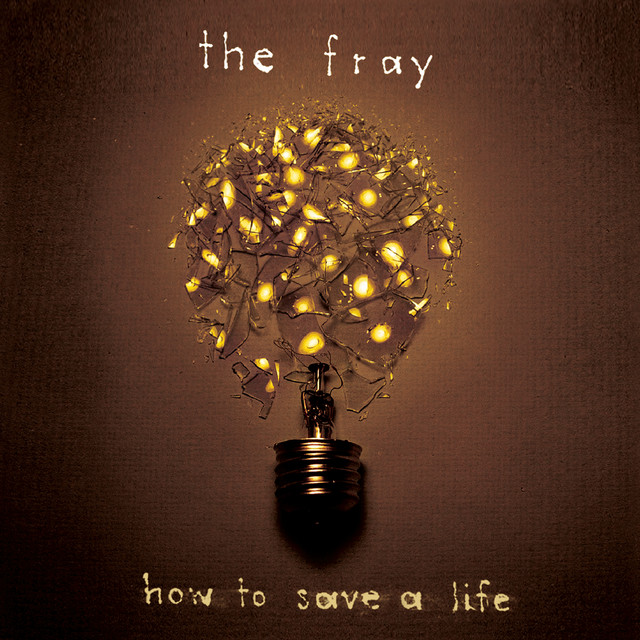
The Fray were still finding their footing when How to Save a Life came out in 2005. They’d come up through the Denver scene, four guys who’d met in high school, playing churches and youth groups and small venues, building something quietly and without a map. Slade is the piano player, and you can hear that in the architecture of his songs — they move the way piano music moves, harmonically careful, built around a chord that keeps reaching and not quite resolving.
“Look After You” reaches and doesn’t quite resolve for most of its four minutes. That’s the point.
“If I don’t say this now I will surely break.”
The song opens in a state of emergency that isn’t dramatic. It’s the opposite of dramatic — it’s the quiet panic of a person who has never been this exposed before and knows it. The melody doesn’t rise to meet that feeling. It stays low, careful, like someone speaking in the dark so as not to wake the house.
What Slade understood — or stumbled onto, which amounts to the same thing — is that love songs written from inside the feeling are usually about desire. The wanting before the having. This song is written from the moment after, when you’re standing in the room you actually wanted and realizing the weight of what you asked for. It’s the love song nobody writes because it requires admitting that being loved is frightening. That needing someone is a kind of debt you can’t calculate. That when you say I will look after you, you are making a promise to the future self who may not know how to keep it.
The bridge lays it out plainly:
“There now, steady love, so few come and don’t go. Will you, won’t you be the one I always know?”
He’s not declaring. He’s asking. And the difference between those two things is the whole song.
Joe King’s guitar work here doesn’t announce itself. It’s underneath the piano, filling the space without crowding it. Dave Welsh too — this is a band that knows when to stay out of the way of a song, and “Look After You” required that discipline, because the second it gets busy it stops being honest.
The production on How to Save a Life was handled by Slade and King alongside Aaron Johnson and then finished by Tim Palmer — and the record has a particular restraint running through it, a refusal to let the arrangements become the point. These are piano-forward songs, and the piano is never pretty for its own sake. It’s working. Every note is doing something structural. That’s a harder sound to make than it sounds — most bands that come up through the evangelical circuit and land on mainstream radio get told to open the room up, add strings, sweeten the reverb. The Fray mostly didn’t.
The song ends where it started — in that same quiet place, that same question held open. There is no resolution. The chord doesn’t land where you expect it to. You’re left with two people in a room, making a promise to each other that they understand is bigger than them, and the music just sits there with that weight and doesn’t try to lift it.
Slade was a young man on his honeymoon. He’d just done one of the bravest and most ordinary things a person can do. And instead of writing something triumphant, he wrote something scared, because that was the truth of where he was — not in spite of the love, but because of it.
That’s what the song is. It’s a man who loves someone so much it frightens him, writing it down before the feeling gets away, trying to say I will look after you and meaning it with everything he has and knowing that meaning it is not the same as being able to promise it.
He said it anyway. The piano stayed honest. That was enough.