Who Are You
Pete Townshend wrote this one after waking up in a police cell on Dean Street.
Who are you? Who, who, who, who?
Coming out of those synthesizers, over Keith Moon’s drumwork, with Roger Daltrey’s voice raised to the edge of accusation, it sounds like a taunt — a challenge shouted down from somewhere high up. But Pete Townshend isn’t asking anyone else. He is asking it of himself, drunk in a doorway at four in the morning, and the answer is not the one he wanted.
The doorway was real. Soho, 1978. Townshend had spent the evening at a Sex Pistols show at the Screen on the Green, then gone drinking with Paul McCartney and Ronnie Lane, then wandered into the offices of Warner Bros. and argued about money and The Who’s future, and then collapsed in a doorway on Dean Street because he could not figure out how to get home.
He woke up in a police cell. The desk sergeant didn’t recognize him, gave him a cup of tea and a lecture about taking better care of himself, and sent him out into the morning. The song is about that night. The collision between who he thought he was and what he had actually become.
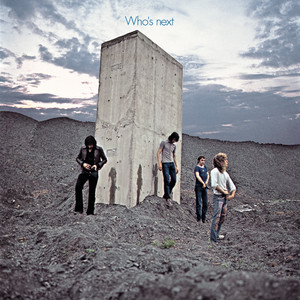
By 1978 The Who had been a band for fifteen years. They had Tommy. They had Who’s Next. They had Quadrophenia. They had rewritten what a rock band could be more than once. And Townshend was exhausted, medicated, drinking hard, and not sure any of it had mattered. The punk kids at the Screen on the Green that night had no use for him. He was the establishment now. He was the thing you rebelled against.
That is a particular kind of grief. Not the grief of failing. The grief of building something real and living long enough to watch it become furniture.
The album was finished in the summer of 1978. Keith Moon played the drums on it. He was in rough shape — bloated, unreliable, brilliant in fits and starts. He would be dead five weeks after the record came out. An overdose of clomethiazole, the drug prescribed to manage his alcohol withdrawal.
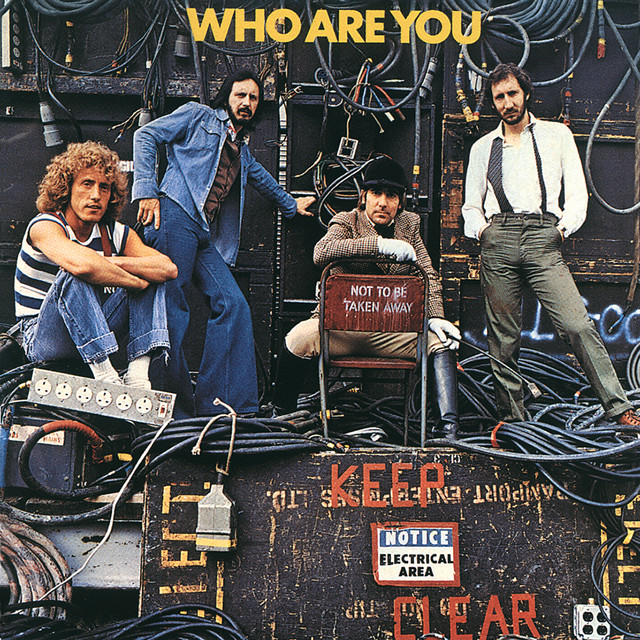
On the cover the four of them sit in a scrapyard surrounded by old equipment and busted amplifiers. Moon is in a chair with a sticker on the back that reads NOT TO BE TAKEN AWAY. He was taken away. The chair is still in every copy of that record.
Once you know that, the question changes texture. Who are you — asked of yourself on a night you’ve lost the plot, when the thing you built is bigger than you can carry, when the people you love most are starting to disappear. It stops sounding rhetorical. It sounds like a man feeling for the thread back to something solid.
The song is long. Six minutes and twenty-one seconds, and it earns the length. The opening synthesizer figure sounds like a machine being switched on in an empty building. Then the guitars and Moon’s drums come in and the whole thing lifts off with that Who momentum, four people playing right at the edge of what the song can hold.
Daltrey sings the verses with a weary bravado, and then the chorus arrives and he opens the throttle. Who are you? By the fourth or fifth time through it stops sounding like a question and starts sounding like a demand. Like he needs the answer before he can take one more step.
Townshend got back on his feet that morning and went home. Then he sat down and turned the worst of the night into a song. That is what songwriters do with it. They render it into something you can hand to whoever needs it next.
The Who kept going after Moon died. Kenney Jones came in on drums, and they made more records, and they toured, and the question of what The Who is without Keith Moon is one Townshend and Daltrey are still living with. There is no clean answer. There rarely is, when something that fundamental changes.
But the song is still there. Six minutes and twenty-one seconds of a man in a doorway on Dean Street, asking the only question that’s left when everything else falls away. He woke up in a cell, and he never did get a final answer. He wrote the question down instead.