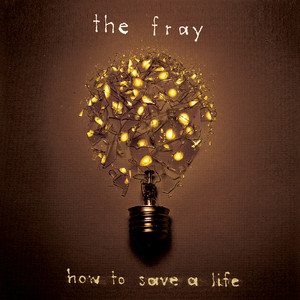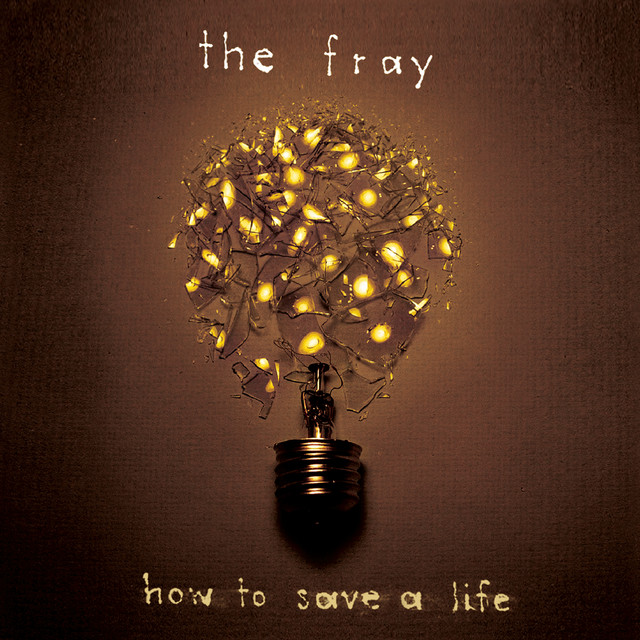
How to Save a Life
Isaac Slade wrote this song after spending a summer as a mentor at a camp for troubled teenagers.
Isaac Slade wrote this song after spending a summer as a mentor at a camp for troubled teenagers.
That’s the whole origin. Not a breakup. Not a personal crisis. A kid he couldn’t reach — a teenager who showed up to the camp carrying something heavy, and left still carrying it, and Slade went home wondering what he’d missed, what he should have said, whether there had been a moment in the conversation where the whole thing could have gone differently. He sat down at the piano and tried to work it out. The song that came from that is an argument with himself — two voices in one room, talking past each other, and neither one entirely wrong.
The piano figure at the top is almost too simple. Four notes, repeating, patient as a clock. Joe King comes in with the guitar and the two of them lock into something that feels like waiting — like a conversation that’s been put off too long and is finally, badly, happening. Producer Slade himself oversaw most of How to Save a Life with the band largely in control of their own sound, and the decision to keep the arrangement spare matters here. There’s nowhere to hide in a song this open. Every word lands in a room with no furniture.
“Step one: you say we need to talk.”
That’s the line that does the work the title only hints at. Because the song is not, exactly, about saving someone. It’s about the conversation that comes before you find out whether saving was even possible. The narrator is running through it — the steps, the careful words, the best version of what you might say to someone standing at an edge — and underneath the clinical language (step one, step two) is sheer panic. He’s coaching himself through a conversation he already failed to have.
The second verse turns it. The friend who was supposed to be saved falls asleep — or shuts down, or leaves — and the narrator is still talking, still working through his script, while the moment has already passed. “He says I’ll try, I say ‘try.’” One word repeated, the distance between intention and action visible in the gap.
The song became one of the most licensed tracks of the mid-2000s — Grey’s Anatomy used it, and the show’s audience was enormous, and suddenly this quiet piano song about a specific camp counselor’s specific failure was the background music for every television death that needed weight. You can resent that or accept it. The song held up under the pressure because it was built for exactly that kind of weight from the beginning. Slade wasn’t writing an abstraction. He was writing about a real kid. The song carries the specificity of that, even when the listener doesn’t know it’s there.
What the Grey’s Anatomy moment did — and it’s worth naming honestly — is transfer the song’s meaning from its origin to its audience. Millions of people heard it and thought of someone specific: a friend they’d lost, a conversation that never happened, the particular silence that follows a person going somewhere you can’t follow. The song became a container for all of that. That’s not the same as saying it belongs to everyone equally. It still belongs to the kid from the camp, whose name Slade never published, whose story is still mostly private. But grief has a way of recognizing itself across distances.
There’s a word Slade reaches for in the bridge — blame — and it sits there without resolution. No one gets absolved. The narrator doesn’t walk away clean, and the friend doesn’t walk away at all. The song ends without the life being saved. It ends with someone asking where did I go wrong? and leaving the question open, because that’s where the question actually lives — not answered, not put away, just present, just there.
That’s what earns it. Not the piano, not the melody, not the show that played it seventeen times in five seasons. What earns it is that Slade sat down after a summer of not knowing what to say, and wrote the song about not knowing, and didn’t fix the ending. He left it exactly as broken as it was. The kid from the camp left carrying something heavy, and the song carries it too, and that weight is what makes it true.