Load Out
The crew loads the truck before Jackson Browne does a single thing.
The crew loads the truck before Jackson Browne does a single thing.
That’s what “Load Out” is about, at its core — not the performer, not the songs, not the audience filing out into the parking lot. The roadies. The guys who show up first and leave last, who tape down the cables and wrap the cables and load the cables back into cases while the artist is already in the car. Browne wrote them a song. Not a thank-you note, not an acknowledgment from the stage. A song. And then he recorded it live, in the venues those same men were breaking down around him, so the whole thing would be saturated with the sound of the rooms they all lived in together.
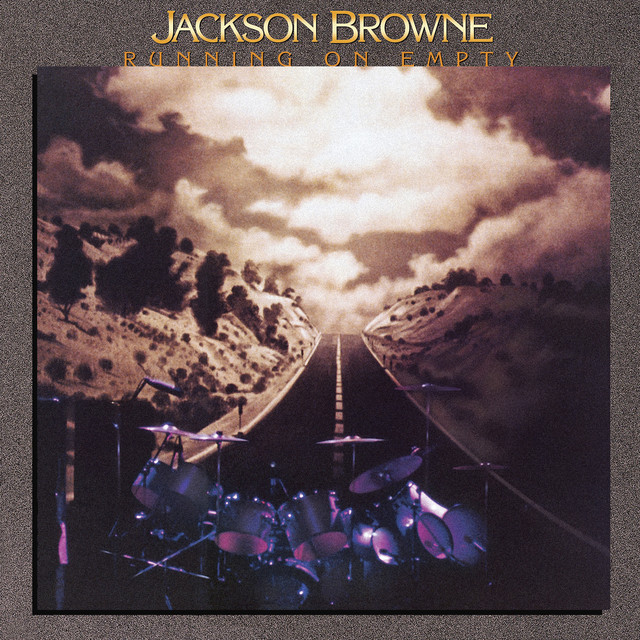
Running on Empty was recorded entirely on the road in 1977 — in hotel rooms, on the tour bus, in the arenas themselves. Not as a stunt, but because that’s where the life was. Browne had been touring behind The Pretender, his bleakest record, written after his wife Phyllis died by suicide in 1976. He was thirty years old and somewhere between grieving and numbed-out and just moving forward because that’s what the schedule required. The tour kept going. You kept going with it.
The album captures what that life actually feels like — not the glamour version, not the mythology, but the specific texture of days that are all motion and no place. And “Load Out” is the hinge the whole thing turns on.
The song opens with the simple fact of the end of a show. The crowd is gone. The lights are up. The work that was invisible all night — the work that made the night — is now visible, happening in the half-dark. Browne sings it plainly: now the seats are all empty, let the roadies take the stage. There’s no glamour in the line. No pathos either. It’s just a thing that happens, stated as a thing that happens.
What follows is a portrait of labor that most songs about touring don’t bother to notice. Browne names the trucks, the cases, the cable — the physical reality of moving a show from one city to the next. He sings about the crew the way you’d talk about someone you trust with your life, which is basically what they are when you’re doing 200 shows a year and the whole infrastructure moves on their shoulders.
“We got to drive all night and do a show in Chicago or Detroit, I don’t know…”
That line does something. The uncertainty of it — Chicago or Detroit, he doesn’t even know — is the truth of the touring life. The cities blur. The shows blur. You play the show, you load the truck, you drive, you do it again. The destination almost doesn’t matter. What matters is the people next to you who are also not sleeping, also eating bad food in fluorescent diners, also doing this because it’s what they do.
The musicians on this record were road-hardened in their own right. David Lindley on guitar and fiddle. Craig Doerge on keys. Bob Glaub on bass. Russ Kunkel on drums. Leland Sklar. These were not session men hired for a date — they were the people Browne had been playing with, living with, depending on. You can hear it in the way “Load Out” breathes. Nobody’s showing off. Nobody’s filling space. The song is lean because the men playing it understood what lean sounded like — they’d been doing it night after night in rooms where the sound had to carry to the back row.
The live crowd noise on the record isn’t decoration. It’s documentation. These are the actual rooms, the actual nights. The slight imperfections in the recording are the slight imperfections of real life as it’s happening.
“Load Out” segues into “Stay” — the Maurice Williams and the Zodiacs classic — and the two became inseparable on the album, played as one long piece, the plea to the audience to not go home folded into the acknowledgment that home is nowhere in particular anymore. The combination charted as a single. But what I keep coming back to is the moment before the segue, before the energy lifts — the quiet stretch where Browne is just singing about the crew doing their work, and the melody is patient enough to let that matter.
That’s the craft of it. The song doesn’t ask you to feel anything specific about roadies as a category of person. It just shows you what they do and holds the camera there long enough that you see them — actually see them, the way you see someone when you’ve been in the same room with them long enough that the familiarity has worn past performance and into something real.
Browne has said the record was partly about understanding what it meant to have a home you kept leaving. After his wife died, the road was partly grief management — keep moving, don’t sit still long enough for it to land. That context doesn’t make “Load Out” a grief song, but it makes its gratitude feel earned rather than sentimental. When you’re running from something and the people around you are the only constant, you notice them differently.
“After all the shows, you do what you do, I’d give anything to be playing to you…”
It’s a strange reversal — the performer wanting to still be performing, wanting the show back, the moment already past before it’s quite over. That feeling is real for anyone who’s ever been on the back end of something good. The best nights end and you want to rewind them, not because the night was perfect but because it was yours and now it’s becoming something you did instead of something you’re doing.
The roadies know this better than anyone. They pack it into cases every night.