Flying Horses
Brad Corrigan wrote "Flying Horses" in his dorm room at Middlebury College, about a carousel.
Brad Corrigan wrote “Flying Horses” in his dorm room at Middlebury College, about a carousel.
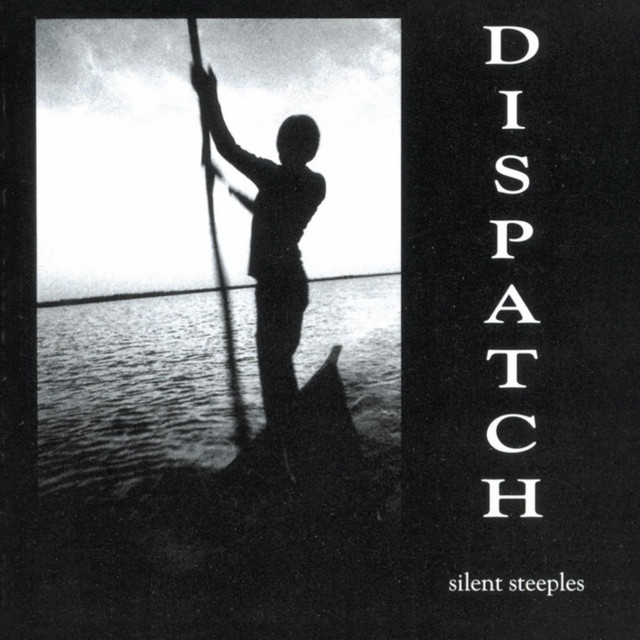
Not about loss, not about the passage of time in the abstract, not about the particular ache of watching something spin in place while the world moves around it. About a carousel. He was twenty years old, and he sat down and wrote a song about painted horses going nowhere, and it turned out to be one of the most honest songs about growing up that anyone in the 1990s indie scene produced. The fact that Dispatch never got a record deal — that Silent Steeples existed only as a cassette they sold out of the back of their van — is the kind of detail that makes you believe music finds its people anyway.
The three of them — Corrigan, Chad Urmston, Pete Francis — met at Middlebury and started playing parties and small venues in Vermont and Massachusetts before they had any business being taken seriously as a band. They recorded Silent Steeples in 1996 with no label, no producer with a name you’d recognize, no marketing budget. They dubbed cassettes and handed them out. They built an audience the slow way, show by show, the way people used to have to do it. By the early 2000s, they were selling out arenas on word of mouth alone, no radio play, no major label behind them. But that comes later. In 1996, “Flying Horses” is just a song on a cassette, recorded cheap, and it already has everything it needs.
The carousel Corrigan was writing about is at Martha’s Vineyard — the Flying Horses Carousel in Oak Bluffs, which has been running since 1876 and is the oldest platform carousel in the country. The horses don’t move up and down. They just turn. They have real horsehair manes and glass eyes, and children have been reaching for the brass ring on that machine for nearly a hundred and fifty years, and the thing keeps spinning regardless.
He didn’t explain all of that in the song. He didn’t need to. What he wrote was simpler and stranger and more useful:
“Spinning around, I’m going nowhere, I can see you though the air.”
That’s the whole situation. You’re on the horse, turning, and the world keeps coming back around — the same faces, the same shoreline, the same light — and you can see the person you love through the gap in the air between rotations, and then they’re gone, and then they’re back. It is the most accurate description of being young and in love and terrified of time that I know of in a song. You’re moving constantly and going nowhere and the person in front of you keeps disappearing and reappearing and you can’t tell if that’s beautiful or devastating.
The song takes its time. Five minutes and twenty-three seconds on a record that didn’t even have wide distribution, which means Dispatch trusted that the people who found it would stay with it. The guitar work in the back half opens up the way early Phish opened up — not noodling, not showing off, just following the feeling out to where it wants to go. Urmston and Francis lock into a rhythm section that doesn’t rush anything. The song earns its length not by adding complexity but by refusing to leave the moment before the moment is done.
That is a harder thing to do than it sounds. Most bands in 1996 with a song about a carousel would have cleaned it up and cut it to three minutes and put a big chorus on it. Dispatch left it messy and long and patient, and it holds together because the feeling at the center of it is real.
Corrigan has said in interviews that the three of them wrote toward honesty rather than toward radio. That sounds like a convenient thing to say in retrospect, but the music backs it up. “Flying Horses” doesn’t have a hook designed to make you remember it. It has a feeling designed to make you feel something — a quiet vertigo, the specific sadness of watching a beautiful thing spin in place, knowing it will keep spinning after you’ve walked away.
The carousel at Oak Bluffs is still there. It still runs every summer. The horses still have glass eyes and real manes and they still just turn, no up and down, no variation, just the same circle since 1876. Children still reach for the brass ring.
The song is still there too, and it still does the same thing it did on that cassette in 1996 — puts you on the horse, starts the rotation, and lets you see someone you love through the spinning air, and then they’re gone, and then they’re back, and you can’t decide how to feel about that, and the music doesn’t decide for you.
It just keeps turning.