The Logical Song
Roger Hodgson wrote "The Logical Song" about what school did to him.
Roger Hodgson wrote “The Logical Song” about what school did to him.
Not what it failed to give him — what it actively took. He’s said it in interviews more than once, plainly: he was a sensitive child, sent away to boarding school at six years old, and over the years the institution worked on him the way institutions work on people. It smoothed the parts that stuck out. It taught him to be presentable, responsible, acceptable, respectable, and by the time it was done he didn’t recognize himself. He wrote the song trying to find out where the original person went.
That’s a small, quiet origin for a song that became one of the biggest rock records of 1979. But the smallness is the point.
The song opens in the only place it could — childhood, unguarded, the world still enormous and strange and good. It was acceptable, respectable, presentable, a vegetable. Hodgson wasn’t writing an anthem. He was doing a postmortem. The string of -able words that comes later — those aren’t praise, they’re a list of the ways they got to him. Each one lands a little heavier than the last. By the time you reach vegetable, the joke isn’t funny anymore. Something was grown in the dark and it lost its color.
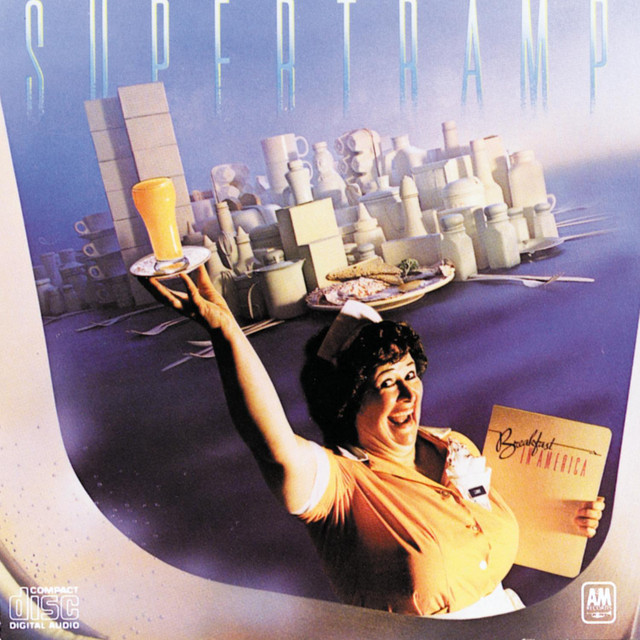
The production on Breakfast in America has Rick Davies’s fingerprints all over the rhythm section and John Helliwell’s saxophone woven through the verses, that slightly anxious squeal in the middle that keeps the song from ever settling into comfort. Rudy Edwards engineered it at Village Recorders in Los Angeles, and the record has a clean, slightly antiseptic brightness — which is exactly right for a song about the cost of being made clean. The arrangement is doing what the lyrics are doing. The surfaces are polished. You can hear the wax.
What saves the song from bitterness is the opening verse — those four lines about waking up and finding the world magical, miraculous, wonderful — and Hodgson’s voice, which has the quality of someone who genuinely remembers what it felt like before. He’s not performing nostalgia. He sounds like a man sorting through a drawer, turning over something he found in the back and recognizing the shape of it.
“Please tell me who I am.”
That’s the whole song. Everything before it is setup for that question, and the question lands so plainly that the first time you hear it you might not register how naked it is. He doesn’t dress it up. He doesn’t contextualize it or soften it or hedge it with a metaphor. He just asks it, straight out, like someone who has run out of time for being subtle.
Most rock songs in 1979 didn’t ask that question directly. The era was full of grand gestures and theatrical darkness, or else it was full of disco and blankness. Hodgson walked in with a piano and a memory and a question about his own identity that he apparently didn’t have an answer for. The song didn’t resolve it either. It ends where it begins — with the question still hanging there, unanswered, the logical, oh-oh-oh-oh-oh trailing off into the air.
Hodgson left Supertramp in 1983, four years after this record made them famous. The split was not gentle; he and Davies barely spoke for decades. Two men who had built something extraordinary together, and the thing between them couldn’t hold. That’s not unusual in rock bands. What’s unusual is that Hodgson spent the following forty years touring under his own name, playing “The Logical Song” to audiences who needed to hear it, and the song never stopped meaning what it meant. He wrote it young, trying to recover something that had been taken from him at six years old, and it turns out there are a lot of people who recognize that particular kind of loss.
The boarding school sent a boy away and gave back someone suitable. The song is the part they couldn’t get to.
Please tell me who I am. He asked it once, in a studio in Los Angeles, over a melody he’d been living with for years, and the question has been looking for company ever since. It finds it. Every time.