Don't Drink The Water
LeRoi Moore played the opening of that song on a single reed instrument — an oboe, doubled against Tim Reynolds's acoustic guitar — and the sound it makes is ancient and unsteady,
LeRoi Moore played the opening of that song on a single reed instrument — an oboe, doubled against Tim Reynolds’s acoustic guitar — and the sound it makes is ancient and unsteady, like wind through a canyon where something bad happened a long time ago.
That sound matters. Because “Don’t Drink the Water” is not a song about something that happened a long time ago. It’s a song about something that never stopped happening.
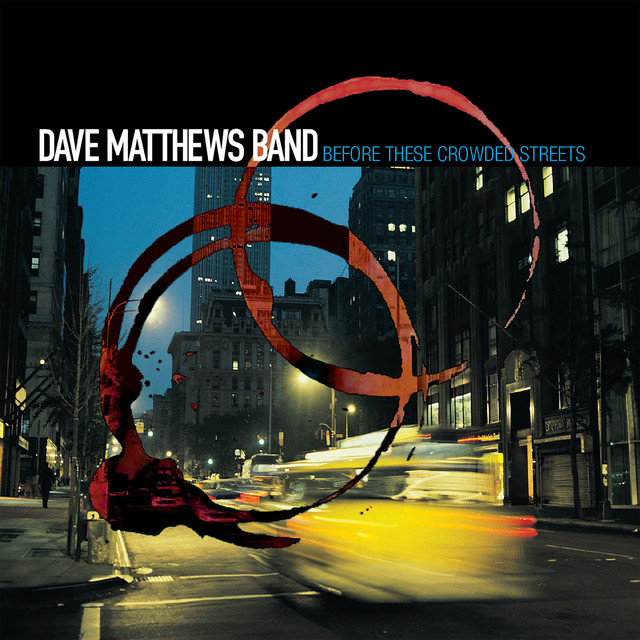
Before These Crowded Streets came out in April 1998, the fourth album from a band that had spent the mid-nineties becoming one of the biggest live draws in the country almost entirely by word of mouth and parking lot tape trades. By the time they walked into Bearsville Studios in Woodstock with producer Steve Lillywhite — who had worked with U2 and Peter Gabriel and XTC, a producer with a gift for large spaces — DMB could fill arenas. They made an album that did not sound like it wanted to fill arenas. It sounds like a confession delivered at night.
“Don’t Drink the Water” is seven minutes long, and Dave Matthews wrote it from the point of view of a colonizer.
Not allegorically. Not with any softening. The narrator of this song has walked onto someone else’s land, decided it belongs to him now, and commands the original people to leave or die. “This is my home now, I command you to leave.” He is not a villain in a parable. He speaks plainly, with the specific arrogance of someone who genuinely believes the land becomes his the moment he wants it.
Matthews was born in Johannesburg. He grew up between South Africa and the United States, living through the last decades of apartheid before emigrating in the late 1980s. He understood dispossession not as a historical abstraction but as the actual ongoing architecture of the place where he came from. He knew what it looked like to watch a government sort human beings by category and tell some of them that the ground under their feet had been reassigned.
The song doesn’t say any of this directly. It doesn’t have to. It just gives the colonizer his full voice — the whole ugly logic of manifest destiny — and then, underneath the words, runs a counter-argument through the music itself.
Because the music doesn’t agree with the narrator. It never did.
Boyd Tinsley’s violin comes in like a warning. Carter Beauford, who may be the best drummer working in any genre at any tempo, plays behind the beat in a way that makes the whole song feel unstable, like ground that might give. Stefan Lessard’s bass doesn’t walk — it circles. The band is not illustrating the narrator’s confidence. They’re playing the land’s refusal. The music is what the narrator is drowning out.
And then Matthews starts to scream.
Live versions of this song — and DMB was always a live band first, a studio band second — run longer and louder than the album cut, and the last two minutes often become something close to convulsive. Matthews’s voice leaves the melody and starts moving on its own, not improvised exactly but unguarded, the way a person sounds when they’ve been holding something and finally stop holding it. Audiences who showed up expecting “Crash Into Me” stood in venues across the country watching a man come apart over a genocide, and most of them came back the next night.
That’s worth naming, actually. The audience for this song was predominantly white college students, the inheritor class of the thing the song is condemning. And the song didn’t spare them, and they sang along anyway. Not because they missed the point — enough of them got it — but because the music was doing what music does when it’s working: making you feel the weight of something larger than your comfort.
“Don’t drink the water, there’s blood in the water.”
The line is a reversal. Water in the settler narrative is discovery, resource, life. Water is what you find and name and claim. Matthews flips it: the water is contaminated because of the finding. The blood is already there. You can’t take the land without what’s in the ground coming up through everything.
Lillywhite produced the album with a density that rewards headphones — layers of strings, of horns, of acoustic instruments arranged in the room to bleed into each other — and “Don’t Drink the Water” is the heaviest thing on it. No lightness. No resolution. The song ends not with the narrator repenting but with the narrator still speaking, still insisting, while the music falls apart beneath him.
That’s the honest ending. The narrator doesn’t have a change of heart. He just keeps talking and the ground keeps refusing and those two facts coexist without being reconciled.
Matthews has played this song at nearly every tour since 1998. Every time, the opening oboe and that doubled guitar sound like something warning you before you’ve understood what you’re being warned about. Every time, the ending doesn’t resolve.
It shouldn’t. The history didn’t resolve either.