Crush
LeRoi Moore played the opening of "Crush" on a soprano saxophone, and for eight minutes and nine seconds, Dave Matthews Band built one of the most elaborate seductions in rock musi
LeRoi Moore played the opening of “Crush” on a soprano saxophone, and for eight minutes and nine seconds, Dave Matthews Band built one of the most elaborate seductions in rock music around it.
That reed tone — bright, a little nasal, slightly foreign to the American rock vocabulary of 1998 — is the whole mood of the song before a single lyric arrives. It doesn’t announce itself. It curls into the room.
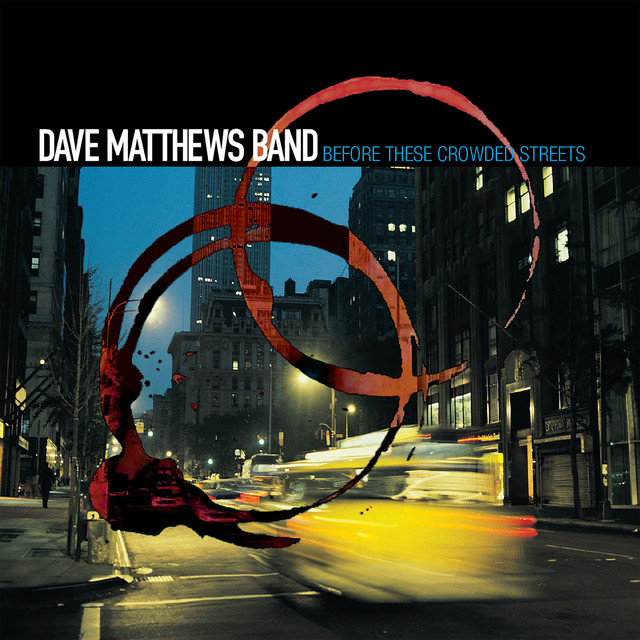
Before These Crowded Streets was the band’s third studio album, recorded in 1997 at Bearsville Studios in Woodstock, New York and mixed at Right Track in Manhattan, produced by Steve Lillywhite — the same Lillywhite who had shaped Under the Big Black Sun for X and War for U2, a man with a clear ear for how to make a band sound like itself at maximum pressure. The album was the darkest thing DMB had made. Where Crash had been warm and almost playful, Streets was dense, layered, sometimes genuinely unsettling. “Don’t Drink the Water.” “The Last Stop.” These were not party songs.
And then there was “Crush,” which is something else entirely.
What the band understood — and what gets underrated because jam band is a category that invites dismissal — is architecture. These were working musicians who had spent years on the road building songs in real time, learning where the ceiling was by pushing on it night after night. By 1998, Matthews and Moore and Carter Beauford and Stefan Lessard and Boyd Tinsley had played together long enough that the studio arrangements on Streets didn’t sound like a band reading charts. They sounded like a band thinking out loud, collectively, at a very high level.
“Crush” is eight minutes long, and it earns every one of them. The structure is patient in the way that only confident musicians can be patient — they’re not padding, they’re waiting, because they know what’s coming and they’re not going to rush it. Boyd Tinsley’s violin enters and exits. Beauford plays around the beat rather than on top of it, which he has always done, which is why the songs breathe the way they do. Lessard holds the low end with the kind of quiet authority that gets noticed only when it’s gone.
And LeRoi. The soprano saxophone in the verses, yes, but also the alto work deeper in the track, the tonal weight of it, the way he phrases against Matthews’s vocal instead of doubling it. Moore was a jazz player who never stopped being a jazz player, even in an arena rock context, and the tension between those two things — the formal training and the stadium crowd — is part of what made DMB’s mid-period records sound unlike anything else on active rock radio.
The lyric is not subtle, and it was never trying to be.
“Oh, I want to be your lover.”
That’s the whole declaration. Matthews has always written desire plainly — not crudely, but without the protective layer of metaphor that some songwriters put on like armor. He tells you what he wants, and then he spends eight minutes making the musical case for why you might want it too. The verses circle around the feeling, the chorus drops into it, and the instrumental passages give the listener time to catch up, or to just sit inside the groove for a while and let it do what it does.
The song was released as a single and it reached the top of the Modern Rock chart in the summer of 1998. That success was real, but it’s slightly misleading — the single edit was shorter, cleaned up for radio. The album cut is what the song actually is. You need the full eight minutes. You need the song to take its time with you.
LeRoi Moore died on August 19, 2008, at forty-six years old, from complications of an ATV accident he’d had in June. He’d been recovering well enough that the band thought he’d rejoin the tour. They were on stage at the Gorge Amphitheatre when they got the news that he was gone.
He had recorded one more album before the accident. Big Whiskey and the GrooGrux King, released the following year, was in part a tribute to him — GrooGrux was his nickname in the band. They finished it without him. There is something about making a record and not living to hear it that doesn’t get easier no matter how many times you encounter it in the history of music.
But he’s here in “Crush.” He’s in the opening bar, right at the start, before anything else has happened. The song begins with what LeRoi brings into the room, and then it builds everything else on top of it. That’s not an accident. That’s the band knowing what they had.
The soprano saxophone curls in. Eight minutes and nine seconds later, it’s over, and you want to put it back on from the beginning.