One Rainy Wish
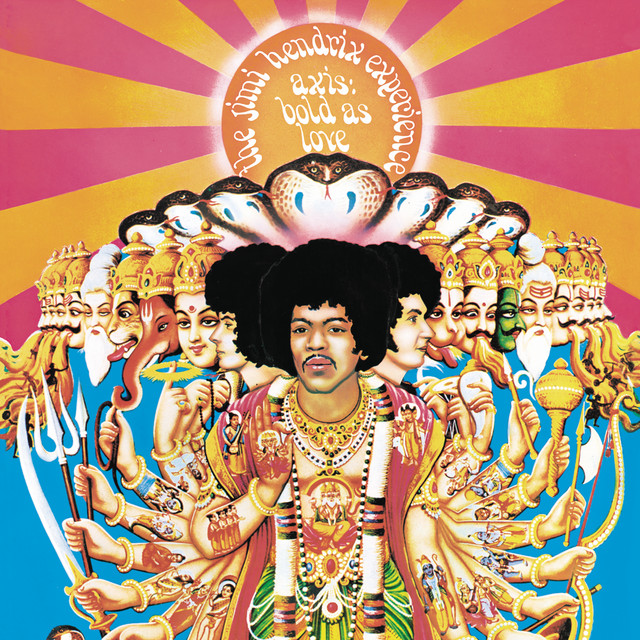
Jimi Hendrix recorded Axis: Bold As Love in three days. Near the end of side two is the closest he ever got to whatever he was reaching for.
Jimi Hendrix recorded Axis: Bold As Love in three days.
Three days at Olympic Studios in London, October 1967. Eddie Kramer engineering, Chas Chandler producing, Mitch Mitchell on drums, Noel Redding on bass. Somewhere inside those three days is “One Rainy Wish,” sitting near the end of side two, a song most people walk past on the way to “Little Wing.” I think it’s the closest Hendrix ever got to the thing he was reaching for.
It starts with the guitar alone. No drums, no bass — just Hendrix running his fingers down the neck of his Stratocaster, a slow cascade of notes descending from somewhere above the staff, soft as something half-remembered from a dream. By that point on the record the album has already been loud and furious and tender in a dozen directions. Then this starts, and whatever you thought you were listening to shifts.
“Golden rose, the color of the dream I had, not too long ago.”
He’s describing a woman. Or a color. Or a feeling. Probably all three, probably none. His lyrics get underestimated constantly, because the guitar takes all the attention — but he wrote images, not arguments. He didn’t explain. He pointed. Golden rose. You either see it or you don’t, and if you do, you understand the song in its first five seconds.
When the band comes in, it doesn’t crash. It arrives. Mitchell’s drums are gentle here, almost brushed, holding back in a way Mitchell didn’t always hold back. Redding’s bass finds the groove and stays in it. Kramer’s mix is wide and warm — the stereo spread on this record was ahead of what most engineers were attempting, and on this song it matters, because the music needs air on both sides of it. You’re inside the room, not watching it from outside.
About halfway through, Hendrix plays a solo that isn’t fast and isn’t showing off. It’s searching — unhurried, methodical, certain there’s something on the other side of the next note if he can just reach it. He bends strings the way other people phrase sentences, with the understanding that where you land matters as much as where you start.
He was twenty-four years old. He had already spent years on the Chitlin Circuit backing Little Richard and the Isley Brothers — hard rooms where nobody gave you a second chance on a bad night — and all of that is in his hands on this track. The fluency isn’t luck. It’s accumulated time. Three days only looks fast from the outside.
Most of Axis charges. There’s an electric violence running through it, gorgeous and necessary. “One Rainy Wish” is the exhale — the part of the night where the lights go low and someone puts on something quiet, and you stop analyzing and just let the sound do what it wants to do to you. It’s the song you hear when you’ve finally stopped moving.
“I have never laid eyes on you, not before this timeless day.”
That line is about meeting something you have no framework for — no category, no precedent, just the fact of it in front of you. Which is what happened to people who saw Hendrix live in 1967, and what happened to anyone who put this record on. It arrived and there was no box for it. There still isn’t.
He made two more albums. He was dead at twenty-seven.
The wish at the center of this song — golden, unnamed, dreamed before it was found — stayed out in front of him. He kept reaching for it through everything that came after, and he ran out of time before his hands did. But for three days in October, in a studio in London, on a track most people skip past, he got close enough to touch it.
Three days. That was enough.