Hurt
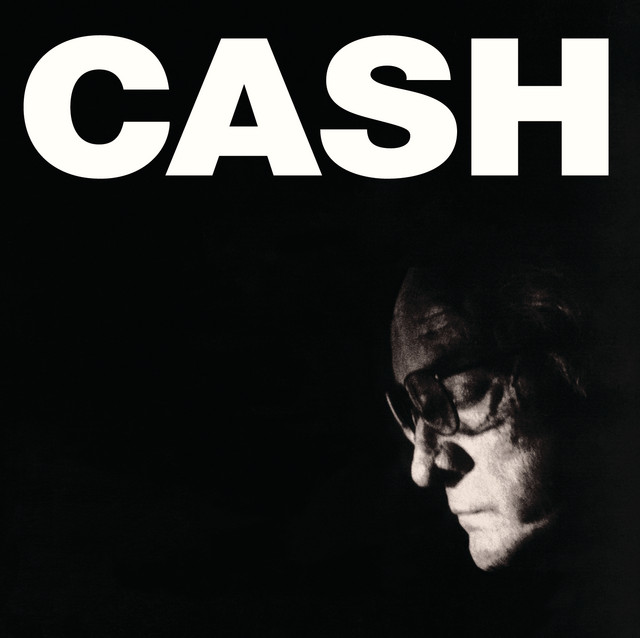
Johnny Cash changed one word. The whole cover is in that one word.
Johnny Cash changed one word.
Trent Reznor wrote “Hurt” in 1994, twenty-eight years old, deep in the hole that The Downward Spiral was named for. The line he wrote was “I wear this crown of shit upon my liar’s chair.” When Johnny Cash recorded it eight years later, he sang crown of thorns.
One word. The whole cover is in that one word. We’ll get there.
In 2002, Rick Rubin sent Cash the song and suggested he record it. On paper this is an absurd idea — a seventy-year-old Baptist from Arkansas covering a Nine Inch Nails song about heroin and self-harm. Reznor said yes mostly out of politeness; he admitted later he was flattered but worried the whole thing might come off as a gimmick.
It is worth sitting with how reasonable that worry was. Cover songs fail in one of two directions — too faithful, and you’ve made a photocopy; too clever, and you’ve made a joke. A frail country legend doing an industrial junkie hymn had every chance of landing as a joke.
It didn’t, and the reason it didn’t is the thing this whole site has been circling all year. Cash didn’t perform the song. He didn’t interpret it. He just told the truth through it, and it turned out the song could hold more truth than anyone — including the man who wrote it — knew was in there.
Because here’s what happens to those lyrics between twenty-eight and seventy.
At twenty-eight, “what have I become?” is a question. A young man’s question — dramatic, self-lacerating, still half in love with its own darkness, asked by somebody who has time to become something else.
At seventy, sick, it’s not a question anymore. It’s an inventory.
And the line that changes the most is the simplest one in the song: “everyone I know goes away in the end.” When Reznor wrote it, that was a feeling. When Cash sang it, it was a casualty list. His brother Jack, gone since 1944 — the table-saw accident that shadowed his whole life. Luther Perkins. Carl Perkins. Waylon, dead just months before the session. By 2002 Johnny Cash had outlived nearly everyone who built the rooms he was famous in. He wasn’t singing about the fear of being left. He was reporting from the far side of it.
Then there’s the video.
Mark Romanek filmed it in the House of Cash museum in Hendersonville, which had been closed for years and was falling apart — and instead of dressing the set, he shot the disrepair as-is. The warped wood. The dusty gold records. A banquet table laid out like a feast nobody came to. And cut against it, the archival footage: young Johnny, sharp as a knife, walking train tracks like he owned the railroad. The camera watches a man watch everything he built decay, and Cash let it. That was the bravest production decision of the decade, and it wasn’t a decision so much as a surrender.
June is in it. She stands on the stairs and watches him sing, and the look on her face is not a performance — it’s somewhere between pride and grief, the look of a woman watching her husband tell the world the truth about dying. She was gone three months after the video came out. Johnny followed four months after her.
Reznor saw the finished video and described tears, goosebumps, and then a strange realization he was honest enough to say out loud: that song isn’t mine anymore. He meant it as a loss and a gift at the same time. A song belongs to whoever pays the most for it, and Cash paid with the only currency the song would take.
Which brings us back to the one word.
Cash kept everything else. He kept the needle. He kept the liar’s chair. He sang a song about heroin without flinching from what it was, because he’d fought his own version of that war in the sixties — the pills, the wreckage, the years June spent pulling him back. He had no need to sanitize it. He’d earned every line honestly.
He changed only the crown. Crown of shit is self-disgust — a young man marinating in his own filth. Crown of thorns is something else entirely. It doesn’t make the line prettier; thorns aren’t prettier. What it does is aim the confession somewhere. With one word, the song stops being a man talking to the mirror and becomes a man talking to God — not asking to be cleaned up, not dressing himself up in bigger theology than he had, just turning the chair around to face the only audience left that mattered.
That’s not an edit. That’s a man signing his name.
I won’t tell you “Hurt” is pleasant to listen to. It isn’t. The piano comes apart at the end on purpose. His voice wavers and Rubin kept the waver. It is three minutes and thirty-six seconds of a man with nothing left to sell, telling the truth one last time at full volume.
But if this site has a thesis — that the songs worth keeping are the ones that describe life — then this is the far edge of the category. A song that described one life at twenty-eight and a completely different life at seventy, without changing anything but a word. The young man wrote it as a warning. The old man sang it as a will.
Everyone I know goes away in the end. He sang it, and seven months later he went too.
First, though, he sat down in the wreckage of everything he’d built, looked straight at the camera, and showed us how a man leaves the room with his soul intact.
One word.