Going to California
Jimmy Page tuned his guitar down a whole step to record this song, and then played it like he was trying to find something he'd lost.
Jimmy Page tuned his guitar down a whole step to record this song, and then played it like he was trying to find something he’d lost.
That detail matters because “Going to California” lives in a register that doesn’t sound like Led Zeppelin. No drums. No Marshall stack. No John Bonham turning the room into a physics problem. Just Page on acoustic and John Paul Jones on mandolin, the two of them sitting close together in a studio in Hampshire in 1971, quiet in a way the band almost never allowed itself to be.
The song came out of Page’s obsession with open tunings — specifically the DADGAD tuning he’d borrowed from folk guitarist Davey Graham, the same tuning that powered “White Summer” and “Black Mountain Side.” He dropped it further for this one. Lower and looser, the guitar almost sighing under his fingers. What came back was something softer than the band’s public face had room for — a song about longing and California mythology and a woman who doesn’t exist yet, or maybe never will.
Robert Plant wrote the words after the 1971 Los Angeles earthquake, or that’s the story that’s stuck. He was fascinated by Joni Mitchell at the time — obsessively so, by his own admission — and this song is soaked in that fascination. The woman in the lyric “with flowers in her hair” is not specifically Mitchell, but she’s not not Mitchell either. She’s the California dream feminized and made impossible: the wise woman, the healer, the one who can put the broken thing back together. Plant was twenty-two and had already been to California a dozen times and hadn’t found her. He kept going anyway.
“Spent my days with a woman unkind, smoked my stuff and drank all my wine.”
That’s the song’s engine — not the search for something better, but the honest accounting of what’s being left behind. The woman unkind. The stuff and the wine. The man who is leaving isn’t leaving for nothing; he’s leaving because staying has its own damage. California is a direction more than a destination. Every generation gets its own version of this song, the one that says somewhere west of here, I’ll find the version of myself that makes sense.
Jones’s mandolin is understated enough that you can miss it on first listen. Don’t miss it. It’s doing the structural work the bass usually does — holding the bottom while Page’s acoustic moves above it, the two parts interlocking the way session musicians do when they’ve played together long enough to know where not to be. These two were the architects of the band in ways that didn’t always get credited. Page was the guitar god and Plant was the voice on the poster, and Bonham was the force of nature you felt in your chest. Jones just built everything that made those things work. The mandolin on this track is twelve seconds of proof.
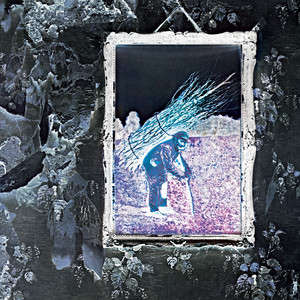
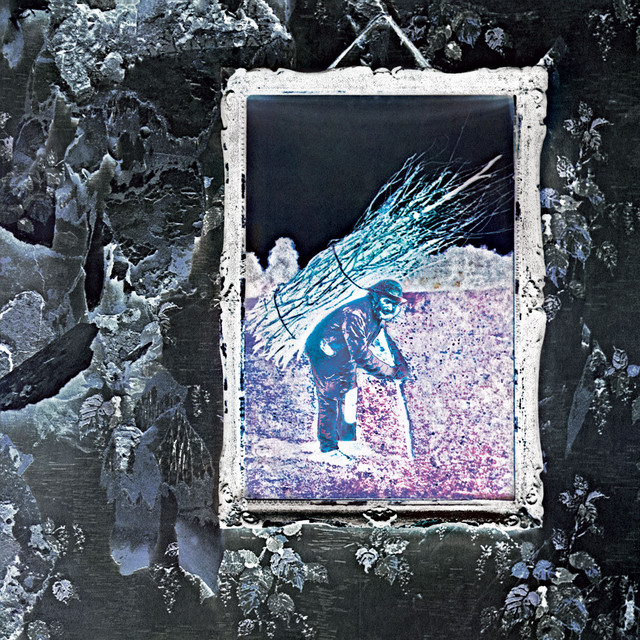
Bonham’s absence is the loudest thing in the room. You don’t notice it as absence, exactly. You notice it as space — the song breathes because there’s nothing filling the air, and it needs to breathe to do what it does. Jimmy Page understood this. He spent most of 1971 building Led Zeppelin IV as a record of contrasts, each side a different argument about what the band could be. “Black Dog” into “Rock and Roll” into “The Battle of Evermore” into “Stairway to Heaven” — and then the second side opens with “Misty Mountain Hop” before landing here, at the quietest place on the record. Plant’s voice is unhurried. Page plays like he has nowhere to be.
The song ends without resolution. He never gets to California, or if he does, the woman isn’t there. “Gonna find my way to heaven / ‘cause I did my time in hell.” That’s the closest Plant gets to a conclusion, and it’s not really a conclusion. It’s a man still moving, still looking. The song fades on the search, not the finding.
Fifty years later, Robert Plant still performs this song. He’s played it in small theaters and on festival stages and in acoustic settings where he lets the mandolin part breathe. The woman in the song is still not there. California is still a direction. He never stopped going.
Some songs end. This one just keeps traveling.