Yellow Ledbetter
Eddie Vedder never settled the words. Thirty years of competing transcripts, and only one line in the whole song comes through clean.
Eddie Vedder never settled the words.
“Yellow Ledbetter” has been out for more than thirty years, and there is still no agreed transcript. People still argue about what the second verse says. Vedder has sung it differently on different nights, and in all that time he has never nailed the lyrics down. Out of the whole song, one line comes through clean.
The song came out in 1992 as the B-side to “Jeremy,” which means most people found it by accident — flipping the single over, or reaching the end of a tape someone made them, or hearing it come out of a car window and wondering what that guitar was. The guitar is how the song found people before the internet made finding things easy. Mike McCready plays a Stevie Ray Vaughan-inflected lead over a chord progression that learns openly from “Little Wing” — not a copy, more like a student who stayed in the room. He plays it slow, patient, with space in it. You heard it once and needed to hear it again.
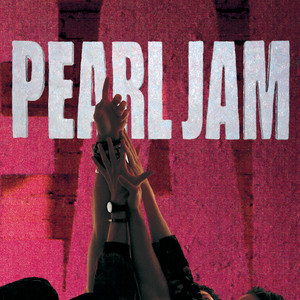
It was recorded around the Ten sessions in 1991. Stone Gossard, Jeff Ament, and McCready had been at this together for years by then — through the end of Mother Love Bone, through Andrew Wood’s death, through watching a band they believed in come apart before it got its moment. Ten was partly a record about surviving that, and its big songs — “Alive,” “Evenflow” — carried that survival with real muscle. “Yellow Ledbetter” was too loose, too sad, too open-ended to sit beside them.
It didn’t make the record.
What Vedder is singing about, as far as anyone can tell, is a man coming home from war. Or a man learning his brother isn’t coming home from war. Or both. Certain images surface through the murk — a box, a flag, a porch, the feeling of being left behind in a country that no longer quite feels like yours. You don’t get a full libretto. You get the territory, and the territory is grief: standing at a window while a flag gets folded and handed to a mother, feeling the weight of it and your own uselessness against the weight of it.
Then the one line.
“I don’t know whether I’m the boxer or the bag.”
That is the only place in the song where Vedder’s diction sharpens all the way. Everything else is allowed to dissolve into feeling. That line has to land, and it lands every time, because it says plainly what most songs won’t: that you can be hit by something enormous and not know whether you’re fighting back or just absorbing it — and not be sure the difference matters.
The solo that opens the song and winds through it was largely improvised. McCready wasn’t executing a plan. He was in the room, following where the song wanted to go. The part people carry with them — the figure he returns to at the end and repeats, as if he doesn’t want to put it down — nobody wrote that. It happened.
Pearl Jam became a lot of things after Ten. They fought Ticketmaster. They made records that confounded the audience that had shown up for “Even Flow.” They outlasted almost everyone who came up beside them — Cobain gone, Layne Staley gone, Andy Wood gone before any of them got famous. They are still working. “Yellow Ledbetter” is the sound of the band before any of that hardened into a story about the band: five musicians in a room, one of them playing something that barely needs a song around it, one of them singing words he never fixed in place, all of it aimed at something just out of frame.
The ending is just the guitar circling back. McCready plays the figure one more time and the song stops — not with a slam, just the way a conversation ends when both people have said enough and the quiet is acceptable.
I think the blur was honest. A man in that house, watching that car pull away, would not have his words in order either. Vedder left almost everything unfixed for thirty years, and the one line he made sure we heard, every night, in every version, is the one that says I don’t know.
He still sings it that way. He still doesn’t know. Neither do we.