Copperline
James Taylor wrote "Copperline" with Reynolds Price, and Price was going blind when they wrote it.
James Taylor wrote “Copperline” with Reynolds Price, and Price was going blind when they wrote it.
That’s worth sitting with before you hear a single note. Price was a novelist — A Long and Happy Life, Kate Vaiden — a man whose whole life had been about seeing things clearly enough to put them on the page. By the late 1980s a spinal tumor had taken away the use of his legs and was threatening his sight. Taylor approached him about collaborating, and what they built together was a song about a childhood place that no longer exists, written by a man who could feel the world slowly going dark. You hear that when you know it. You might hear it even when you don’t.
The place was real. Copperline is a stretch along Bavarian Creek near Chapel Hill, North Carolina, where Taylor spent part of his childhood — red clay banks, river light, the particular smell of summer in the Carolina Piedmont. Taylor grew up moving: Chapel Hill, then Milton Academy in Massachusetts, then McLean Hospital at seventeen, then London, then the whole machinery of a music career that started so young and so fast that the childhood behind it became a kind of myth. The song is what happens when you try to find your way back to a myth and discover the geography has changed but the feeling hasn’t gone anywhere.
“Half a mile down to Morgan Creek, leaning heavy on the end of the week.”
That’s how it opens — not with an image of paradise, not with golden-hour nostalgia, but with weight. The creek is there, but so is the end of the week, and the person leaning on it. Even in memory, people are tired. Even Eden had a Monday.
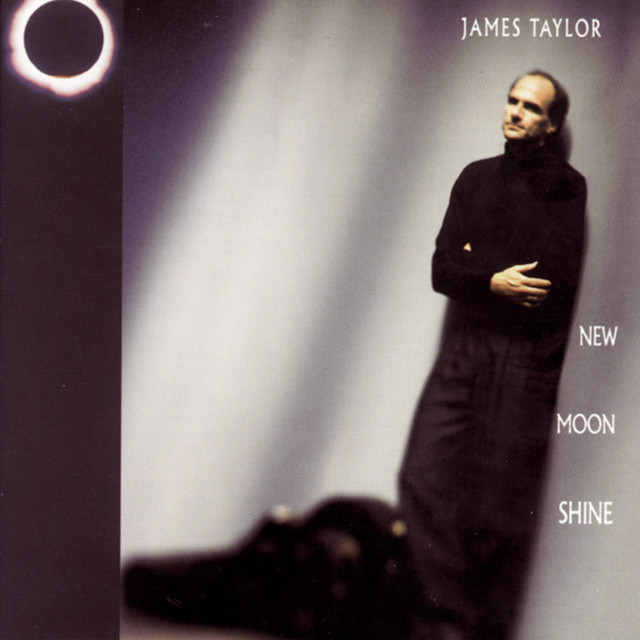
Taylor recorded the studio version for New Moon Shine in 1991, but the song lives best in the live version — the one where the arrangement opens up and breathes, where you can hear the space around the acoustic guitar and the way his voice settles into the vowels like he’s not in any hurry to leave them. He played it for years after the album came out, and it held up the way songs hold up when they’re true rather than crafted. You can hear the difference. A crafted song gets polished smoother with every performance. A true song gets worn in.
Reynolds Price died in 2011. By the end of his life he had written more than thirty books, much of it after the surgery that left him paralyzed and half-blind. He described the years after his diagnosis as the most productive of his life — which is the kind of thing that sounds impossible and isn’t. Some people find out what they need to say when they discover they’re running out of time to say it. Price was one of those people.
What Taylor understood, and what Price helped him find the words for, is that the places we come from are not really places. They’re conditions. States of being. You can go back to Chapel Hill, stand on Bavarian Creek, feel the red clay under your shoes — and the thing you’re looking for won’t be there, because it was never the geography. It was the version of yourself that lived inside that geography, and that version is gone in the same way all versions of ourselves eventually go, dissolved into whoever we became next.
“First time I tried to put it in words, a mockingbird sang and the whole thing blurred.”
That line is the whole argument. Some things resist language. You get close and the bird starts in, and the clarity you were reaching for slips sideways. Taylor and Price took that feeling — the way memory resists being pinned down, the way the thing you love most about a place is precisely the thing you can’t explain — and instead of fighting it, they just described the resistance. That’s harder than it sounds.
There’s a carefulness to this song that you don’t always notice because it feels so easy. The production on the live record is unhurried. The guitar stays out of its own way. Taylor doesn’t oversing a note of it — and Taylor was fully capable of oversinging; he had the instrument for it. He chose not to. He chose to sound like a man remembering out loud, not a man performing remembrance, and that choice is why the song still sounds honest thirty-plus years on.
He was forty-three when the studio version came out. Old enough to know what he’d lost, young enough to still feel the loss as something specific rather than general. That’s the window where this kind of song gets written. Too young and you’re writing about leaving. Too old and you’re writing about the leaving in the abstract. At forty-three, the leaving is still particular. You can still name the creek.
Copperline. A half mile down. The clay banks and the river and the weight of the week, and the mockingbird that starts up every time you try to say what it meant. Taylor found his way back to it the only way you actually can — not by going there, but by writing it down, and then playing it every night until the song remembers what he can’t quite reach anymore.
That’s what the song is for. That’s what all of them are for.