Blue Sky
Dickey Betts wrote "Blue Sky" for a woman named Sandy Wabegijig — the woman he was about to marry — and it's the only Allman Brothers song where you can feel that the person who wr
Two guitars are trading phrases, ascending, neither one leading, neither one following. Duane Allman’s slide and Dickey Betts’s lead, running together with the easy precision of two people who have spent years listening to each other think. It’s the summer of 1971, Criteria Studios, Miami. Nobody is arguing. Nothing is wrong yet. Dickey Betts wrote “Blue Sky” for Sandy Wabegijig — the woman he was about to marry — and it’s the only Allman Brothers song where you can feel that the person who wrote it was happy.
That’s not a small thing. The band’s catalog is an atlas of hard country — loss, danger, the road grinding people down, Duane’s slide pushing up against something enormous and dark. And then there’s this. Five minutes and eleven seconds of clear sky, open chord voicings, and two guitars finding each other across the room without a single sharp edge. The whole song sounds like a man who can’t quite believe his luck.
Dickey had been writing songs in the Allman Brothers’ orbit long enough to know the register the band lived in. “In Memory of Elizabeth Reed” was his — stately, searching, built for a graveyard. He could go deep. But “Blue Sky” is what he wrote when something good was actually happening, and he didn’t try to complicate it or hedge it with darkness. He just wrote what he saw: a clear morning, a woman beside him, and the particular weightlessness of a day that hasn’t asked anything of you yet.
“You’re my blue sky, you’re my sunny day. Lord, you know it makes me high when you turn your love my way.”
That’s the whole thesis. It doesn’t deepen from there because it doesn’t need to.
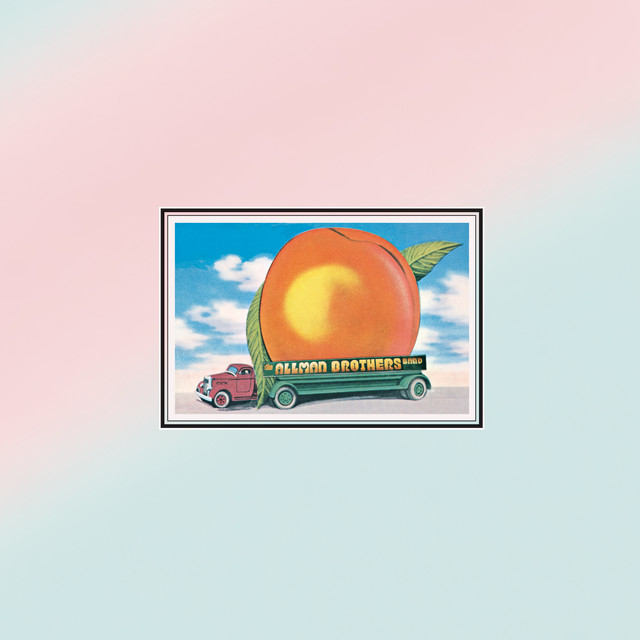
The session was part of the run that would become Eat a Peach — an album that was already shadowed before it was finished. Duane Allman died in October 1971, three weeks after those sessions wrapped, his motorcycle going down on a Macon street on a Tuesday afternoon. He was twenty-four. The album carries that. “Ain’t Wastin’ Time No More,” “Les Brers in A Minor,” the full live side — you can hear the band learning to carry the weight of his absence in real time.
“Blue Sky” is the counterweight. It was recorded while Duane was still alive, and he plays on it. That interplay — two guitars in conversation, neither one fighting for the lead — was what the Allman Brothers were built for, and “Blue Sky” is the clearest example of what it sounded like when everything was right.
Jaimoe and Butch Trucks hold it together on drums without ever pushing the tempo anywhere it doesn’t want to go. Berry Oakley’s bass sits low and easy. Gregg Allman plays organ in the background, not fighting for space, just filling the air with warm color. The whole band is serving the song instead of the song serving the band.
Betts took the lead vocal himself, which was unusual — Gregg was the voice of the band, the instrument that could make a room stop. But “Blue Sky” needed something different. Gregg’s voice carries weight even when it’s trying not to. Dickey’s voice on this track is lighter, unguarded, a little rough in the upper register, and that roughness is exactly right. It sounds like a man singing to someone who’s standing right there, not performing for an audience.
After Duane died and the band kept going — and they did keep going, because Gregg and Dickey had signed a lease on this sound together and neither one knew how to leave it — “Blue Sky” became a different kind of song. Not a harder song. Not a sadder song. Something closer to a document: proof that there was a time when both guitarists were alive and in the room and the morning was clear and a woman named Sandy had said yes and Dickey Betts sat down and wrote the exact truth of how that felt.
The song still closes the same way it always did. The guitars climb toward each other and find the same note and hold it there, unhurried, until it fades. No resolution that feels earned through suffering. Just two people, two guitars, one clear morning.
Some songs are about what you survive. This one is about what you get to have before the surviving starts. Dickey Betts played “Blue Sky” for the rest of his life, and no matter what came after — the breakups, the feuds, the decades of a band that kept pulling itself apart and putting itself back together — that morning was still in the song, exactly where he left it.