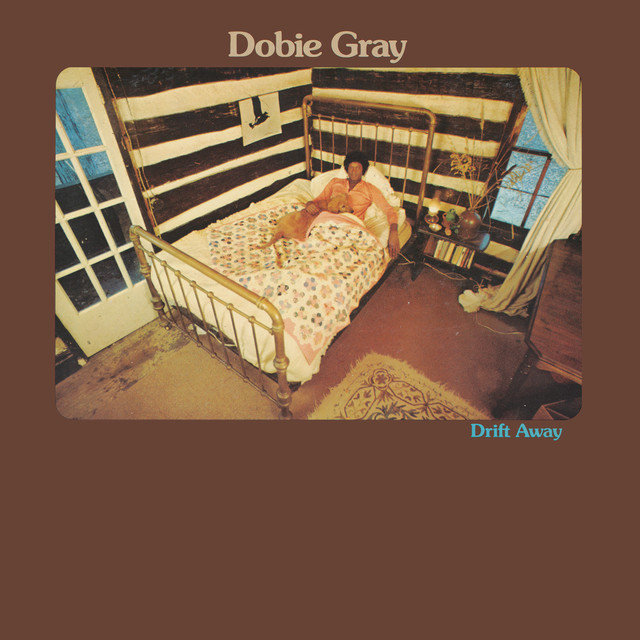
Drift Away
Mentor Williams wrote "Drift Away" in 1972, and he almost gave it away before Dobie Gray ever heard it.
Ask three people who sings “Drift Away” and you may get three different answers. Rod Stewart, whose 1976 cover was the bigger hit. Uncle Kracker, who took it to number nine in 2003 and handed it to a whole new generation. But the version everything else is built on is Dobie Gray’s 1973 original — and it very nearly didn’t exist.
Mentor Williams wrote the song in 1972 and shopped it around — to John Fred, to a handful of other artists who passed or sat on it — and it nearly vanished into the pile of nearly-songs that never find their voice. Then Gray cut it at Muscle Shoals Sound Studio in Sheffield, Alabama, with Williams himself in the room, and whatever alchemy happens in that building on Jackson Highway happened again.
The song didn’t chart the way it deserved. It peaked at number five in the summer of 1973, which sounds respectable enough, but it disappeared from radio quickly, crowded out by bigger machinery. Dobie Gray never had another hit to match it. In a different industry, this would be a sad story. But “Drift Away” has a second life that most number-one records never get — it kept finding people, kept turning up on compilation after compilation, kept playing through the speakers of diners and gas stations and late-night car radios for fifty years. The song outlived its moment by being indifferent to its moment.
That’s because the song is not about a time. It’s about a need.
“Give me the beat, boys, and free my soul — I want to get lost in your rock and roll and drift away.”
There is almost nothing complicated about that lyric. Williams wasn’t trying to say something difficult. He was trying to say something true, and he found the words on the first pass. The want in that line — the specific want of a tired person asking music to carry them somewhere the rest of their life can’t reach — is not a feeling that belongs to 1973. It belongs to every year. It belonged to whatever year you were in when you first needed it.
Gray understood this instinctively. He had been around long enough to know the difference between a song you perform and a song you inhabit. He’d recorded under different names, cut R&B sides in the mid-sixties, toured the chitlin circuit, worked the margins of a business that was generous with its energy and stingy with its money. By the time he sat down with this song he was thirty years old and had earned the weariness that the lyric required. He didn’t have to manufacture it.
What he brought to the track was a voice that sits somewhere between gravel and warmth — not polished, not raw, just honest. The musicians at Muscle Shoals had been in that room for years, cutting everything from soul to country to rock without ever blinking, and what they gave Gray was a groove so settled and unhurried that the song feels like it’s already in motion when the needle drops. The piano line that opens it is not a flourish. It’s an invitation. Come in, sit down, let it carry you.
Mentor Williams spent decades watching other people record his song. Each version found its own audience, and each audience came to the song with its own reasons.
But Williams wrote it as a soul song, and Gray sang it as a soul song, and the soul version is the one that carries the real weight. Because soul music has always been the music of people who need a way out — not permanently, not recklessly, just for three minutes and fifty-eight seconds. Long enough to put down whatever they’re carrying and let somebody else’s rhythm do the work.
“And when my mind is free, you know a melody can move me.”
That’s not a metaphor. That’s a description of a physical fact that anyone who has ever needed music has felt in their body. The melody moves you. It lifts the thing. You come back to the same room, the same problems, the same Tuesday, but you come back lighter — just enough lighter to keep going.
Dobie Gray died in December 2011, at sixty-eight, from complications after surgery. He had a catalog wider and deeper than most people knew, and he spent his later years performing whenever he could, this song always the one the crowd waited for. He never seemed to resent that. By all accounts he treated the song with the same sincerity every time — not as a closing obligation but as the reason the whole night had been building.
He knew what it was. He’d been a working musician long enough to understand that most people never get a song like this, a song that needs exactly the voice they have, that says exactly what they needed to say, that keeps finding its way to people who need it.
Mentor Williams almost gave it to someone else. It’s worth sitting with how close we came to never hearing what Dobie Gray did with it.