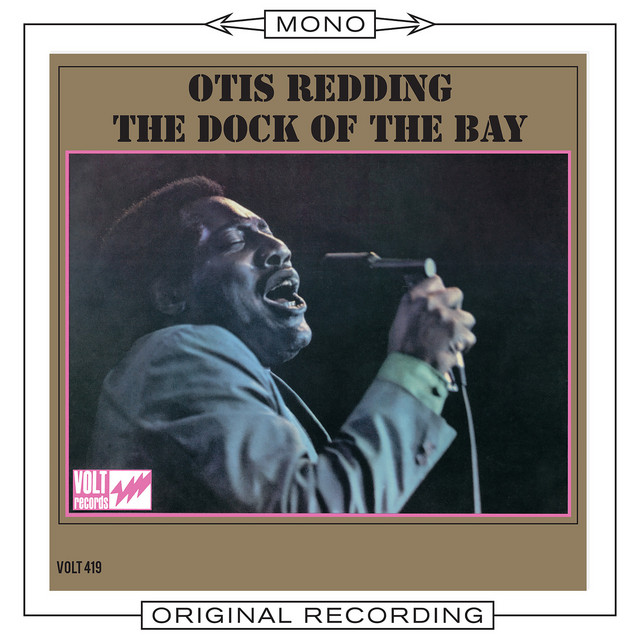
(Sittin' On) The Dock of the Bay
He recorded it three days before he died. You can hear him letting go of everything.
He whistles at the end because he hadn’t written the last verse yet.
That’s the part that gets me. Not the lyrics, not the melody, not the way his voice sits on the word nothing like a man who’s made peace with the weight of it. The whistle. Because Otis Redding walked into the studio on December 7, 1967, and the song wasn’t finished, and he whistled as a placeholder — something to fill the space until he could come back and write the words that belonged there.
He never came back. Three days later his plane went into a lake in Wisconsin. He was twenty-six.
The producer kept the whistle. Of course he kept the whistle. What else could he do? Otis was gone, and the space at the end of the song was never going to be filled by anything else, and the whistle — aimless, unhurried, the sound of a man with all the time in the world — became the most famous thirty seconds in soul music.
I think about time differently when I listen to this song. Not in the philosophical way — not life is short, seize the day, all the bumper sticker stuff. In the physical way. The way Otis sat down at the edge of that song and did what people do when they have nowhere to be and nothing to prove. He just sat there. Watched the tide. Let the world do its thing without him for a minute.
“Sittin’ in the morning sun, I’ll be sittin’ when the evening comes.”
There’s no ambition in that line. No hustle. No next move. That’s what makes it so radical, especially from a man who had been one of the hardest-working performers in music — a guy who screamed his throat raw on stage, who put everything into every show, who never once held back. And here, at the end, he’s done pushing. He’s just sitting.
The song crossed over in a way nothing Otis had done before could manage. It hit number one after he died — his first and only number one. White audiences who had never bought an Otis Redding record bought this one, because the song doesn’t belong to any genre or audience or moment. It belongs to every person who has ever been tired. Not sleepy. Tired. The kind of tired where you finally stop running and sit down somewhere with a view, and you watch the ships roll in, and you watch them roll away again, and you realize that the watching is enough.
There’s a kind of man who sits on his porch in the evening and does nothing. Not reading. Not talking. Just sitting. When you’re a kid you think he’s bored. He isn’t bored. He’s doing exactly what Otis was doing — letting the world roll in and roll away without needing to be part of it for a minute. That’s not laziness. That’s the hardest thing in the world for people who’ve spent their whole lives moving.
The whistle at the end is Otis Redding sitting still. He didn’t know it was the last song he’d ever make. He thought he’d come back and finish it. But the unfinished version turned out to be the perfect version, because the empty space at the end is the whole point.
Some things don’t need a last verse. Some things are better left with just the sound of a man who finally stopped running, whistling into the air, unhurried, unfinished, free.