Father's Søn
There is a version of this song that Stephen Wilson Jr.
There is a version of this song that Stephen Wilson Jr. probably could have written in an afternoon — the easy one, where the father is a hero and the son inherits everything clean. That’s not the song he wrote.
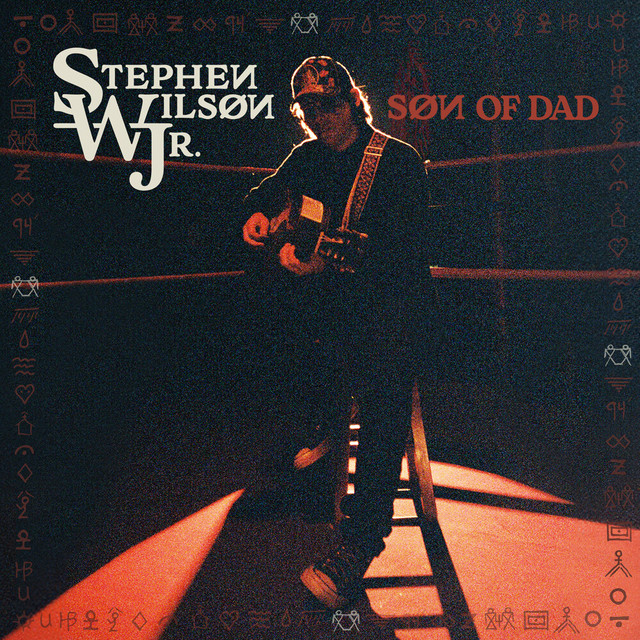
Father’s Søn came out of Wilson’s debut album son of dad, a title that sounds redundant until you sit with it. A son of a dad. Not a son of a legend, not the heir to something polished. Just the son of a man who was himself somebody’s son, with all the unfinished business that implies. The whole record turns that phrase over and over, looking at it from different angles, and this song is where it opens all the way up.
Wilson grew up in Alabama, the kind of upbringing that gives you both the church and the bar in the same bloodstream. His father wasn’t absent, exactly, but fathers can be present in body and somewhere else entirely — in the bottle, in the work, in the silence that settles around certain men when the day ends and they don’t know what to do with themselves. Wilson has talked in interviews about watching his dad, trying to read him, trying to figure out which parts to inherit and which parts to leave on the floor. That’s the engine of this song. Not rage, not grief, not forgiveness — the in-between place, where you’re still sorting.
What Wilson does in the lyric is catalogue without editorializing. He lists the things a son picks up from a father without being asked — the posture, the language, the particular way of holding anger, the hand gestures, the morning rituals. He’s not saying these things are bad. He’s saying they’re his now, whether he chose them or not.
“I’ve got my father’s hands, I’ve got my father’s eyes — trying not to turn into what I’ve come to recognize.”
That second line is where the song earns itself. Trying not to turn into what I’ve come to recognize. Not what I hate. Not what I fear. What I recognize — which is a different word entirely, a word that allows for love in the same breath as the warning. You recognize something you know. And you know something you’ve lived inside of. The line holds the whole tension of the record: this man made me, and I am grateful and wary in equal measure, and I am not sure yet where gratitude ends and complicity begins.
Wilson sings it without pressing. The melody stays low and even, the production stripped back — acoustic guitar, some fiddle moving quietly underneath, his voice doing the work without theatrical escalation. Producers Derek Mixon and Brad Tursi gave the track room to breathe, which was the right call, because the song needs that air to feel like confession rather than performance. It’s the kind of production choice that gets called tasteful and then nobody mentions it again, but it’s carrying half the weight. Mixon and Tursi understood what the song was doing and got out of its way.
The turn in the final section doesn’t resolve anything. That’s the point. Wilson doesn’t arrive at forgiveness or condemnation or the clean break that would make a better story. He arrives at continuation — the understanding that you carry your father into every room you enter, and the question of what you do with that is not a question you answer once. You answer it every day, in small decisions, in moments nobody sees. He’s still sorting. He’s singing about still sorting, which is the most honest version of this story there is.
There’s a whole tradition of country songs about fathers — some of them warm, some of them brutal, almost all of them eventually conclusive, one way or another. This one refuses the conclusion, and that refusal is what makes it feel true. Because most of us, if we’re being honest about the men who raised us, are still somewhere in the middle — not yet at peace with them, not willing to write them off, just living with the inheritance and trying to figure out what to keep.
Wilson is twenty-something writing from the middle of it, not from the far shore. You can hear that in the song. The unresolved quality isn’t a weakness in the craft; it’s the whole argument. Some reckonings don’t finish. Some songs just hold the space where the finishing would be and say: I know. I know. Me too.