On Every Street
Dire Straits made their last studio record in 1991. The title track runs seven minutes, and the man singing it never finds what he's looking for.
Dire Straits made their last studio record in 1991 and called it On Every Street. The title track runs seven minutes. It is about a man searching for a woman who has disappeared into the ordinary world — into the streetlights, the hotels, the faces of strangers — and across those seven minutes he never finds her.
He doesn’t find her at the end, either. The song stops with him still looking.
Mark Knopfler had been making music under that name since 1977 — since the demo tape that landed on a desk at Phonogram in London, since “Sultans of Swing” announced that somebody in a Newcastle flat was playing guitar with a fingerpicking style learned from Chet Atkins and J.J. Cale and bent into something of his own. By 1991 the band had sold a hundred million records and played stadiums on six continents, and Knopfler was done. He knew it. He hadn’t said it out loud yet.
The title track is seven minutes of him saying it.
Listen to how the song is built. There’s a repeated figure on the guitar that circles back on itself without resolving — slow, patient, the way a man circles a neighborhood he used to know, looking for something he can’t name. It never lands anywhere. It just keeps going around.
The band that recorded it was skeletal by then. Guy Fletcher produced the album. Jack Sonni had already left. Terry Williams, Pick Withers, John Illsley — what remained was mostly Knopfler’s guitar and the space around it, which is where the weight in a Dire Straits record always lived anyway.
And then there’s the lyric, which is stranger than it first sounds:
“There’s a girl in the everybody street.”
Not on every street. In the everybody street. She hasn’t gone into hiding. She has dissolved into the crowd — everywhere and nowhere at once, part of the ordinary world now, which is the one place you can’t search. He looks for her in hotels. In the pools of streetlight. In the faces of strangers. He looks in the places memory goes when it doesn’t want to be found.
Seven minutes. He doesn’t find her.
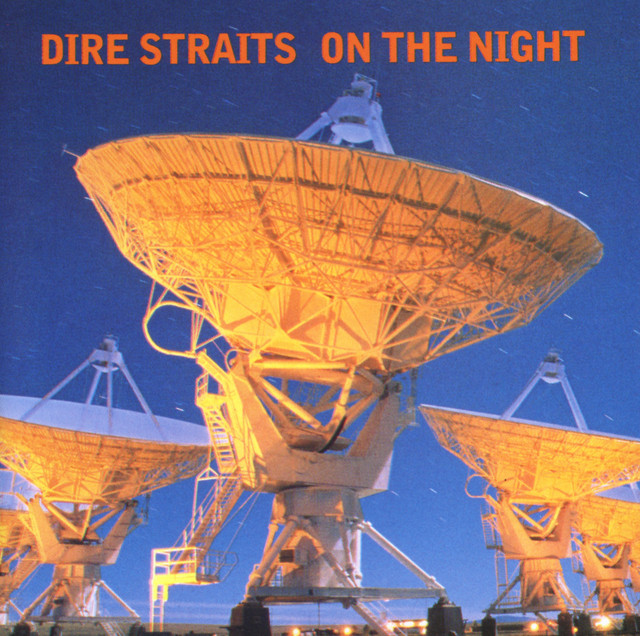
There’s a live version on On the Night, recorded on the 1992–93 tour. It was the final Dire Straits tour, though nobody was calling it that yet. Knopfler plays the song in front of a stadium full of people and it still sounds like a private act. He never postured on a stage in his life. He plays like he’s forgotten you’re there — like whatever he’s working through is real and ongoing, and the audience has simply been allowed in the room.
The live take runs longer. The solo, if that’s even the word for it — it’s closer to a conversation with the chord changes — goes deeper into the search without getting any nearer to an answer. He doesn’t give you the resolution you think you want. He gives you the searching. A man keeps walking because stopping means admitting that what he’s looking for isn’t coming back.
The band dissolved in 1995, two years after the tour ended. Knopfler called the decision difficult but inevitable, and he’s made records under his own name ever since — quieter ones, country-inflected, the Celtic shadows that were always underneath the Dire Straits sound finally coming up to the surface. Good records. But something closed when the band closed, and I think he knew that when he wrote this song, four years before it happened.
Because here is the line the song ends on:
“I’ll always be looking for you.”
Not I found you. Not I’ll find you. Present tense, ongoing, no finish line. By the last verse the search isn’t a phase he’s passing through on the way to something better. It’s the condition. He has accepted that the looking is what’s left, and he picks up the guitar and keeps looking anyway.
That’s what the last Dire Straits studio record left us with. Seven minutes long. The record ends, the band ends, and the looking doesn’t.