Calling Elvis
After this tour, Dire Straits never made another record. A ten-minute song about a phone nobody answers, played by a band about to go quiet itself.
After this tour, Dire Straits never made another record.
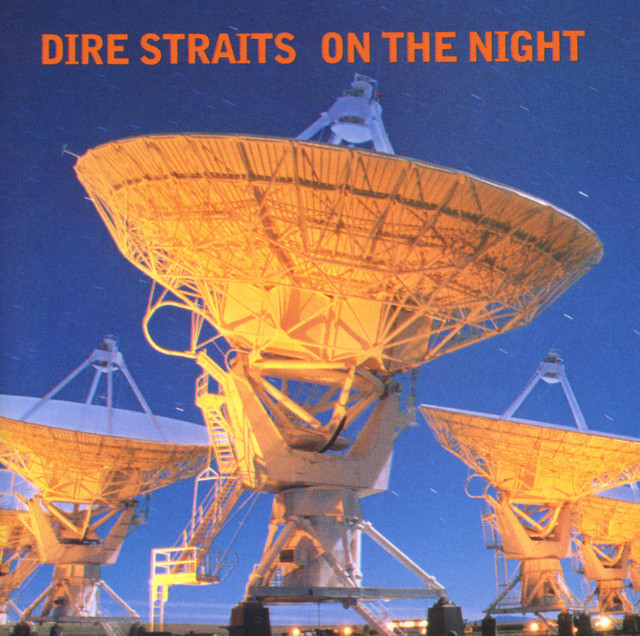
The version of “Calling Elvis” most people know is the live one — ten minutes and twenty-five seconds, from On the Night, recorded on the final tour in 1992 and 1993. A song about dialing a number that will never be answered, played by a band that was about to stop answering too. Nobody announced it. They just stopped.
The studio version came out on On Every Street in 1991. The conceit is simple: the narrator is calling Elvis. On the phone. The circuits are busy. Nobody picks up. He keeps trying.
“Calling Elvis, is anybody home?”
By 1991, Elvis had been dead roughly fourteen years — he died on the bathroom floor at Graceland, and what was left afterward wasn’t a person you could reach. The man had been replaced by the mythology. You could buy him, quote him, dress as him. You could not call him. The song is about the other end of that line — about loving something that’s gone and picking up the phone anyway, because that is what people do. You know what you’re going to hear. You dial.
Knopfler doesn’t resolve the question. He plays it out for ten minutes and leaves it open.
The band on that tour was enormous. Guy Fletcher on keys. John Illsley on bass, the way he had been since the beginning, since the rooms were small and the PA was rented. Jack Sonni was gone by then. There were horns. Moving the show took a full production crew and a freight truck — a long way from the bedsit in Deptford where Knopfler, Illsley, and David Knopfler first worked out what the band was going to be.
Knopfler already knew the room wasn’t going to be that big again. He was thinking about what came after — the solo records, the film scores, a quieter life in music. You can hear it in the playing. I can’t tell you exactly where; it’s not one note. But it’s there.
He plays guitar with his fingers, no pick. He has since Sultans of Swing, since the first record. The tone that comes from that — warm, slightly muted, slightly rough — comes from skin on string, and nobody else has it, because it isn’t a technique. It’s contact.
What surprises me about the live cut is that the intimacy survives the arena. The crowd is out there somewhere in the distance, the production is at full scale, and the solo in the back half still sounds like a man working through something alone. It runs four, five minutes. Unhurried. Circling the same grief the lyrics opened with. He’s still calling. Still getting no answer. He plays it anyway.
That part of it isn’t absurd to me at all. Anyone who has lost someone knows the impulse. You go back to the line. You listen to the static. You let it ring.
After the tour, after On the Night, the band didn’t break up. There was no press conference, no farewell statement. They sold something like a hundred and twenty million albums, and then they simply didn’t make another one. Knopfler went on to Golden Heart, the Notting Hillbillies, Sailing to Philadelphia, the work with Emmylou Harris. Good work. But Dire Straits ended the way a phone call ends when the other party quietly hangs up — no click loud enough to mark the moment, just the slow understanding that nobody is there anymore.
So the last big document of this band is a ten-minute song about calling someone who will never pick up. They recorded the question, put it on a live album, and then went silent on their side of the line too.
Is anybody home?
Eventually the silence answers for you.