Heavy Fuel
A song about a man who quits nothing closed the shows on the tour where Dire Straits quit.
“Heavy Fuel” closed the shows on Dire Straits’ last tour.
I keep coming back to that. Mark Knopfler wrote a song about a man who refuses to quit anything — the smoking, the drinking, the fast cars, the late nights — and then his band played it at the end of the night, every night, on the tour where they were quitting.
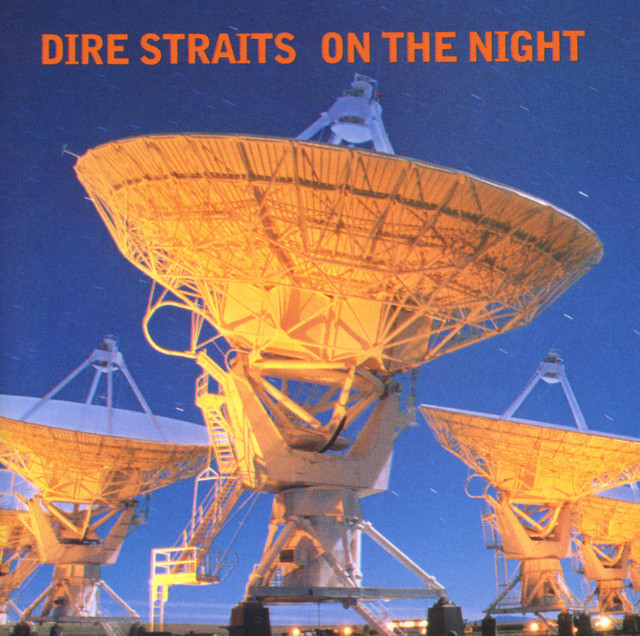
The song started on On Every Street in 1991. That record came out quietly for a band of Dire Straits’ size — almost politely. Then the band took it on the road for two years, and in 1993 they released On the Night, the live document of that farewell tour. The live version is the one people mean when they say “Heavy Fuel.” Five minutes and twenty-two seconds of a man listing his vices the way another man might list his accomplishments.
He doesn’t drink coffee. He doesn’t eat his vegetables. He doesn’t run in the morning. He smokes. He drinks. He drives fast. He stays up late.
“Only the finest of grape and grain. That’s all that I require.”
What gets me is that Knopfler doesn’t judge him. He plays the character with real affection — with obvious delight in the man’s complete refusal to improve himself — and that affection changes what the song is. It is not a warning. It is not a satire. It’s a portrait of somebody who has thought hard about how he wants to live, arrived at his answer, and stopped arguing about it. You end up on his side. I do, anyway.
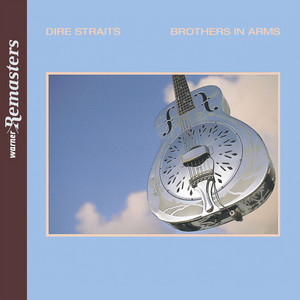
People forget Knopfler could be funny. They remember the delicate fingerpicked songs, the elegiac weight of Brothers in Arms. But “Heavy Fuel” is a comedy, and a committed one.
“I don’t care what the doctors say, I get up every night and I pray: send me someone who’s strong and somewhat sincere.”
Somewhat sincere. The man has standards. He has simply moved them down to where he can clear them. That’s an honest line about how a lot of people actually live, and it’s funnier because nobody in the song flinches at it.
The live recording works better than the studio cut, and the reason is the band.
Guy Fletcher and Alan Clark on keyboards. Jack Sonni and Phil Palmer on rhythm guitar. John Illsley on bass, holding the bottom of the song the way Illsley held things down for sixteen years — without fuss, without credit, essential. Chris White and Ed Shearmur on horns. Danny Cummings on percussion. A full touring band that had played these songs for two years straight, long enough to stop thinking about them and just play them. The groove sits there for the whole run, no heroics, and the song doesn’t need anything else.
Over it, Knopfler’s guitar comes in on the intro like a diesel engine turning over. Clean, then dirty, then somewhere in between. He never plays more than the song asks for. After sixteen years of being one of the most listened-to guitarists alive, he still played less and let it mean more. That restraint is the quietest fact about this band, and it might be the truest one.
Here is the part of the history that the song doesn’t say out loud.
By 1993, Dire Straits had been a band for sixteen years. Brothers in Arms had been one of the best-selling albums of the entire decade — one of the first records used to show people what a compact disc could do. Knopfler could have kept going. Kept selling arenas. Kept printing money.
He wound it down instead. The On Every Street tour was the last one. On the Night is what they left behind — a band saying goodbye not with a ballad but with a two-hour set that proved they could still fill the room.
And the song they ended on was this one. The man in the song lights another cigarette, rolls down the window, points the car at the horizon, and answers to nobody. The band playing behind him had already decided to go home.
I don’t take the song as advice. Drink your water. See your doctor. But I think the reason it lands, and the reason it earned the last slot of the night, is sincerity — the thing the lyric only asks for “somewhat,” the song delivers in full. The character means every word of how he lives. Knopfler meant every note of how he played. And the goodbye was real: they closed the set, closed the tour, closed the band.
The man in “Heavy Fuel” never stops. The band that played him did. They gave him the last word anyway.