Fallin' Down
The Buffalo, New York winter of 1993 was not the backdrop you'd choose for a breakthrough.
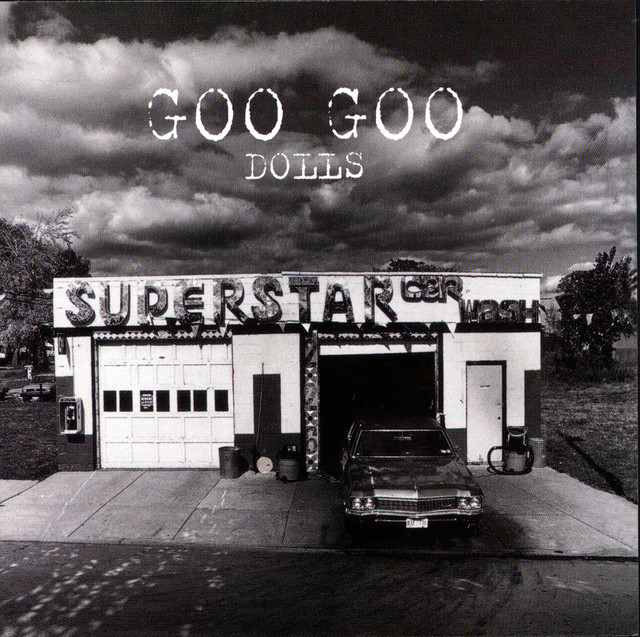
The Buffalo, New York winter of 1993 was not the backdrop you’d choose for a breakthrough. The Goo Goo Dolls were six years into their career, broke enough that a van with heat was still a good tour, and working with producer Rob Cavallo on Superstar Car Wash — their fourth album, their first for Metal Blade, their last real shot before the whole thing was going to stop mattering.
“Fallin’ Down” opens the record. It runs three minutes and eighteen seconds, and it sounds like a band that knows exactly how much time they have left to get it right.
What John Rzeznik understood about writing in that register — the one where it’s too late to be cool about it — is that you have to name the thing plainly. Not dress it up. Not make it interesting. Just say it. I’m fallin’ down. The whole song is right there in four words. The rest of the three minutes is just holding that weight up to the light and letting the listener look.
The Goo Goo Dolls in 1993 are worth separating from what they became. The power-pop era that made them famous — “Iris,” the City of Angels soundtrack, the VH1 rotation that ran all through 1998 — was still five years out. Superstar Car Wash is a harder record, closer to the band’s punk roots, produced with the kind of energy you get when a group is fighting for survival rather than managing success. Cavallo, who’d go on to work with Green Day on Dookie, understood that energy. He didn’t smooth it out.
“Fallin’ Down” sits in that tension between the rawness the band came from and the melodic pull they were moving toward. The guitars are compressed and urgent. The rhythm section — Robby Takac on bass, George Tutuska still on drums — pushes hard underneath. But the chorus opens up into something that belongs to a different, bigger song, the kind that gets sung by people who don’t know the band.
That gap is where the song lives. The verse is honest about the mess. The chorus reaches for something anyway.
And all the friends that I’ve had in my life Can’t help the way I feel inside.
That’s the turn. The verse catalogs the fall — the vague specific erosion that happens when you’re somewhere between twenty-five and thirty and you realize the thing you thought was coming is not coming on its own. And then those two lines land, and they’re not poetic, they’re just true: the people who love you cannot fix this. That’s not loneliness speaking. That’s clarity.
Rzeznik has talked about that period as one where the band was uncertain about everything — whether records would keep getting made, whether anyone was listening, whether the whole enterprise was just stubbornness dressed up as a career. “Fallin’ Down” came out of that. It’s not about one moment or one relationship. It’s about the accumulated weight of keeping something going when you can’t yet see why.
The album didn’t break them. Nothing did until “Name” showed up on A Boy Named Goo two years later. But Superstar Car Wash made the case that the band could write at that level, and Cavallo made the case on their behalf to anyone in the industry who needed convincing. The pieces were all there.
When you put “Fallin’ Down” on now — not as nostalgia, just as a song — what you get is three minutes of a young band refusing to make falling down sound dramatic. No grand gesture. No orchestral swell. Just a guitar that’s been tuned honest, a voice saying the plain thing, and a chorus that reaches up from the bottom of it, not because things are fine, but because reaching is the only move that makes sense.
That’s a harder thing to write than it sounds. Most songs about falling dress it up. This one just opens the door and lets you walk in.