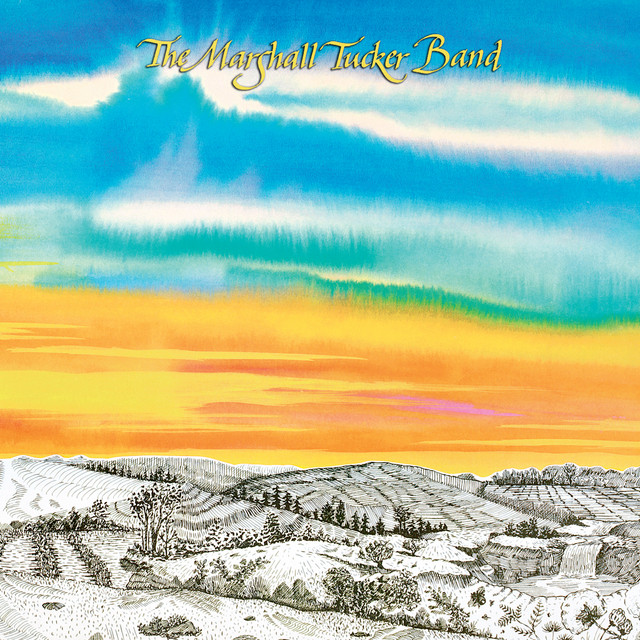
Can't You See
Toy Caldwell wrote the whole song in one sitting, in a Holiday Inn room, sometime around 1972, and never changed a word.
Toy Caldwell wrote the whole song in one sitting, in a Holiday Inn room, sometime around 1972, and never changed a word.
That’s the part worth holding onto — not the guitar solo, not the freight-train tempo, not the fact that this song has been the last call at a thousand roadhouses from Spartanburg to Sacramento. The fact that it came out whole, like it had been sitting in the room waiting for him.
He was twenty-three or twenty-four, from Spartanburg, South Carolina, the kind of place where the mills run all night and the music runs harder. He’d already served in Vietnam. He’d already lost his brother Tommy in a car wreck — not yet, that came later, but the weight of early loss was already written into how he played. He picked up a guitar the way some men pick up a bottle, and when he put it down the song was finished.
The Marshall Tucker Band wasn’t a band that got talked about the way the Allman Brothers got talked about, and that’s a small injustice worth naming. They came out of the same Carolina and Georgia soil, same circuit of sweat-soaked clubs and Southern honky-tonks, but they had something the Allmans didn’t — a flute player. Jerry Eubanks on flute and saxophone, sitting in the middle of a hard-rock band like he belonged there, and somehow he did. That’s the thing about Marshall Tucker: they kept adding voices to the room when most bands in their lane were cutting down to the essentials. The sound got bigger and stranger and more itself.
“Can’t You See” is the one that made it out. It’s a simple song about a man trying to get gone — trying to find a train, a mountain, a woman who will let him be — and it knows exactly what it is. It doesn’t pretend to be complicated. The narrator is running from something he can’t name clearly, which is the only honest way to describe why people run.
“Gonna find me a hole in the wall, gonna crawl inside and die.”
Not metaphor. Not posturing. Just a man stating his condition as plainly as he can manage.
The version on Carolina Dreams Tour ‘77 is the one that does what studio recordings can’t always do — it lets the song breathe until it finds its actual size. Six minutes, live, and Caldwell’s slide guitar doesn’t so much solo as it converses. He’s not showing off. He’s answering a question the song asked in the first verse and couldn’t finish in four minutes. There’s a patience to it that you don’t hear often in rock and roll, where the virtue usually rewarded is attack.
The rhythm section underneath him — Paul Riddle on drums, Tommy Caldwell on bass, Toy’s brother, his anchor — is the reason the whole thing holds. The bass doesn’t drop out during the guitar solo. It stays right there, root and fifth, telling the song where it lives. When a band is that locked in, you don’t hear it as two instruments. You hear it as a floor.
Doug Gray sings it like he’s been singing it his whole life, which by 1977 he more or less had. His voice doesn’t have the raw bark of a Gregg Allman or the wrung-out ache of a Ronnie Van Zant. It sits somewhere quieter, more conversational — a man describing his situation to someone who might understand, not performing the pain, just reporting it.
Tommy Caldwell died in 1980. Car wreck, Spartanburg. He was twenty-eight. The band kept going, with different configurations and different bass players, but the center of gravity was gone. Toy played on for years, lived long enough to be celebrated for what they’d built, and died in 2010 of a heart attack. He was sixty-two.
Between them, the two brothers put something into this song that you can still feel in the live recording — the easy trust of people who have made music together since they were kids in the same house, who don’t have to look at each other to know what the other one is about to do.
The Holiday Inn room where Toy wrote it doesn’t exist anymore in any meaningful way. The Holiday Inn chain has turned over a thousand times since 1972. But the song came out whole that night and nothing has had to be added to it since. It didn’t need a second draft. It didn’t need a bridge. It knew what it was.
That’s rarer than any guitar solo.