I Won't Back Down
George Harrison played on this record, and nobody put it on the cover.
George Harrison played on this record, and nobody put it on the cover.
That detail sits at the center of “I Won’t Back Down” in a way that says something about how the song was actually made — not as a monument, not as a statement, but as something a few friends built quietly in a garage while Tom Petty was still figuring out what kind of solo record he wanted to make. Harrison played the acoustic guitar. Jeff Lynne produced it. Ringo Starr played the tambourine. Mike Campbell was there. It is, by any fair accounting, a Traveling Wilburys session that got filed under someone else’s name.
And yet the song sounds like one man alone in a doorway.
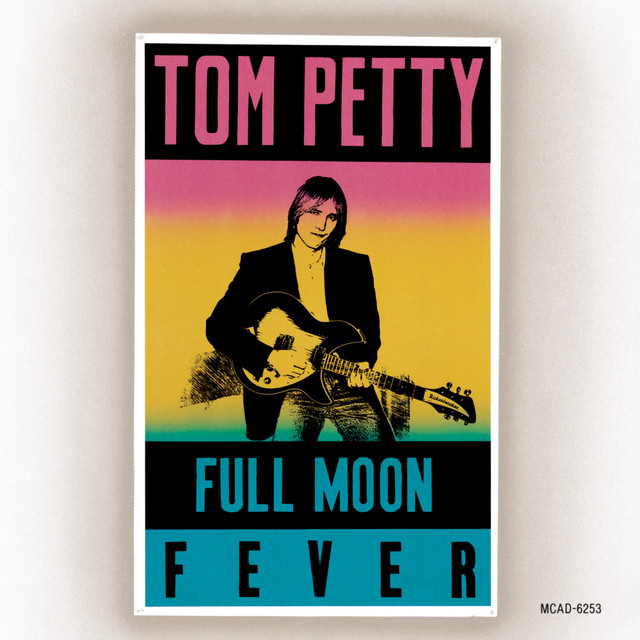
Petty wrote it in 1988, the year after an arsonist burned his house down. He and his family got out. The tapes didn’t, mostly. He moved into a rental and started writing, and what came out of that period — assembled with Lynne at Dave Stewart’s studio in Los Angeles, a converted garage on Encino Avenue — was Full Moon Fever, which his label nearly shelved because they didn’t hear a radio sound in it. MCA passed it around internally for months. They were wrong, and eventually had to admit it.
The song is two minutes and fifty-eight seconds long. It does not build to anything. It arrives at its thesis in the first line and stays there. Well I won’t back down, no I won’t back down. That’s the whole argument, and Petty understood that restating it was not the same as proving it — that if you just held the line, clearly, for three minutes, the line would prove itself.
“You can stand me up at the gates of hell, but I won’t back down.”
There’s no cleverness in that lyric. No metaphor doing double duty, no ironic distance. It is what it says it is — a man drawing a line in the dirt and deciding to stand on it. Petty was good at that. He’d fought his label for years over pricing, over release schedules, over control of his own masters. He’d declared bankruptcy on principle. He was not performing defiance; he had been practicing it.
Harrison’s acoustic is the sound that holds the whole thing together. Not the electric, not the drums — the acoustic. It’s mixed like a room instrument, like something you’d hear from across a kitchen, and it gives the song the quality of something overheard rather than performed. That was Lynne’s instinct throughout Full Moon Fever: dry the reverb, push the guitars close, make the listener feel like they’re standing in the room. It was not what mainstream rock radio sounded like in 1989. It became what a lot of things sounded like after.
What’s strange and right about “I Won’t Back Down” is how gentle it is. The chorus doesn’t detonate. The guitars don’t stack. It’s a quiet song about a hard thing, and the quietness is the point — the message isn’t I’m fighting, it’s I’m not moving. There’s a difference. Fighting is loud. Standing still is its own kind of sound.
Petty played it at a lot of funerals, in a way — not literally, but the song kept getting claimed by people carrying things too heavy to name. After September 11 it became unavoidable. He said at the time that he was glad it meant something, and you could hear in the way he said it that he was also a little surprised, the way writers are when a thing they built for one reason turns out to hold another weight entirely.
He died in October 2017, at sixty-six, from an accidental overdose of painkillers he’d been taking for a fractured hip he hadn’t told anyone about. He had played a show a few days before. The Heartbreakers didn’t know how bad it was. He had kept going the way the song said to — right up until he couldn’t.
George Harrison was gone by then. Ringo is still here. Jeff Lynne still works. The garage on Encino is probably something else now.
But the song is still two minutes and fifty-eight seconds of a man who lost his house and went into a rented room and decided — with a few quiet chords and a friend’s acoustic guitar and no particular fanfare — that there was a line he wouldn’t cross, and he was going to say so plainly, and keep saying it until people believed him.
He did not sound like he was performing courage. He sounded like he had already made the decision and was just reporting it.
That’s the harder thing to do.