Free Fallin'
Tom Petty wrote "Free Fallin'" in about twenty minutes, sitting at Jeff Lynne's keyboard in Encino, waiting for the session to start.
Tom Petty wrote “Free Fallin’” in about twenty minutes, sitting at Jeff Lynne’s keyboard in Encino, waiting for the session to start.
That’s the part worth holding onto. Not the years of craft that made twenty minutes possible — though those years were real — but the specific texture of the moment: a borrowed keyboard, a house in the San Fernando Valley, a song that arrived so fast Petty himself wasn’t sure it counted. He thought it was a joke. He played it for Lynne expecting a laugh, and Lynne put down whatever he was doing and said they had to record it right then.
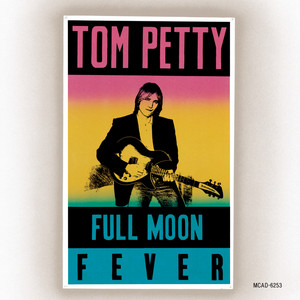
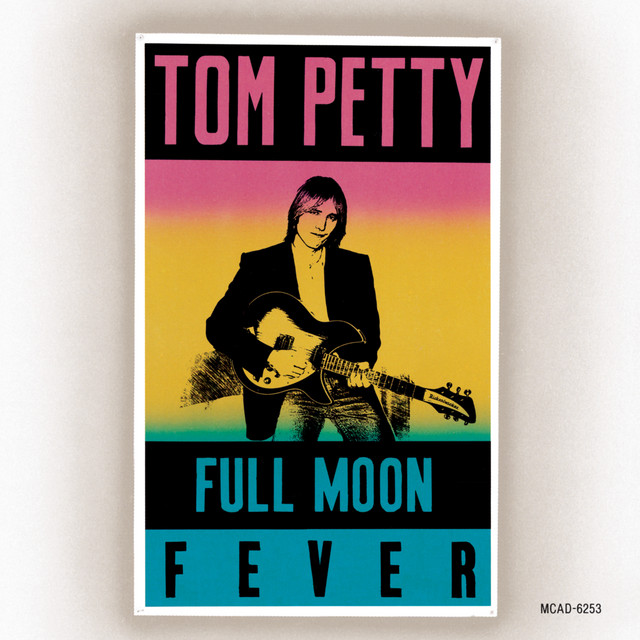
Full Moon Fever was 1989, and it wasn’t supposed to exist the way it does. The Heartbreakers were in a complicated place. Petty had just gotten through a legal war with his label over the price of records — a real fight, not a PR gesture — and the band was between things. Lynne, fresh off producing the Traveling Wilburys record with Petty and Harrison and Orbison and Dylan, had become a collaborator who suited Petty in a particular way: meticulous about sound, unhurried, willing to let a thing breathe. The two of them made Full Moon Fever essentially as a solo record, mostly without the Heartbreakers, in Lynne’s home setup, and MCA almost didn’t release it because they couldn’t hear a single.
They were wrong. But that almost-wrongness is part of the story.
The song is about a girl from a good family, a good neighborhood, loving vampires and Tom Cruise. It’s about the Ventura Boulevard boys and the freeway and the way the San Fernando Valley looks from above — flat, sprawling, every street the same. On paper it’s nothing. A sketch. A guy watching Los Angeles be Los Angeles.
What makes it work is that Petty sings it like he’s reporting without judgment. He’s not above the girl who loves vampires. He’s not winking at the boys on the corner. He’s not doing anything ironic with the Ventura Boulevard geography. He just looks at it straight and finds it beautiful, the way you find things beautiful when you stop needing them to be more than they are.
“She’s a good girl, loves her mama, loves Jesus and America too.”
That line has no condescension in it. None. He’s not cataloguing small-town limitations. He’s saying: here is a person, here is what she loves, here is her life. The chorus doesn’t contradict her. The chorus is her own freedom, or at least the version of freedom available on a Tuesday in the Valley — free fallin’, which is not the same as arriving somewhere, but is still, unmistakably, flight.
Mike Campbell plays the guitar. He always plays the guitar — Campbell, the most reliable and least discussed co-architect of the Petty sound for thirty years, who put riffs on records that other people named after his boss. On this song the electric is minimal, almost an afterthought. The keyboard figure that Petty found at Lynne’s house is the skeleton, and the production holds everything very still around it. Lynne’s instinct was to make the record sound large and clean, the way he always did — bright and deliberate, the drums triggery in that late-eighties way that should date the record and somehow doesn’t.
Phil Jones played the drums. Don Was played bass. George Harrison played rhythm guitar on another track on the album, though not this one, because Petty had Harrison on his couch and a studio in his orbit and somehow still ended up with a song about the San Fernando Valley that felt like the most honest thing on the radio.
Petty died in October 2017. He was sixty-six, which is young — young enough that the songs still felt like they had more road in front of them when they didn’t. The coroner found multiple prescription drugs in his system; he’d been performing the last months of his life on a broken hip he hadn’t told the crowd about, because he thought he owed them the shows.
That detail matters for this song. Because “Free Fallin’” is a song about freedom that Petty spent his whole career enacting in the most literal, stubborn ways he could — the fight over record prices, the refusal to tour behind albums that weren’t ready, the decision to make a solo record when the band’s situation was complicated and not explain himself about it. The freedom in the song isn’t weightless. It costs the thing you’re falling away from. And he kept paying that cost, right up until the broken hip and the packed arenas and the obligation he felt to the people who came.
“I’m free fallin’.” It’s present tense. Continuous. Not a destination, not a memory. Something happening right now, while you’re watching, and then the song ends and it keeps going.
Twenty minutes at a borrowed keyboard. Lynne said record it now. And they did, and here it still is — a joke that turned out to be the whole point of the afternoon, and maybe a little more than that.