I Don't Need No Doctor
The bass player on this recording replaced John Entwistle in The Who. That's who John Mayer brought when he wanted to play real.
The bass player on this recording replaced John Entwistle in The Who.
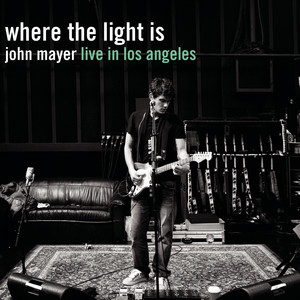
That’s Pino Palladino — the same Pino Palladino who played on D’Angelo’s Voodoo. The drummer is Steve Jordan, who held the Rolling Stones together through the Dirty Work era and co-produced Keith Richards’ solo records. That is the rhythm section John Mayer walked onstage with at the Nokia Theatre in Los Angeles in 2008, in front of a crowd that came to hear “Daughters” and “Your Body Is a Wonderland.” And what he played with them, for six minutes, was a Ray Charles song.
The song was old before Mayer ever touched it. Ray Charles cut “I Don’t Need No Doctor” in 1966 — written by Nickolas Ashford, Valerie Simpson, and Jo Armstead — a gospel-blues plea from a man so far gone on a woman that medicine can’t reach him anymore. In 1971 Humble Pie took it and turned it into rock and roll, Steve Marriott screaming it like his chest was on fire. Two performances, decades apart, both of them total. Anybody covering this song after that is standing in a long shadow.
Mayer knew the shadow. You can hear that he knew it.
There are two versions of John Mayer, and by 2008 the public had mostly settled on one of them: the tabloid fixture, the quotable disaster in interviews, the guy who made pristine pop records that sold millions while people who wanted their guitar heroes more dangerous rolled their eyes. That version is real enough. I’m not going to argue it away.
But the other version is real too. A man who spent years studying B.B. King and Stevie Ray Vaughan and Eric Clapton. Who sat with Buddy Guy and actually listened. Who can play a standard blues run and make you hear the space inside it instead of just the notes. That version had already shown up once — the John Mayer Trio, with Jordan and Palladino, had put out a live record called Try! three years before this night, and it surprised a lot of people who hadn’t been paying attention.
Where the Light Is was built as three sets in one night: acoustic, trio, full band. “I Don’t Need No Doctor” lives in the full-band set. That placement matters, because it means the song arrives with the whole weight behind it — and because it means Jordan and Palladino are in the room. You do not hire the man who replaced John Entwistle to stand behind you while you fake something. Those two have been in sessions most musicians would retire on. With them at his back, Mayer stops trying to convince anyone of anything.
He just plays.
“I don’t need no doctor — woman you know what I need.”
It’s a simple line. It has always been a simple line. What changes between versions is how much of the desperation under it the singer is willing to let show. Ray Charles sang it like a man at the end of his rope. Marriott sang it like a man on fire. Mayer sings it like a man who studied both of those performances closely and then went looking for what’s left when the posturing falls away.
What’s left is the playing.
I’ll be careful here, because guitar playing is easy to oversell. So I’ll just say what I notice. When a guitarist is showing off, there’s a performance of difficulty — the face, the lean, the theatrical bend that says look how hard this is. None of that is here. Mayer disappears into the song. The guitar disappears with him. What remains is a man working through something he hasn’t resolved yet, which is exactly what the song asks for.
The recording runs just over six minutes, and that length is a decision. The song is not over until the song is over. Somewhere in the middle of it, the Nokia Theatre crowd — loud all night, cheering riffs, screaming at high notes — goes quiet in a different way. Not polite quiet. Held breath. For a stretch they stop being an audience and become witnesses. Six minutes is a long time to hold a room. He holds all of it.
Ray Charles got there first. Steve Marriott blew the roof off. Forty years after the song was written, a pop star with a tabloid problem stood in front of the heaviest rhythm section he could find and played it straight, and the room went still.
Some songs are strong enough to survive everyone who loves them. This is one. And on this night, the man playing it brought the bass player from The Who — because he wasn’t asking permission to be taken seriously anymore.
He just played.