Bullet The Blue Sky
In 1986 Bono and his wife Ali went to El Salvador to see the civil war for themselves. He came back and asked The Edge for a sound that matched what he saw.
In 1986, Bono and his wife Ali went to El Salvador to see the civil war for themselves. The death squads. The American money funding the machinery of it. When he got back, he went to The Edge and asked him for something that sounded like what he saw.
That request is the whole song. Not a melody, not a chord progression — a sound. What he saw would not fit inside a protest song with a verse and a chorus and a plea for peace, and he seems to have known it, because he didn’t ask for one.
The Edge is David Evans, the quiet one, the one who worked out that delay and reverb could turn a few notes into a cathedral. For this song he set the cathedral aside. He picked up a Gibson Explorer and made it churn — not ring, not chime, none of the things rock guitar is built to do. It sounds hydraulic. It sounds like machinery with no regard for the people standing underneath it. Brian Eno and Daniel Lanois were producing the record at Windmill Lane Studios in Dublin and at STS Studios in Danesmoate House, and whatever happened to that signal in those rooms, what came out sounds like a machine that hasn’t been switched off and doesn’t know how to be.
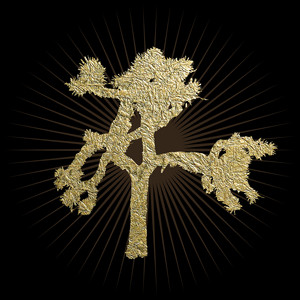
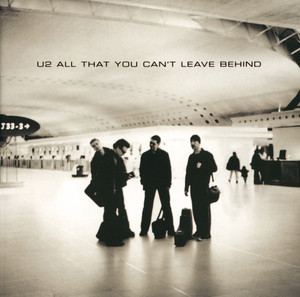
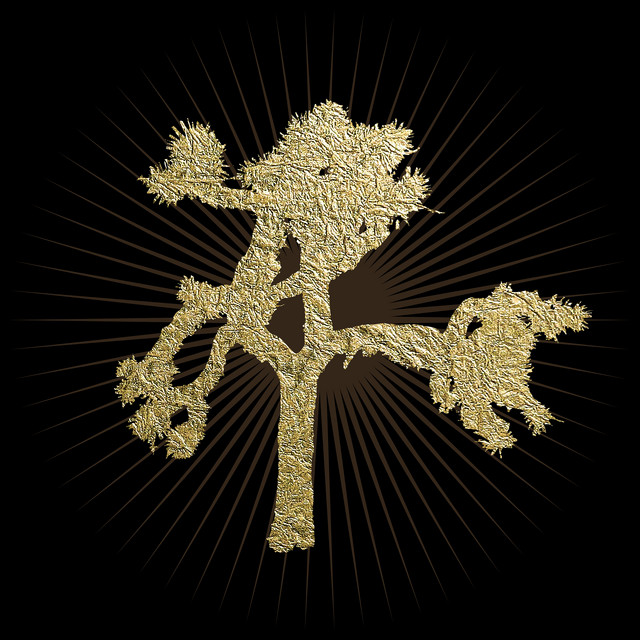
The Joshua Tree is a record about America — the idea of it, the mythology of it, and then the slow collision with what America actually does. “I Still Haven’t Found What I’m Looking For” and “Where The Streets Have No Name” got the airplay and the stadium singalongs. “Bullet the Blue Sky” is the same record with the lights turned on.
“In the howling wind comes a stinging rain, see it driving nails into souls on the plain.”
Bono reached for the Old Testament and didn’t apologize for it. He couldn’t whisper over that guitar. The imagery had to be the size of the sound, and it is. He isn’t singing so much as preaching — standing at a pulpit, delivering a sermon about what he saw — and the band builds underneath him the way dread builds, not all at once. Larry Mullen Jr. holds it down the way only a drummer who has played with the same three people since he was fourteen can: nothing flashy, just the heartbeat that keeps the machine from flying apart. Adam Clayton’s bass sits under all of it like a foundation under a burning building.
Then the money changers walk in. A televangelist counting his dollars while the planes fly overhead and the shells fall. Bono had seen poverty up close, and he had seen what money can insulate a man from knowing about himself. He put both in the same room and let them look at each other.
“Outside is America.”
He says it twice. Both times it lands like a door slamming.
The song doesn’t resolve. There is no catharsis at the end, no moment where the crowd and the band find each other and the stadium lifts the way it does in “Where The Streets Have No Name.” It ends with the riff still churning, still going, the way the thing it describes ends — which is to say it doesn’t.
The Joshua Tree sold more than twenty-five million copies. U2 became the biggest band in the world on the strength of a record this angry about what the biggest country in the world does with its power. I don’t know how to square that, and I’m not sure it needs squaring. The song didn’t get softer because it sold. The guitar sounds like incoming fire no matter what room it plays in. The machine doesn’t care who’s listening.
It’s the song you hear when the story you were told about a place and the place itself come apart in front of you. Bono went and looked, and what he saw followed him home, and instead of letting it fade into an anecdote he handed it to a guitar player and asked for the truth at full volume. Four minutes and thirty-one seconds.
He asked for something that sounded like what he saw. He got it.