One Tree Hill
Greg Carroll died on July 3, 1986, on a motorcycle in Dublin.
Greg Carroll died on July 3, 1986, on a motorcycle in Dublin. He was twenty-two years old.
He had been Bono’s personal assistant for about a year. He’d come from New Zealand, from the Maori community in Auckland, and had attached himself to the band during their 1984 tour — the kind of person who just shows up and becomes indispensable, who carries everything and asks for nothing, who makes the machinery of a touring rock band feel like it has a soul. Bono brought him back to Ireland. And then he was gone, on a wet road, on a borrowed motorcycle, before the year was out.
“One Tree Hill” is the song Bono wrote for him. The title comes from a volcanic hill in Auckland — Te Tātua-a-Riukiuta, in Māori, a place sacred to the Ngāti Whātua people, the one that sits above the city where Carroll grew up. Bono had been there. He’d stood on it. He used it as a kind of anchor for the whole song — a specific hill, a specific man, a specific grief that refused to be softened into abstraction.
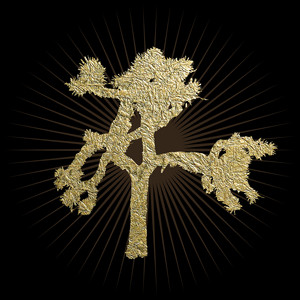
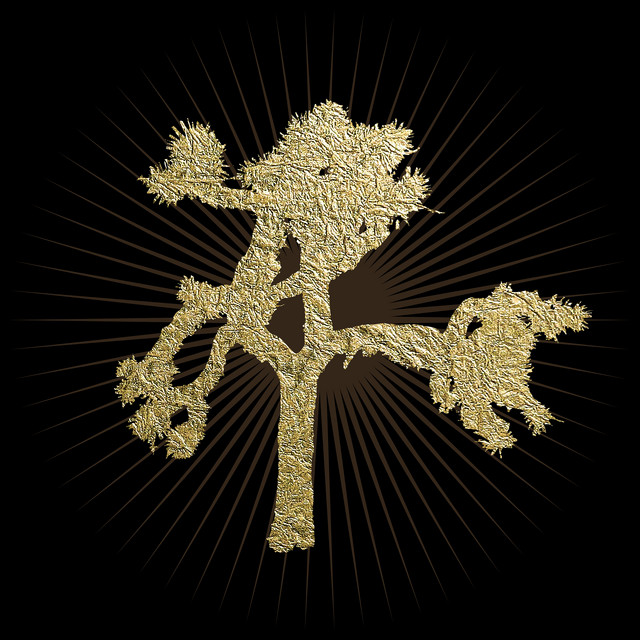
The song closes The Joshua Tree, after the American mythology of “Where the Streets Have No Name” and “With or Without You” and “Bullet the Blue Sky.” All that desert imagery, all those canyons and Joshua trees and hardpan roads under wide sky. And then, at the very end, something more personal. A grave. A name you have to know to recognize.
What Brian Eno and Daniel Lanois built underneath the song is important. They recorded The Joshua Tree at Danesmoate House in Dublin, in the mountains south of the city, and the landscape got into the record whether they planned it or not. The sound is cold and wide and patient. The Edge’s guitar comes in on “One Tree Hill” not as a riff but as a kind of weather — the delay-soaked chime that was already his signature, but here it doesn’t shimmer, it accumulates. Lanois mixed it like a slow tide coming in. There’s no hurry in it because there’s no relief coming.
Adam Clayton’s bass is load-bearing throughout, and Larry Mullen Jr. plays the drums with the particular restraint that grief sometimes demands — not quiet exactly, but deliberate. Every beat placed like it costs something. The song builds for five minutes without ever quite exploding, which is the right decision. An explosion would be a release. “One Tree Hill” doesn’t release anything.
“I’ll see you again when the stars fall from the sky, and the moon has turned red over One Tree Hill.”
That’s not a promise of resurrection. It’s a promise of mythic time — the end of things, the collapse of the ordinary world, which is the only timeline in which this kind of loss makes sense, the only scale that can hold it. When someone is taken that suddenly, that young, the ordinary calendar stops making sense. You can’t just say Tuesday, July 8, he was buried and feel like you’ve said anything true. You need geological time, you need the stars failing, you need the moon going red.
Bono is sometimes accused of reaching too big, of finding the cosmic metaphor when the human-scale one would do. Here he’s right to reach. The human-scale one isn’t sufficient.
U2 would not play “One Tree Hill” in New Zealand for years. They finally performed it in Auckland in 1993, and the city understood what it was hearing. The hill was there. Carroll’s family was there, or people who knew him were. The song arrived where it belonged, on the soil it was written about, seven years late — not because the band forgot, but because the song was too close to play there until it had to be played.
There is a kind of integrity in that. In knowing a song has a weight and not pretending otherwise. In waiting until you can stand in the place and sing the name without it breaking you in front of thirty thousand people.
Or maybe you let it break you. Maybe that’s the point.
Greg Carroll has a credit on The Joshua Tree. Not in the liner notes the way a musician gets credited, but in the way that matters more — the whole record carries a dedication, and he’s in it by name. A twenty-two-year-old from Auckland who showed up and made himself necessary and then died, and left a wound in the middle of one of the most acclaimed records of the decade that most casual listeners still don’t know is there.
“We turn away to face the cold, enduring chill, as the day begs the night for mercy.”
The night doesn’t give it. The night just comes. That’s the whole song, under all the beauty — the plain fact of loss that doesn’t negotiate, the way a person can be gone so completely and so fast that the world keeps on as if nothing happened, the tide coming in, the stars staying where they are, the hill still standing above Auckland with its Māori name and its long memory.
One Tree Hill is still there. Carroll isn’t. The song is the only place both of those things are true at the same time.